

Previous Post
So, I’m a bit of a vendor nerd. I’ve been fed Tertulia ads for a long time, and they’re about as close to a celebrity as it gets in my head (aside from Kesha, Halsey, and Taylor Swift, along with a choice few others). So, when they got in touch about writing for our little platform, I was kind of thrilled.
We also did an episode with them for Six Figure Author Experiment, which you should certainly listen to as well. You should also check their full stack out. Even though I had seen their website builder ads for a long time, they showed me some stuff on their platform that I didn’t even know people were working on, let alone had existed for years.
I’m really excited for their expansion beyond magic website builders, but if you haven’t tried it before, then I definitely recommend giving it a shot. Meanwhile, here’s Lynda to talk about a topic near and dear to my heart, namely, the Frankenstack.

There’s a monster haunting the indie author community. You’ve probably built it yourself, piece by piece, with the best intentions. A website builder here. An email platform there. A bookstore link tool, a social scheduler, a payment processor, a landing page builder, maybe a course platform.
Each one promised to solve a specific problem for you. Together, they’ve made you crazy. Welcome to the Frankenstack.
“I’m not a marketer, I’m a writer.”
Sooner or later, most committed writers come to accept that learning how to market the book is just as important, if not more, to the book’s success than the book itself.
Most writers quickly get the hang of a “call-to-action” and (though often begrudgingly) moving readers “through the funnel.”
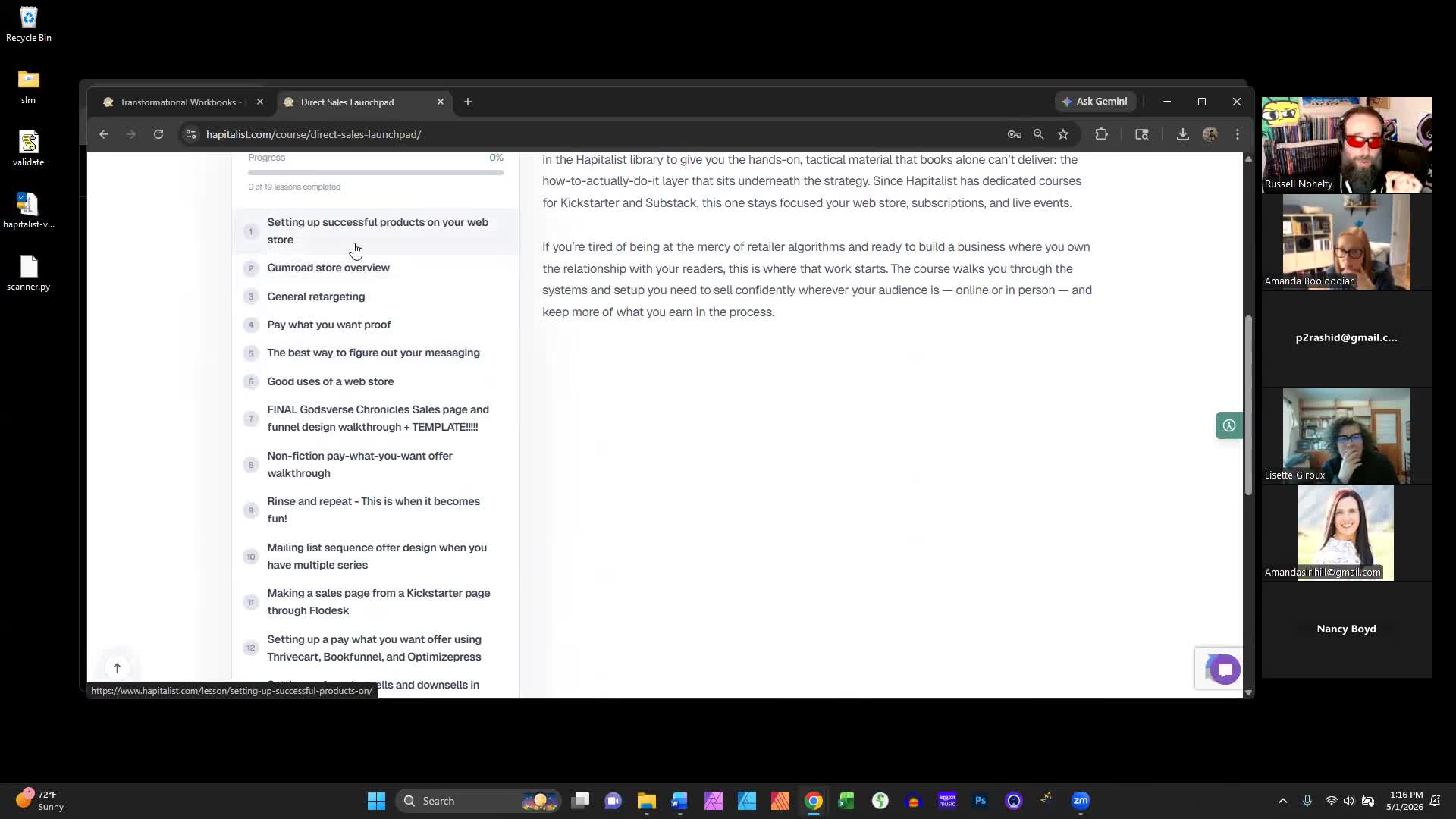
They start mastering tools like Mailerlite, and then maybe Hootsuite, then graduating Zapier…while realizing they also need a Substack…and a hundred other tools…
…the more sophisticated you get, the more the fragmentation becomes unmanageable. It’s literally punishing your success.
Take romance author Scarlet Ibis James. She’s non-stop promoting her books across platforms, and it’s hard to imagine how she finds the time to write. “The ideal for me would be seamless integration where I can focus 85% on content, 10% on engagement and 5% on deployment. No more platform hopping.”
The worst part of that fragmentation is the inconvenience and frustration, especially when you’d rather be writing. But there’s also a risk that even with all those efforts, you’re not optimizing your marketing.
There is no single view of who your readers are, what they’ve bought, or how they engage with your work.
Then there’s the cost.
The math compounds quickly:
- Email platform: You’re punished for success here, and when you need to upgrade from the free plan you’ll pay $20–$100/mo.
- Website builder: Whether its wordpress themes or wix plugins, you’ll be paying some $15–$40/mo
- Link-in-bio tool: $10–$20/mo
- Automation tools: $20–$50/mo
Then, selling directly? Whether it’s Shopify or Payhip or other platforms, it’s a lot to manage on top of your Amazon and Ingram platforms.
Suddenly, indie authors are spending hundreds per month before selling a single book. Factor in the invisible cost of hours lost to technical overhead that authors never asked for. Debugging DNS, integrating APIs - or at least learning the UX or checkout in multiple places.
Your third job
The boom in indie publishing has been gratifying for the writers who felt early on that:
- They didn’t want to be platform dependent, namely on Amazon.
- They didn’t believe that a traditional publisher was needed to legitimize and promote their work.
- Both of the above
The movement’s promise to publish on your own terms, set your own prices, own your relationship with readers, is transformative. Yet, it’s not so easy to hand authors control over their own destiny. The tech and marketing stack has become a significant burden.
Instead of control, many authors got a lot more responsibility without the infrastructure they need. Writing is often already a second job, and the entrepreneurial complexity of book promotion is a third job. That doesn’t feel very empowering anymore.
Cathalson, who has been an indie author for decade and tried every platform out there said it best: “In an industry that lags behind technology, indie authors often adopt modern tools only to find bloated, expensive systems with no clear purpose. AI, one of the most powerful new tools available, is wasted on websites that do not help writers succeed. The result is clear: frustration, lost time, and platforms that profit from authors while giving little in return. Writers need tech that supports their dream of a unified digital space.”
Knowing when to walk away
So what to do about it? Ideally you want to move toward a single place where your books, your audience, your storefront, and your communications all live together, no more platform hopping – unless there’s an agent to do it for you.
You can begin with an honest audit and look at consolidating. List every tool you’re paying for and ask two questions: what does this do, and could something I already have do it instead? Here’s a decent rule of thumb. Does a tool:
- Replace two things you already have?
- Directly connect to revenue or reader relationships?
- Have a setup takes less than an afternoon or at least one that does not make you want to poke your eyes out? (If the free trial required your credit card and three integrations before you have a concrete benefit, you probably want to run not walk.)
Unstacking
Start with the hub, not the spokes. Ideally, you have a base platform that includes your core activities (again, website, your email list, and your storefront). Then, everything else should feed into that — not compete with it. Most importantly: Own your list. Your email list is your most valuable asset as an author. Make sure it lives somewhere you control and that you can manage easily.
The goal isn’t a perfect system, as a system that is practical to use will always outperform a sophisticated one you’re constantly fixing. Good enough, consistently executed, is a pretty good strategy. Imagine: a reader discovers your book, buys it, gets added to your list, receives a thoughtful follow-up, and comes back for the next release. You see all of it in one place. And you spent the morning writing.
That’s not a fantasy. That’s just what the indie publishing revolution was supposed to look like all along.
Back to Russell now
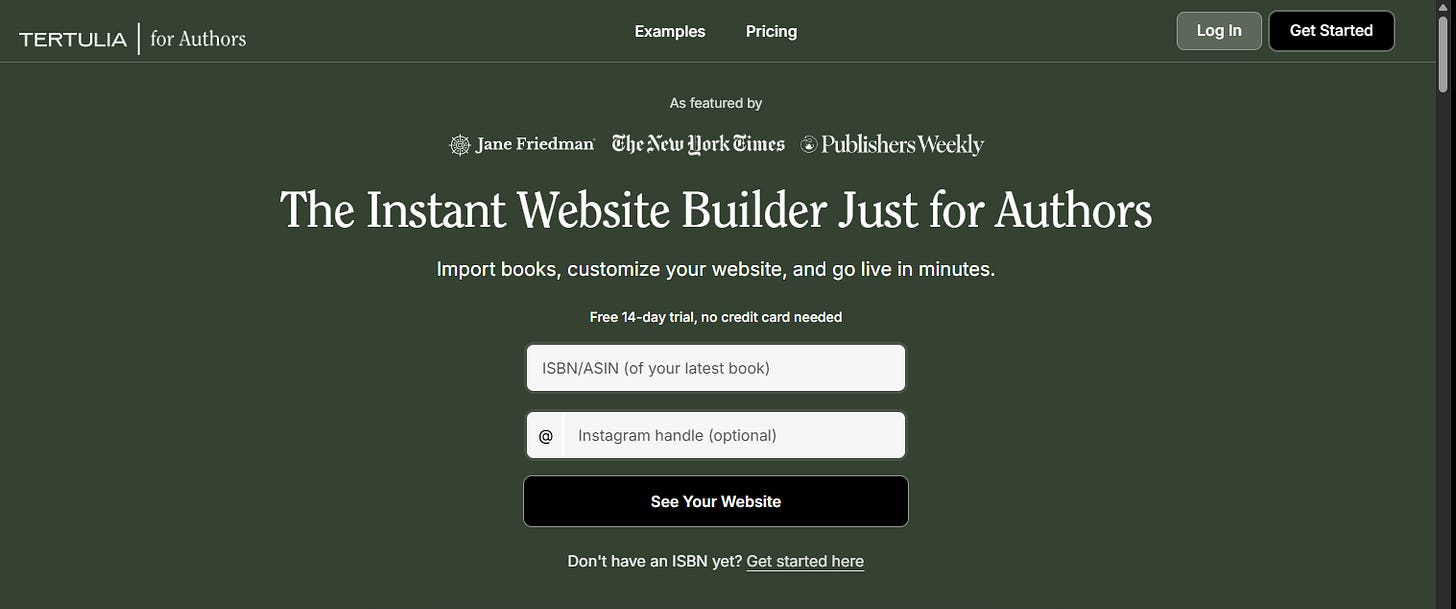
Bless Lynda’s heart. I specifically told her she couldn’t pitch Tertulia in the article until the end, and she chose not to do so at all, so I’ll do it. If you know Tertulia at all, you know it as a magical website builder, but they’re about to make some big expansions into the world of direct sales, specifically combatting their war on the Frankenstack.
They’ve got an amazing platform every bit as good better than Goodreads, and their website builder really is magic. So, if you have a chance check it out. All you need is an ASIN.
The world is constantly in a state of unbundling, then rebundling, then unbundling, and I’m excited to see this “rebundling” come to the indie author world because I’m tired, y’all.
I’m tired of logging into a billion interfaces, and trying to make them connect together. So, even if Tertulia isn’t for you, I hope you’ll at least join both Lynda and I in our war against the Frankenstack.
My words of the year are “Brilliantly Simple”, and while it’s going nebulous for me right now, I love to see platforms start thinking about how we can make things brilliantly simple for indies.