Previous Post
Having lived in an upstate New York small town briefly as a teenager, I’d pretty much do anything to avoid returning. One of the few upsides of reality is that we can sometimes avoid things we don’t want to do. Fictional characters aren’t so lucky!
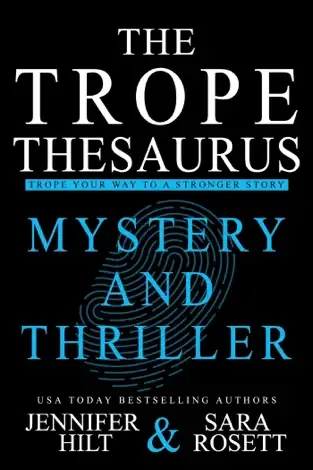
So, let’s look at how FX’s 2010 series Justified uses the return-to-small-town trope. To do that, I’m using an example from the recently released The Trope Thesaurus Mystery and Thriller, co-written by Sara Rosett and me. It’s available now from D2D and Amazon.
Justified, a character-driven show with elements of mystery and thriller, has become a fan favorite. If you haven’t watched it, it’s available on streaming services, and trust me, this is an enjoyable assignment!
In Justified, disgraced U.S. Marshal Raylan Givens is sent back to his Kentucky small town to apprehend his former friend, turned criminal, Boyd Crowder. The series was based on an Elmore Leonard short story, which I also recommend.
First, read my summary of Justified, with the identified tropes below. Notice how well tropes play with others-- it’s the trope superpower.

Justified, Season One (American, 2010)
Raylan Givens is a US Marshal (loner, profession, protector) based in Miami who is sent back to his home state of Kentucky (return to a small town) after embarrassing his bosses.
Unhappily, he returns to the Lexington, KY office, where he learns the Chief, Art Mullen, was his former instructor (boss). Givens grew up in Harlan County, KY, which is home to a local criminal the US Marshall Service seeks—Boyd Crowder (antagonist, suspect). Years earlier, Crowder and Givens worked together as miners for one summer before Harlan went to college and Boyd joined the army (forced proximity). When questioned by his boss about whether the two men are friends, Raylan says ‘We dug coal together” (found family).
The Season One arc involves the US Marshals trying to get evidence that Boyd (suspect) is targeting other drug traffickers to eliminate the drug-selling competition. Raylan is assigned to protect Ava (ticking time bomb), the widow of Boyd’s brother. She killed her husband after years of abuse (victim). Raylan and Ava have an affair even though Raylan still cares for his ex-wife, Winona, who is now married to a scheming local real estate agent (love triangle, politics, secrets). Boyd, who has long been in love with his brother’s wife, stalks Ava (violence).
Boyd’s criminal father has a grudge against Raylan’s shifty father, Arlo, for a previous deal gone bad (antagonists). These two men actively undermine their sons (suspects, politics). Arlo and Raylan have a poor relationship based on Raylan’s childhood and abuse from Arlo. After Raylan’s mother’s death, Arlo married her sister. She and Raylan are close; she paid for his college, providing him an escape from Harlan County (protector).
The first season is all about the shifting alliances Raylan struggles to navigate. He has help from his two Marshall colleagues, Tim and Rachel (found family, profession), as he tries to neutralize the Crowder clan.
Tropes that work well with Return to Small Town: Found Family, Ticking Time Bomb, Quest, Secrets, and Scars.
Other examples of stories with Return to Small Town: In the Woods, Hell or Highwater, Winter’s Bone, Burn Notice, and Grosse Pointe Blank.
Jennifer talks a lot more about this in her new book with mystery legend Sara Rosett, out now.
3 Reasons Why I Love the Return To Small Town Trope
- It provides motivation. Marshall Raylan Givens is the Justified protagonist who only goes back to his hometown, Harlan County, KY, to keep his job. His return is a demotion from his Miami office. What I love about this setup is that, right away, Givens is focused on getting back to Miami. We know his motivation, and the series provides plenty of obstacles to his return.When using this trope, think about why your protagonist wants to be there? What are the factors at play, and how can you make it even more difficult for your character? How can you increase the story tension by making it impossible for them to leave? If your character doesn’t want to leave (often the case in a romance as the relationship progresses), what obstacles can you introduce to them?
- It provides a built-in backstory. Raylan’s habit of shooting bad guys, telling his boss he pulled first, is why he is sent back to Kentucky. We learn that this isn’t the first time Raylan has killed a criminal with his deadly accurate aim. His bosses, who want the accused alive, are not happy with him. Raylan’s boss, Art Mullins, expresses concern at his new hire’s hotshot reputation explaining, “It’s a small office, I get nervous when we change the coffee filters.”The return to the small town has a backstory built in, which is why it’s such a popular trope. There’s no need to dump info when the character will be forced to relive it in that environment! It’s the forced proximity trope built into the character’s past.When using this trope, think about what scars and secrets you can gradually reveal about your character. This is not a fresh start but a return, which means the character returning carries all misunderstandings and disappointments (given or received) back with them.
- It provides forced proximity. There’s no way to outrun a small town! Raylan returns to Harlan County to find his ex-wife working at the courthouse and his estranged father skulking around. His work requires him to interact with both of them, causing all kinds of buried feelings to resurface.That’s the magic of the forced proximity in that characters have to keep bouncing off each other, generating conflict. Think about how, in using the small town trope, you can create more tension by limiting resources and time. Characters make decisions when they are not at their best and face the consequences, creating story conflict.
Next time you are working on a story involving the return to a small town trope, think about if you have mined all the possibilities for your story. There’s a lot of conflict in this unassuming concept.
Calling All Sleuths, Spies, and Serial Killers! Love red herrings, hidden identities, and secrets? Want to indulge your armchair detective instincts?
Check out The Trope Thesaurus: Mystery & Thriller by USA Today Bestselling authors Jennifer Hilt and Sara Rosett.
Join us as we unlock the storytelling DNA behind forty-plus tropes that power the most gripping tales of suspense.
From domestic thrillers to serial killer hunts, femme fatales to police procedurals, and spy sagas to cozy whodunits, we reveal how each subgenre uses familiar frameworks to keep readers guessing—and gasping.
Packed with examples from books, series, and movies, this guide goes beyond surface patterns to explore how goal, motivation, and conflict intersect with tropes and genre expectations.
Discover how secrets, scars, and hidden identities drive character relationships and create emotional stakes that turn simple puzzles into heart-pounding revelations.
Whether you’re crafting your next twisty thriller, historical mystery, or private detective tale, The Trope Thesaurus: Mystery & Thriller will help you transform tropes into tools—showing relationships in action, heightening suspense, and keeping your readers up long past midnight.