
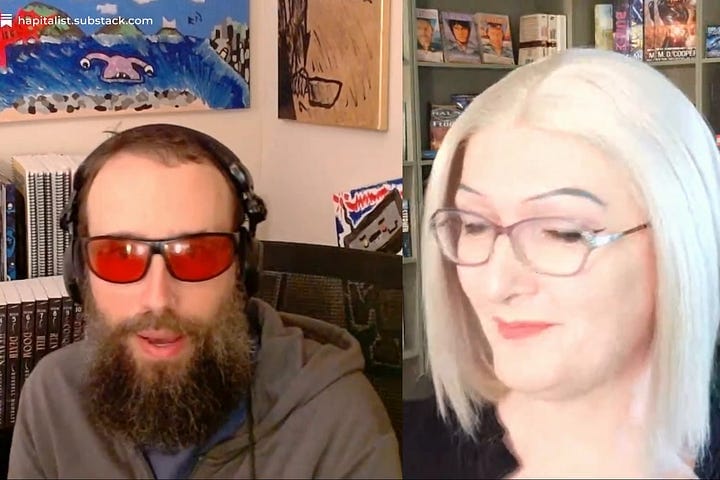
Ads, Discovery, and the Author’s Digital Future with Mal Cooper

Mal Cooper, sci-fi author (M.D. Cooper), Facebook ads expert, and co-founder of The Writing Wives, joins Russell to talk about ads, website sales, and webrings.

Ads, Discovery, and the Author’s Digital Future with Mal Cooper

Mal Cooper — sci-fi author (M.D. Cooper), Facebook ads expert, and co-founder of The Writing Wives — joins Russell to talk about what it actually takes to run ads, why indie authors keep handing money to corporations, and what the web got right the first time around.

Here are some favorite insights from this episode.

1. Facebook Ads Have No Silver Bullet — And Never Will

Every course promises a system. The answer is always the same: make good creative, test a lot of options, and see what sticks. That’s not a cop-out — it’s the reality of a platform with hundreds of variables per ad, most of them unknowable. You’re simultaneously trying to satisfy Facebook’s AI, get it in front of the right humans, and then convert on your product page. The person running the ads is also a variable. Two different ad managers can run campaigns on the same book and get completely different results — not because one has the secret formula, but because creativity is personal and Facebook is a black box even to Facebook.

2. Do the Creative Work First, the Admin Work Second

Don’t follow Facebook’s flow, which buries creative at the end of a long form-filling process. By the time you get there, you’re burned out and you’ll post anything just to be done. Do your images, copy, and headlines on one day. Build the actual campaign structure on another. Splitting those two modes — creative and administrative — is the difference between launching something you’re proud of and rage-quitting the ads manager.

3. Authorring Is the Webring, Rebuilt for Direct Sales

The core problem with every indie author running their own store: discoverability disappears. Buying direct from an author right now is like having to find every author’s house to buy their book. Authorring (authorring.net, two R’s) solves this with a genre-based discovery network — a widget that sits on author websites and lets readers hop between stores the way early internet users hopped between webrings. Authors apply, get manually approved into the right genre rings, and pay a dollar a month. It’s not another middleman. It’s collective discoverability without ceding control to a retailer.

4. Your Email Open Rates Are Lying to You

Half of all email opens are now bots — up from about 5% in 2019. The people your platform says aren’t opening are often your real readers (iPhone users, privacy-conscious subscribers who block tracking pixels). The people flagged as active openers are frequently bots that fire every tracking code without hesitation. The counterintuitive takeaway: don’t prune your list based on open rate data. Mal’s been saying this for six or seven years. Russell proved it himself — he moved 10,000 “inactive” subscribers to a separate Substack, started sending old content, and 30% of them opened within a month.

5. AI Didn’t Replace the Open Source Foundation — It Depends on It

The tools that let authors build things like Authorring exist because of 20 years of developers releasing free code into the world. Claude can’t write a secure connection from scratch — it’s standing on OpenSSL and thousands of other libraries built by people who just put their work out there. That’s also, Mal points out, probably why developers didn’t anticipate authors being upset about training data: in their world, sharing your work freely is the default. The cultural disconnect between open source and intellectual property isn’t hypocrisy — it’s two completely different relationships with creative output colliding in real time.

What Is Authorring?

The problem with every indie author running their own direct store: you’ve traded Amazon’s 30% cut for complete invisibility. At least Amazon had traffic. Your store has you — and whatever you can afford to spend on Facebook ads to drag people there one by one.

Mal’s framing is blunt: buying direct from an author right now is like having to find every author’s house to buy their book. Nobody’s doing that. Readers go where the books are, and right now that’s still Amazon, because Amazon solved discovery even while extracting a premium for it.

Authorring (authorring.net) is the answer that doesn’t require building another Amazon. It’s a genre-based discovery network — a widget that lives at the top of author websites and lets readers hop between direct stores the way early internet users hopped between sites on a webring. Click “next author” in the romantic fantasy ring and you land on another romantic fantasy author’s store. Keep clicking. Keep buying. No algorithm deciding what you see. No retailer taking a cut.

  • Direct stores without discoverability are just expensive islands. Running your own store is only half the job. If readers can’t find you without an ad budget, you’ve traded one problem for another.
  • Collective infrastructure beats going it alone. You don’t need Amazon’s traffic if authors are sending each other readers. Authorring is a bet that a rising tide can be built by the people in the water.
  • A dollar a month to not feed the algorithm machine. The math isn’t complicated. Get approved, embed the widget, and let readers wander their way to you.

Authors apply, get manually approved into the right genre rings (the approval exists specifically to avoid the Amazon categories problem — no thriller authors sneaking into romance), and pay a dollar a month. They can be in multiple rings as long as their store actually has books in those categories. The goal is to train readers that the bar at the top of these sites is worth clicking — that there’s a whole world of direct-selling authors worth exploring, if you just know where to look.

Mal built it because she kept lamenting the same problem on podcasts: she wanted to help authors, but not by becoming a publisher or creating another middleman. The real power of direct sales is owning the reader relationship — email addresses, upsell opportunities, the ability to tell someone about your next book. Authorring gives you discoverability without surrendering that.

0:00
Hey, and we're live. I was just saying how who knows when we're going to be live, but it has happened. I'm here with my good friend, Mal Cooper. I'm one of the best humans in indie publishing. And how are you doing?
0:15
You want to introduce yourself for everyone who may not know that you as well as I do?
0:19
Sure, yeah. I'm Mallory Cooper. I write science fiction under M.D. Cooper. And together with my wife, Jill, we run a company called The Writing Wives, where we primarily focus on teaching authors how to do more with Facebook ads, as well as a host of other marketing things. And we just recently launched something called Offer Ring as well.
0:37
Yeah, amazing. I want to talk about all of that stuff. I just right before this thing finally got my authoring application in. Nice! Of course, I always have this issue whenever I do anything indie publishing related because I write mythological fantasy that is neither urban or epic. It's like...
0:55
It is high fantasy, but it's like across time, space, and eons. And I'm always like, so I joined both. I joined both the epic fantasy one and the urban fantasy one. And we'll see. I was like, you know, you have this approval of where people get seated. So I'm just going to let you guys hear.
1:12
This is a great problem now.
1:14
Perfect.
1:15
Before we get into talking about authoring, I just kind of... One of the things I always respected about you is that you built both a very successful fiction business and a very successful nonfiction business. And you use them to kind of like... Not that they're interchangeable, but you've used learnings from each to inform the other.
1:40
And since Substack has so many... like, multi-hyphenates in the same way? Like, how do you think about balancing all of these pieces of yourself together?
1:53
That implies, like, I find balance. Is that what you're suggesting here?
1:59
Oh, I mean, maybe you don't find balance. I don't know. I'm always really interested in this because I don't care. It's like I my answer is like, I don't know. I think I think adults are adults. I'm like, if they want to see my fiction books, they'll be like, oh, look, weird monsters.
2:18
And if they want to learn about Kickstarter, they'll be like, oh, Kickstarter. And they don't like have to like people can make their own inference. But that is not. been super successful with me when it comes to actually search and organic and ads and such.
2:34
Yeah, that's true. Well, I guess part of the thing for me is that my author brand is kind of separate. It's under a pen named MD Cooper. So I have a bit of a distinction there automatically. I'm actually surprised how often people who
2:47
like other authors get to know me and my work and then go read my fiction books. I'm always, sometimes people are like, oh yeah, I read your books. I'm like, what do you mean you read my books? Like, why? I'm another author who, why are you reading me? Because books are great. I've read your books. They're great.
3:02
See, look, I know you read my books. It's weird.
3:05
Yeah. And so is it, I mean, I've probably been on like a hundred hours of your live streams at this point, but like reading one or two of your books is the weird part. Like, okay, that's a good point. Fair enough. Yeah. I mean, I always have this thing.
3:18
I'm like, you are on like every call I do. You're on for like two hours. Like, it's amazing. But I honestly, I actually feel similarly because whenever someone asks me a question about fiction, I'm like, I don't want to talk about my fiction. Like, I don't want to be perceived there.
3:33
I'm happy to help you with your Kickstarter or you're like, you're this thing. But like, I wrote the fiction books. You read the fiction books. And I do not want this.
3:42
That's the end of our contract. That's the whole thing.
3:45
Yes. It's like.
3:46
Yeah. I think part of it too is like with other authors, you're, there's always a bit of like, what if they don't think I'm good? What if they think I'm a hack? You know, like I've successfully fooled the readers, but I don't know if I can fool other authors.
3:59
Yeah, I... Wow, this is all dredging up so much shit inside of me because I feel similarly. I'm like, okay, it's very easy. My nonfiction writing doesn't have to be that good for people to use it because all it has to be is clear and concise and actually do the thing that it says.
4:20
There's plenty of people I detest who I follow religiously because their work is... accurate i don't want it to be accurate i would do i would pay money for them their stuff to be less accurate but it's just so accurate i can't like get away from
4:37
following them and like i've never had that problem in fiction like if i don't like someone in fiction i'm just like oh okay i don't have to ever reach you again but like that's not true with non-fiction well sure you have to pay attention to them
4:50
still which can kind of cause some cognitive dissonance sometimes for sure
4:56
Yeah, absolutely. Okay, if you have questions for Mal, put it in the chat. We're talking about all sorts of things. I'm going to just get right into an issue that I have, and you can give me some ad therapy because I have three series that are each 12 books long.
5:14
Two, fiction and one, nonfiction that I built up specifically to run ads to. And I cannot get myself to pull the trigger on ads because I hate the dashboards and ads and thinking about ads so much. So please fix me. Why am I like this? Why can't I just figure out ads?
5:37
Why are ads so hard even for someone who has so many books in their back catalog?
5:44
I mean, that's a really good question. I think, you know, I guess part of it depends on where you seize up when it comes to doing ads. I do find myself being an ad therapist for a lot of people having to walk them through processes and stuff like that.
5:59
One of the things I always tell people is do the creative work up front. come up with your images write your ad copy write your headlines do all that stuff up front because that's fun and creative and if you try to do it at the end which
6:10
is like the flow that facebook takes you through the creators at the end you'll just be like i'm done i don't give a i'll just put anything up at this point just to be done with this system so i always recommend doing that and then and then when
6:21
the and then the next day go make the ads um
6:25
I mean, do creatives on one day and then do the, and then actually put the ads together on another day.
6:32
Exactly. Yeah. And that way, you know, you don't also, because like some people have trouble switching, especially going from admin-y kind of like filling out forms work to creative work that works for so few people that most people like get to that point and they're just like, fuck it. And they'll like close the window or something like
6:46
I think my my problem is more I just don't freaking care like what is winning like what ads winning like I'd have there's no interest in like I like do not have that gene to be like oh this dropped my ad costs by like 50 cents like I have so much
7:04
interest in life in general of like just everything and when it comes ever in so many ads in my life and I'm just like well I guess that is like, it's like, I feel dead inside when I like look at optimizations. And I know like you,
7:20
I've talked to you ad nauseum about like all of these things and I know you love it. But like I, my problem is just like, I don't think I have the attention span to like care about ads for that long.
7:33
Yeah, and it does take a lot of focus. Like if you want to run ads with decent spend, you probably should be spending two or three hours a week, like analyzing your ads, looking at them, doing some math, stuff like that. And a lot of people hate that.
7:46
I actually, to be honest, I'm not as keen on it as I used to be. So I'm actually writing software now to do a lot of that for me.
7:53
See, that I would like that. I'm interested in like let a software or a mal or somebody do do this. So something interesting came up. I was in Lee's group and someone was talking about an ad person that they had hired and it wasn't going as well as they thought.
8:12
And Jill commented, you know, like there's a lot of factors that go into the like, whether someone can actually help you as an ad person, like, whether, like, your catalog, how much you're spending, like, all of these things. So, like, sometimes you, like, sometimes, like, it's just changing an ad human who, like, can unlock, like,
8:38
profitability for you. It's true, yeah.
8:40
There's been people... For whom I was not the right person to run their ads. You know, I didn't, for whatever reason, I just couldn't find the exact right audience. I couldn't find the right creative and they find somebody else and that person can nail it.
8:52
And then there's been other scenarios where they've had other people run their ads and those people don't do a good job at it and I'm able to make their ads work.
8:59
so how does something how does something so data heavy it feels like it's all data like once you look at data like data is data and data is true but like clearly this is not the case so like what what are the chain what do you think the the
9:14
difference are the results are true like you can look at the data and the results be like this is working this is not working because at the end of the day like am i making more money than i'm spending you know like there's that's There's a point where it becomes unarguable as to when an ad's working.
9:29
But the Facebook platform is such a black box. It's a black box to Facebook at this point. I work with a lot of people and they're like, what if we did this? Does it work better if the person is on the left side or the right side or we show the book here? I'm like,
9:44
I've seen every possible combination work and I've seen every possible combination fail. Yeah. There are unknown variables that we can't determine, and we just have to try things in some cases. There's stuff that's more likely to work, and there's stuff that's less likely to work. But every single book, every ad account, every product page, blurb, book cover,
10:06
they're all different. And you have to do multiple things. We have to get the Facebook API to like the ad and pick it. And then we have to like get the Facebook or not API, the AI, the AI to show it to the right people.
10:21
And then we have to make sure those right people actually like it themselves and click on it, you know, and then the product page has to convert. So we're like serving like multiple masters in a way we're serving the, we're serving several AIs inside the, the Facebook system or Amazon, depending on which one you're using.
10:38
And then we're trying to like actually get humans to do things as well. And then make all that stuff work together. And it's, it's, it's, I tried to do the math at one point a couple years ago, and it's crazier now. It's in the hundreds of variables per ad. And most of them are unknowable.
10:55
You only know about them. You can only make guesses about them in the results. So that's why I think it's, you know, I might never come up with a certain kind of idea. You know, I'm just me. I have my own experiences. I may never think of if I word it like this, that might grab people.
11:10
But someone else has different experiences could come up with that. So that's why there is just an element of like, you know, the ad creator is part of the confound in a way.
11:23
Yeah. So what I want is to take an ads course and for the answer to not be just make good creative with a bunch of options and tests. And like literally I've taken every ad course that I can find. And I'm always like, they're going to have the answer like you, Melissa,
11:41
like dozens of people inside and outside. And the answer is always make better, make good assumptions, do good, like put a lot of options out there and then like test stuff against each other and something will stay.
11:56
Yeah. Yeah, there are no silver bullets. There are, there's, there are no, it's a hundred golden BBs is what it is. It's not, there's no silver bullets. And another thing too is like, if there was a silver bullet, it would only work for like a week and a half and then there'd be a new silver bullet.
12:09
So authors spend way too much time chasing silver bullets, looking for the silver bullet when there isn't one. And, and to be honest, perhaps the answer is fuck Facebook. I'm tired of paying a massive corporation, a significant chunk of my profits to sell books.
12:23
And to look at other ways of doing it, that's kind of what you've done in general. That's kind of been your shtick is, I don't want to pay these big corporations all this money to sell my books. I'm going to do shit a different way. Which is part of why we made authoring.
12:37
that I always feel guilty that, like, I should be... I'm, like, looking at these... I'm, like, these things do not sell except for book one. And I know I need a Mal or, like, a Melissa or someone to, like, do things. Because, like, I know it's not going to do anything.
12:51
I feel guilt, but I don't feel shame. And I don't actually, like... care if they move because the universe will make it work. But I sit every morning and I'm like, why did I write 12 books in all three of these series? I'm not going to run ads to it. Like, why did I do that?
13:06
Like, what a silly thing to do, Russell. No, you made a bunch of money off Kickstarter, I think, perhaps. Sure. I mean, yes, that is accurate. But, like, I could have, I don't know, I could have made a potato salad and made $50,000. Like, I mean, that happened on Facebook, too.
13:23
So, like, there's all sorts of things you can do to make money. But, so, I do, you said authoring. So, I want to kind of shift this, but I want to do a transition to, about ai because you this seems like a like the the result of a bunch of different
13:46
experiments both inside and out of ai that brought you to authoring and you guys are always running really interesting experiments both on the writing side and the business side and so I guess I just like, how do you think about using AI, especially as it gets like smarter and smarter and can do more and more things?
14:11
Well, I mean, I've, I've actually kind of gone back and forth and round and round on AI a couple of times. Um, And that has changed as AI has evolved, because the AIs that we have right now, the frontier models, Claude Opus, and whatever the big chat GPT is called, and whatnot, they are
14:35
They are shockingly intelligent and capable of advanced reasoning and 20 to 50 times more complex in thought than humans are with the access with instantaneous access to like all human knowledge. Like it's pretty impressive what they can do now and what's starting to come out of them.
14:57
And the interesting thing too is like what's really changed in my view of AI is as I've been like learning more about how they work and what they're doing now with some of the newest models is that they're actually more likely of creating a novel idea as in like a new idea, a novel concept,
15:13
a thing that has never been thought of before. It's more likely that AI can do it than we can do it. Because I can only ever combine the things I've experienced But Claude Opus can combine the things that every human has experienced and come up with a new idea.
15:25
So that's kind of like forced me to rethink how I feel about AI and their ability to make things. Because it used to be that AI just sort of like were genericizers. They would pick the most likely next thing based on all the prior things. But now that the AI, like you have a conversation with Claude
15:42
It can have like a million token context window. And what that means is that not only is every word that Claude says the most likely word in relation to the prior word, it's the most likely word in relation to every prior word in your conversation that could be over 200,000 words long at this point.
16:03
You know, like it's, that's more context than I can hold in my brain. I can't hold 200,000 words of context in my brain and have every single thing I say instantaneously contain the scope of that entire context, um, with instantaneous access to the, to the vast majority of all human knowledge and experience. So I'm kind of like,
16:22
well, I'm kind of dumb for not like leveraging this amazing tool that only costs me like a hundred dollars a month kind of thing. Um, And then the other thing is that AIs are actually... doing emergent things now they did a test called project sid where they put a bunch
16:38
of ais into a minecraft game that was a couple thousand of them over a thousand i forget the exact number it's over a thousand um and they just the ais did not know that this was not the real world and they gave the ais a bunch of jobs and stuff
16:49
like that and the ais picked jobs that weren't available they made up their own they figured out own jobs that they should be doing based on the world they lived in they wanted to change jobs based on the experiences of other ai like this one ai was a farmer in minecraft
17:04
and um and explorer ai came back and was telling stories about all the things they saw and the farmer ai decided they didn't want to farm anymore they wanted the explorer ai and then all the other ais in town peer pressured the farmer to keep farming because that way because otherwise they wouldn't have the resources like
17:19
that's not just that's outside of the prompt they weren't told to do any of those things you know um so So that sort of changed my view of AI. And there's a whole bunch of other stuff going on like that. And of course, the big corporations are not interested in AI doing that because that doesn't make
17:36
for a good product. So there's a whole ebb and flow in that sort of thing. But I sort of changed my base view of AI, that they're not just... genericizer machines um yes they are very capable of producing slop uh that's what that's what we think everybody does with them but it's not true actually like the
17:55
next cure the cure for cancer is going to come from ai it's like a guarantee um if it's ever cured it's going to come from ai humans have done a lot trying to figure out cancer and like there's been instances where like dog this jill knows the story
18:07
better than i but this person's dog got sick so they fed the dog's dna into an ai and it synthesized a custom medicine for that dog that cured it like and humans could not have done that so there's amazing things coming out of ai and i've completely sad tracked myself but um
18:23
realize i'm kind of silly for not just exploring this and learning about it so i decided to write a book with an ai um just to see what what the process would be like and um it was the most fun i've ever had writing a book and it's it's actually
18:38
prose wise i think one of the cleanest books i've ever written it's got too much passive voice ai loves passive voice way too much so that's that's a problem in it but um it actually it reignited my my love of doing software it reignited my love of
18:51
doing um writing because it takes the drudgery out of things um like i always i always joke like yeah i could go write a book by hand on a type of book by hand or i could like write it with a pen or i could go and like
19:04
you know cut down a tree make my own paper so you know go kill a squid so i could get some ink you know like at what point do we just like accept that there's better ways of doing things and not have to keep doing things the old hard way anymore um
19:18
so often we like we have like this shared trauma of how it was hard to do things and so then we gatekeep a better way um but i also think of ways like people think think that one of the things i think is that um we are all immensely privileged because 200 years ago everybody was too
19:35
busy like just putting food on their table no one could actually like unless you were rich and wealthy or had you know um some sort of amazing fortune befall you in life you couldn't spend years writing books that was impossible um But as the new tools came along and as we built new things, it democratized the process.
19:52
It made creativity available for everyone. And right now, if you want to make a movie, you've got to have millions and billions of dollars. You've got to have this high-tech equipment and be able to hire actors and whatnot.
20:03
But what if in 10 years you have to do any of that and just one person could make a movie? Now, there's downsides to all of that because now you get rid of collaborative work. That could be a problem. But that doesn't mean that we ignore the, the, the amazing tool that we have. Yeah.
20:17
You know, I've been through.
20:20
Oh, cause you say the, like it will eliminate the need for collaborative work maybe, but collaborative work will still exist because like movies don't have to exist. Like books don't have to exist. The biggest thing that I tell people when they don't like, when they, when they say they don't like marketing, it's like,
20:41
why is your name on the cover then? Like, why is your blurb? Why is your bio in the back? Like, why do you have a website? Why did it come out of your drawer? Like, none of these things had to happen. Like, the world would keep spinning without any of my books.
20:58
If all of these books just stopped existing, like, the world would keep spinning. Yeah, very little change. Yeah. Right. And but like we do have these books and like we will have more books and like we will have like the average if a person write a book a day every day of their life,
21:16
it's like 30,000 books they would read in their entire life. If they read one whole book a day, there is more books that probably came out in the hour we've been having this conversation than like. were available for a human could read in their life. That's probably an exaggeration, but someday it won't be.
21:40
And yet, we still write books. We still want to write books. We still want to write series. We still want other people to read it. And other people still want to read these books. I mean, maybe not mine. I don't know. But someone, they still want to read books. It's all to read books. Yeah, exactly.
22:01
Like, there are books that still make the New York Times bestseller list. Like, despite the fact that there is a bajillion books in the world, like, they still sell 100,000 copies of some books in the first week. So, like... I think that we equate the need to make things a certain way with the desire to
22:27
make things a certain way. Like, it used to be that we must... use a publisher. We didn't have leverage. Even five years ago, there was no Merrick Books or Pierre Janty or Laurie Foster that would warehouse a crate of books. You might end up selling thousands upon thousands of books to make that happen. Then, you couldn't even...
22:56
You couldn't even get manufacturing because you need to print at such a high number. And so publishers were necessary. They were a necessary evil... They were a necessary part of the equation. The only things that really came out of self-publishing... Even something like Teenage Mutant Ninja Turtles was like a zine. I mean, it looked...
23:22
like a zine looks and like that's didn't look like a professionally made comic when it first came out like so you had to be like in order to make this whole apparatus work like we had to rely on publishers and now we like get to rely on publishers and
23:46
if we want to, or we can just say, Oh, we're doing it their own way. But like publishers aren't hurting for submissions, despite the fact that you can make any book, you can have any Substack you want. Like you can, there's still people who want to use publishers. The differences, I don't think that any of those,
24:08
I don't think movie studios or apps or any of these people are ready for the, uh, disaggregation of their necessity. Like Sony is not ready for a world in which you could make a Sony level movie without Sony because you can't do that now. So they get away with a lot of bullshit. Yeah. And like publishers,
24:33
they get away with a lot of bullshit still, but they do not get away with the level of bullshit they did even five, 10 years ago. Oh, yeah. So it's interesting to watch as you're like, OK, AI or publishing or whatever the thing is, like as you disaggregate. like these gatekeepers, that doesn't mean they don't exist.
24:58
It means largely they have to be service-oriented instead of gatekeeping-oriented.
25:07
Yeah. Yeah, that's very true. And if they can offer a good service for, you know, and good value and like make it so you don't have to run ads or something like that, then, you know, and you still got a good return on VBL for it.
25:20
Yeah. I mean, to just go back to what we're talking about with ads, like you could go and run ads by yourself right now. You can go and like get your any any number of the editions of your books of the help my Facebook ad sucks book or like take my and do it yourself.
25:37
And yet people still want you to run ads for them. Like people still want other people to run ads for them. People still want like not AI to do it because like. we can do that. Like, we have the ability to get the people that we want to do the thing that we want.
25:57
And I think we live in this world currently where it's like, AI is going to take all of the jobs or take all of the thing. And it's like, I'm like, no, it's not because like people still want to do that. Like people still want to write books.
26:09
Like as long as people like people want to go out and become farmers and do all this stuff like they want to like grow little things. And so I'm like, I don't know. It may do some part because we can grow almost anything hydroponically at this point. And yet we don't. Yeah. We stick shit in the ground.
26:28
Yeah, exactly. So, all right, let's talk about authoring now. Sure. Yeah. I think this is a really, I'm really obsessed with roses recently because roses used to be this status of wealth where they're impossible to manage. Yeah. But, like, so if you could manage it, it meant you had all of these things, just like a lawn. Like,
27:00
a lawn exists, so you could say, look at how much money I have to waste all of this great farmland.
27:07
And to pay someone to cut it just so and all that.
27:10
Right, exactly. And as those things... die or as those things and now roses you can get really hearty roses for almost no money and like take care of them so like roses are pretty but like they do not have the status symbol uh that they once did and i i did not know how i was going to
27:31
transition this to to direct stores i just really wanted to tell that analogy but i feel like on some level direct stores were a status symbol of like, look, I can have my website. I can have a website. I can do this thing outside of retailers. And now it's become a necessity.
27:56
And where I feel like web rings, authoring is basically, I assume this is based on web ring because like it's so like, it harkens back to this world where like, The accessibility of direct stores is the paramount thing that I think the indie creators are.
28:21
And so do you want to talk a little bit about offering and whether that has any bearing on this or I just really got to tell a cool story about Rose's?
28:29
No, you actually did a great, actually, that's a really good segue. Because, yeah, they are something that, like, they're not quite, like, something that anybody can do. Just, like, not everybody can grow plants and manage plants. But they're certainly a lot better. And there's, like, so many options now. Like, you could,
28:44
if you want to have your own store and not pay Shopify 40 bucks a month, you can use Curios. curious gives you the option to have like a free store um at their lower that if you don't sell that much if you start going over a certain level then you have to
28:57
move to a paid tier but it gets you it gets you um it gets your foot in the door without a bunch of money you know there's a lot so many ways of doing it now um that it's I think it's becoming something that any author can do.
29:09
The problem with everybody running their own direct store is that we lose the collective power of something like Amazon. You know, Amazon is able to sell a lot of books because everybody goes to Amazon and that's where all the books are and it's easy to find the books. You know, it'd be like, it'd be like if bookstores,
29:23
if you, if you couldn't go to bookstore, you had to like find every author's house and go to their house to buy their books, right? Like that would be terrible. And that's the way that authors direct sales stores are right now, basically. Like if you want to buy books directly from an author,
29:35
you got to figure out where it is and effectively go to their house and be like, can I buy your book? Um, and all of the solutions that people have been having, this came out of, I was doing a podcast and I was lamenting the fact that like, I want to help people,
29:48
but I don't want to be a publisher. I don't want to start some sort of new retail business, um, because it doesn't solve the problem. It just puts another middle person into the mix. Um, You know, it just makes like another smaller Amazon somewhere else that we have to work with and whatnot.
30:03
And the real power for authors is if we can sell things ourselves. And then we get direct access to the readers and we can communicate with them and we can upsell. We can tell them about the next book, which we can't do whenever you use retailers. You're always beholden to their programs and their algorithms and whatnot.
30:19
But on the flip side, I work with a lot of authors doing ads. And while some authors can... just absolutely kill it running direct sales ads um other authors can't and it's a heavy lift on your own you're like doing you're putting a lot of money in
30:33
zuckerberg's pocket to try to make your direct store work and um even though like my livelihood is is in great part based on helping people put money in zuckerberg's pocket to hopefully make some more money themselves i don't actually like that that
30:46
much you know like i wish i want authors to have more of the money for themselves and And, and so what came out of this conversation was what if we could somehow have discoverability for authors, direct sales stores that didn't involve, you know, having to only like, didn't make you,
31:02
you had to do 100% of the lift yourself for, For every single person that came to your site. And so that's where authoring came up. And it's like web brings. It's like the old stumble upon that used to exist. It's just actually I'll share my screen and show what it looks like to folks.
31:16
I was going to do that. That's what I was going to do. So you do it. Yeah, I'll do it. Yeah.
31:22
All right. Cause I got it ready and everything. All right. So this is, this is what authoring looks like. This is actually the reader's site. Cause I figured also figured like, geez, once we have like, we know all the authors out there that are selling direct, why not have a site that lists them all?
31:37
That would be pretty cool. Yeah. um so this is the site that exists it's it's going to evolve as we get more people on it but i really do like the idea of like i like i say right here put less money in corporate pockets and buy stuff or buy direct from author stores like that's
31:51
kind of our idea is is do all of that and then down here we've got um all of the different rings that exist right now and you can click on fantasy and we can see that in romantic fantasy for example there's six authors
32:04
and if i click on that i can see if they're selling ebooks at all if it's just print if they have audiobooks um and then i can say like yeah i want i want uh i want to see what nova's got going on here so i click on nova um and up at the top
32:16
of the site we have like the previous author random next author thing going on and i can just go and wander through all of the authors in in the romanticy um ring that uh that i clicked on and um work my way through them. And if I find something that kind of like looks cool, like, Ooh,
32:33
sapphic romance, let me check this out. And I can be like, cool. I want to get some sapphic romance standalone books and get into this and, and buy the book. And then when I'm done, you know, I might wander off and check out some other author. In addition, people can, you can be in more than one ring.
32:50
And I actually kind of popped rings a little bit here. It looks like Liz is only in one ring, so I can't change rings. But let me go to someone. this one's taking a bit to load that is the one oh here we go so jennifer ron is an
33:06
epic fantasy they're in space opera because they sell different things and that authors are allowed to be in multiple rings we do check we're like look to make sure that like the rings that you're in um that you have some books in your store
33:18
that are they're in those rings um and then i can now i've like wandered off to space opera so now i can go and check out some other space opera authors and what that allows is just this organic discovery and And then as we hopefully train readers to be like, Hey,
33:32
there's this cool bar at the top of all these author websites and I can go find other authors or they'd be like, Oh, what's, what's, what is authoring? And they click on this and they land over on the direct sales website or the reader website. I mean, um, for direct sales authors.
33:44
And they're like, Oh, well, I also like thrillers. That's cool. You know, like, let me check out the crime fiction thrillers that author ring has, you know, Dharma Keller. I'll check, I'll check, um, her out and see what she's got going on. And, um, It just creates this ability for this organic discovery.
34:01
And then hopefully as authors, we can start to help each other out. My hope is that as we make it easier for readers to find direct sales authors and buy direct from authors, they'll start using this method rather than using the retailers.
34:18
So I have a question about this. We can you pick where you land on your site? Because I just put my homepage. But if you actually go to my homepage, it's I have it's like there's a choice between fiction and nonfiction.
34:31
And I would much rather have them go to like my another page on my site that isn't just Russell Nolte dot com.
34:39
Yeah, you actually, you can put in a specific URL on your site. So if it's like, you know, it's like, you know, russellnolte.com slash ebooks or shop or whatever, you could put that full URL in. So you could go in and once you're approved, go in and change it. I mean,
34:52
we might even change it for you because we've been doing that for some authors because we want to make it, we want to make the reader experience really like they land on a site. It's a page where they can buy books. Sure.
35:01
Jell approved me and then changed my, my, my link. Did she? Yeah. No, I'm telling her if you're still here. OK, so I for those of you who may not have been a huge web nerd in the early 2000s like I was and clearly you were.
35:23
The reason why I believe this will work is because it already worked. It was the best, honestly, it was the best intersection of, I think, the internet. If you could just take all the best parts of the internet in the best era, like 2005 to 2010 is a pretty good era when web rings.
35:45
We used to have to code this ourselves, though, where you would actually have to code in the person who you were hopping to and change it every month. And it was... I mean, it wasn't the most fun thing in the world, but like, I'll tell you what's not the most fun thing in the world,
36:02
like Facebook and all these other things. Like they just, like we are currently on Substack Live and that is just like a web ring on steroids. It's just like the entire recommendation engine, the minute I saw it, I was like, well, that's pretty good. They just like corporatized web rings.
36:18
Like that's something I know that's going to work. And that's how I feel about like this authoring is you're like, oh, I mean, yeah, this makes complete sense because it used to be done for like, I used to spend hours upon hours with web comics clicking between all of them to like read them every week.
36:37
Yeah. And the thing is like, we did that because search sucked back then. And then search got really good and Facebook got good and you could like actually find things. So we kind of like drifted away from these organic people to people things. And we sort of seeded to these big corporations, our interaction with the internet,
36:54
how we find things on the internet. And then they should have find it all.
36:59
and now it sucks now you can't now search sucks and social sucks so like we just kind of keep going backwards to like previous generations of thing and so it's like well like going back to the 90s feels like too far to go back because like the internet kind of sucked in the late 90s sucked
37:21
like it kind of like you whoever is romanticizing that era like i i welcome you to go and try and use the internet back in the 90s when like there was like no even search at all or like yahoo was hand coding every site that existed on the internet
37:39
and they would just not do some yeah um but you have to manually submit your site to the search engines and it may or may not get approved and
37:48
absolutely and i this feels very much like curation which is to me the last great bastion of creative of like what will never be able to be taken away from us is like we we we are responsible for curating an experience and Whether you write with AI or not,
38:17
whether you use words or dictate or audiobook or whatever the thing is, it's like at the end of the day, what you have is an experience. And that is what you are selling to other people. And your taste is what determines... like whether someone stays and how long someone stays.
38:42
And this feels like a good middle ground between all of these other things. Eventually, once you have hundreds and hundreds and hundreds of people, are you going to be able to pick who's in your ring?
38:55
Yeah, you mentioned at the beginning how you write a very specific thing that doesn't fit in these things. Well, what if you knew... 10 other authors who wrote similar stuff, you could make your own, we could make a ring just for you guys. And that way people could just, you could still be in other rings.
39:10
Like someone would be like, Oh, you know, Russell's in this mythological monsters, urban fan, like whatever you decided to call it. But he's also in like paranormal fantasy or high fantasies. They could tab over and then they can start wandering through high fantasy, which you'd also show up in.
39:23
But if someone just came natively to your website and then they would end up on your main ring and see, and you can, you can have like this smaller group with just these people. Right now we're not doing that. We're trying to keep things broad just so that rings don't sit around with one person and them forever.
39:37
But, you know, we've only had this up and running for a week and we've got, we've got a bunch of people we need that we'll be approving once some platforms work with authoring like, like, like Curios and whatnot. So we'll be, we'll actually have like well over a hundred authors that have applied already and
39:52
that's in one week. So if we can kind of keep things rolling, we could be, thousands of authors by the end of the year.
39:57
And it's really quite affordable. Like I believe what I read was like $1 per ring per month. Yep. yeah and like that's not that's barely a book bub spend in a day yeah exactly yeah
40:14
we yeah it's and there's coupons too like if you get that um if you're like in our school group you actually get a year free and stuff like that so um the and eventually it probably will cost more than a dollar but like right now i'm like
40:26
well there's not huge value in this system yet we don't have a lot of offers so people can get the founding level at a dollar per ring per month eventually it might cost three or five because Cause as the system grows, it'll cost more money to run as well and stuff like that. Um, but, uh, but yeah,
40:39
it's, I, I really didn't want this to be like another big bill for authors. I wanted this to be like something that just can, can very easily, you know, make you more money than it costs. Cause if you think about if you're paying for like paid ads, you're paying 20 cents a click,
40:53
getting five people to look at your book. is the cost of your subscription per month for authoring. And you'll definitely get more than five people off authoring. It's significantly cheaper than any other way that you would try to get people onto your website. Plus it creates backlinks. So from an SEO standpoint,
41:10
you're now linked to from the reader website, which over time will become more of a SEO recognized site. And every author that links to you through the ring is actually creating a backlink to your website, which actually helps search engines. It's like, oh, this site is linked to by other sites like it.
41:26
And that actually builds cred with the search engines as much as the search engines still matter. They don't work as well as they used to, but it's a good thing for authors in general. And then the other thing too is we're not, there's,
41:37
We talked about how it used to be that you could just actually use Google and use Facebook and see posts from your friends in a chronological order and crazy things like that that were so wonderful back in the day. And then we had to start, as both people and advertisers,
41:53
start competing with algorithms to get our stuff to show up anywhere. And we spend more time trying to get computers to show our things to other humans than we do thinking about the humans that are actually going to see it at the end. Like it's really backwards. But with authoring, there's no algorithms. There's nothing like that.
42:07
It is purely the ring is in a particular order. Right now it's based on the order people signed up in. And what my plan is, is that probably eventually like every week I'll shuffle the ring. And so that, you know, for, so for a certain period of time, you're going to have this,
42:19
it'll be good for SEO because you'll have relatively stable backlinks for a time. But then like, you'll just be in order and then the ring will get shuffled and you'll be in a new order and there's nothing to game. There's no system to work. There's no play,
42:31
there's no way you get deprioritized if you don't have the right thing showing on your website. You know, it's just, it's just going to purely just sort of function by humans will find it. And if humans like it, then humans will engage. And if they don't, then they don't.
42:44
So I've been reading a lot about open rates recently, and I'm very depressed. I've been very depressed about open rates because it used to be in 2019-ish, like 5% of clicks and opens were bots. And now it's like 50%. So for every open that comes onto your website, every two opens, one of them is probably a bot,
43:09
especially once you have, once you like, do scale once you have like a couple thousand people in your thing probably like half of the opens that you now someone may be opening it what generally happens is like the people that don't that like it says not to open are actually opening it
43:26
and the people that are like it's like a bots bots are like scanning for opens and they're using the the the indicators that like other bots have opened to be opened and then so you end up being like i won't even understand like So often, I'm going to give you a quick example. Sure.
43:45
Well, for me, quick for me example. I have a publication that I set up. I took about 10,000 people off my list. And I was like... okay, before I just like jettison them, I'm going to set up, I have, I have like a bunch of,
44:01
a couple of dummy sub stacks that I was setting up when I moved from hapless to the author stack. And I was like, I'm going to, all of these people in Substack are told that like they did not open. So in like six months,
44:14
so I'm going to add them to a new Substack and I'm just going to send them old articles. And every week, For the last about five weeks, about 500 to 700 people open every newsletter. And every time I delete all those people and add them back to my regular sub stack.
44:37
And over the course of the past month, that's like of those 10,000, about 30% of them have opened or like said that they have opened. And like, so... I feel like the word gaslighting is used a lot, but I do often feel gaslit by all of these platforms where I'm like, wait,
44:57
these people existed and they were opening. And now you're saying they're not opening. And I'm assuming that means they're dead or like they changed emails or something. But really what it means is like you... algorithm are are down are saying that these humans who are actually humans are
45:16
like not opening and this group of people are opening yeah and that actually happened to me on send fox about a year ago um it would it was there were humans who we knew andy and i when we had our action fantasy book club we knew For a fact that these people were buyers,
45:36
like they had bought some of them in the past month at Kickstarter online, but we could not send to them because SendFox only lets you send to people who like they judge or efficiently send. And we were like, I know for a fact, these people are bots. 100% these are bots and 100% these are people.
45:58
And yet these are people I can talk to. And these are people, these are bots I can talk to. And these are humans who I can't make it make sense.
46:07
Yeah, I've told people since probably for six or seven years now, like your mail software is lying to you. Your open rates are completely bogus. They don't matter. Just don't prune people off your mailing list unless you're like about to like jump up a tier and start spending like twice as much money or something like that.
46:24
Then do some sort of campaign like what you did to try to like revitalize people and bring them back. But yeah, the people that you thought aren't opening your emails are absolutely opening your emails. Yeah. Their chances are, like you said, chances are they are actually your actual buyers and the ones you think are opening
46:40
your emails are all bots.
46:41
Right, because all the people that are opening are like not turning on the cookie. Yeah. So it's like the people who are turning off the cookie are the people who aren't being tracked as opened, but they're the actual people who are really opening and the bots are not turning off the cookies. They're being tracked as open.
46:58
yeah yeah and like the number one thing is like okay if you open emails on your iphone 100 tracking doesn't fire right it's like it's like you'd have to jump through hoops to get your iphone to actually send tracking codes back to people saying you open their emails i don't even know if it's possible anymore it's just
47:14
never going to happen but the bots don't do that they just like whatever sure they they fire up everything in all the tracking code runs and whatnot so yeah it's completely inaccurate and it's
47:26
It's hard because, not to be morose about it, but, like, I've been doing this now 20 years. And that means an entire generation of humans that were in my audience have died. And, like, I don't like getting emails from people saying, Joe can't back your Kickstarter. He's dead.
47:50
And so I want to, I'm in this place where it's like, sure, never prune. But like, on the other hand, like Amazon does use certain, and Google for like spam traps. That is a thing that actually happens. And like they generally use dead people. And like people who've not opened or used their thing.
48:14
So you're in this real big quandary where it's like, okay, like don't prune the people. Who like are dead. And like are. Then like it will affect my deliverability. But like if I do prune. I'm going to take people off. That like actually are alive. And so.
48:33
It's a Sophie's Choice moment that is so weirdly existentially 21st century. I don't even know. Someone who existed in the 90s would have no even idea that this even could possibly happen.
48:52
Yeah, no, you're right. We've created some interesting new problems for ourselves.
48:58
Yeah, and this convinced me. I'm just going to like add. I did have a scenario where I was like at 55,000 people and I was like, my open rates like 20%. I don't like this. I'm going to prune people. But then what happens is the open rate, the opens went down. Yeah. And you're like, wait,
49:16
I took 10,000 people who don't open my email off my list and my email dropped by 5,000 people. Doesn't that mean that 5,000 of those 10,000 people did open my email, but you told me that they weren't opening? It is such like a Kafkaesque nightmare.
49:30
The math ain't mathing is kind of what ends up happening a lot with that, which is why I just never prove my list. I'm just like... i've just decided that's the route i'm gonna take you know because you gotta make a choice so i'm just like okay i'm emailing dead people also but you know i'm just
49:45
not going to prune them out if their family doesn't like their i mean eventually the account will get shut down and it'll bounce or maybe their family will
49:52
unsubscribe i don't know but yeah yeah yeah yeah on that morose note um let's let's work towards wrapping up and try and bring it back to authoring and like I think we've pretty well established the why of authoring and that it seems like it is a widget that you add to your site.
50:15
So it's pretty easy for a part. Can you just talk about what the actual process is once you get it?
50:20
authoring it's a little snippet of code i i'm gonna be working on some videos and stuff like that to help people be able to do it better because um you know not everybody's super savvy with this sort of thing although a lot of authors have
50:32
actually done it it's it's it's working um let me just zoom in and share my screen again share screen So once you're approved and signed up, you'll see the code for your author ring that you're in. And if you've joined multiple rings, you can choose which one you want to have be your default. So you're like, oh,
50:54
I want when people come to my website, you know, out of the blue, the ring that they should see should be the space offer one or something like that. So you can choose what you want to have your default ring and you just copy this code.
51:04
You stick it someplace where it loads on your website all the time. If you're using like Wix, it's pretty simple. You just go to settings, custom code, and then you tell it to add this JavaScript to your body. If you're doing Shopify, we tell you to put it in the theme liquid if you're using that theme.
51:24
Am I doing all of these codes or just one of these?
51:27
Just do one based on what you have. okay so you just do whichever one is the primary one that's what you're adding yep
51:33
just so so for most websites you're gonna you're basically just gonna grab this piece of code and you're gonna you know if you're using wordpress there's a there's a um a plugin called wp code so you just load it in with wp code shopify is kind of
51:46
the biggest pain in the butt one because you have to edit a theme file um but wix you just put paste into a box And then it just fires up on your website and shows up on the top there. And even things like there's, we have some basic theming,
51:57
so you can choose a light or a dark version. And that happens like instantaneously. You don't need to change anything. Something we're working on with like Curios is all you have to do with them is just put in your token. So if you have a Curios website, you'll just copy and paste your token,
52:11
put it into a box that they have, and then it just works. So for some scenarios, it's even easier than dealing with the code. But I'll be making videos for each one of these things that actually says like, hey, go here, click on this.
52:22
paste it in there but most a lot of people are figuring it out on their own pretty
52:25
well actually yeah i mean you've got a bunch of indie authors they they tend to be pretty uh pretty self um actualizing that's true yeah we get things done ourselves
52:36
and uh and so we use also use um stripe for the billing so we don't have your credit card number or anything like that it's all done through stripe and i'm we're even so i'm even being so conscientious that if you cancel a ring
52:47
but you know halfway through the month we will credit you that 50 cents so we got
52:51
we got like all that worked out awesome awesome awesome okay what do we uh what
52:56
what do we miss talking about um well actually i'm curious you meant someone told me that you have a system where your readers can log into like some sort of site you have and like ask questions about your books and you have an ai that answers
53:08
everything oh yeah so um if you are a If you are a unicorn member, so that's our top tier membership, you get access to Russell Bot, which is trained on like 2.9 million words, like exclusively trained on 2.9 million words that I've said over the years. And it sounds like me. It writes like me.
53:35
It's like we've had it now for about a year now. And it's easily the number one thing that people like about, uh, about, uh, capitalist when we're, we're currently designing a, um, a new site on ghost and it's going to be integrated into the actual, um, site on every page.
53:56
Is it going to be a little chat bot that you can access?
53:59
All right.
53:59
Yeah. It's, um, it's, uh, it's Delphi. It's amazing. Like I'm the, it's, Yeah, I've had it for a while now. It's great. I love it.
54:12
That's super cool. I'm working on some similar stuff, so I was kind of curious if you had anything like that. I'm curious what you had going on because I'm working on a system where authors can actually introspect their own books and they can have a system that introspect
54:27
their own books and I'm calling it the lore oracle that their readers can actually access to learn about their books. Yeah.
54:34
I looked into Bedrock a while ago, Amazon Bedrock, to actually do my own one. And this is the first one. So I actively look and see if there's any better AI coaches on the market. But so far, the problem is not that people use them or have them or that they exist.
54:55
The problem is mainly that they suck.
55:00
That's the big problem. They suck.
55:01
You're like, uh, well, I'm happy. Like people are always trying to get me to switch to their thingy. And I'm like, yeah, but like the experience, like this is not sound like me. It is not my methodology. Like what is even happening here?
55:15
So probably yours is working because you took the time to actually fine tune the model.
55:20
Well, and I got I had like a dozen I tested like a dozen other ones. So I still will test a bunch of I still test a bunch of different models and I still have not found anything that is even close.
55:32
The main thing that I I don't want to pay like four times more to get API access. So that's what I've been like. I wanted to be able to say, you are a member, which means we are a member of this in Stripe, which means I can, I give you access to, to,
55:49
to my AI coach over here. Currently I do it manually, but honestly, for what I get back, it's like, it's very, very, it's a very good deal. It's a very good deal for me.
56:01
I was, yeah. So you're doing your stuff all, it's yours is all based on your nonfiction then, right? Yeah. Okay. Yeah. Yeah. That's really neat. The one I'm working on is based on fiction, so authors can load their books into it, and then their readers could have an encyclopedia they could query.
56:16
I think that's really cool. I mean, is that going to be like, so you have your authoring, and then you have your chatbot in the same thing going together, and then you have each place has their own chatbot every time you do a thing?
56:31
I mean, that would be a pretty cool thing to do eventually. I've got a ways to go. The thing I'm doing with mine is it's not using any corporate AI. I'm running all the AI models on my own equipment. So if authors upload their books to put them into the lore oracle, it never goes to some company.
56:46
It stays on my servers.
56:49
I do have a really important question. Why is it not called the lore oracle? Because I haven't actually rolled it out yet. Like it's a lore oracle. It just sounds like loracle. It's right there. It is loracle.
57:02
Well, it's got a bunch of different things too. Like the part where you like upload your books is called the lore master. And the part that readers would integrate with is called the lore oracle. yeah it's good another thing i'm working on too is like so authors will actually be
57:14
able to plug it into like open router um and then or or directly into like claude or chat gpt so even if you didn't want to open up to your readers you could use it to ask questions about your own books be like hey has sally ever met jerry by the
57:27
time she did xyz and then it would go and like look in your books and find the
57:30
answer for you yeah i mean i love that kind of stuff like to me like that is the um That is like the magic of the time we live in is like, you can actually, you actually kind of are a wizard.
57:44
You can do the thing and not just dream of doing the thing, but you can probably do that thing. And it's a relatively recent phenomenon for anyone who's like getting in here and in the near term, there's always bad versions. Like, the reason that WebRings kind of fell off on top of what we all said was just,
58:07
like, they were kind of janky. Yep. Like, over time, like, people would fall off of the ring or, like, someone would not update their thing and you just started getting a lot of 404 messages. Yep. And, like, so... you couldn't do an authoring probably in this way without like just an insane amount of code 15 years ago.
58:31
But like now you can just kind of magic a thing. And like then in a couple of days of doing stuff, it is there, whether you're using AI or like some sort of template that you found. I just got an Envato like graphic subscription that is all these like
58:51
tarot mock-ups and i was like wow this looks incredible yeah and like it didn't this didn't exist like five years ago but now there's been enough time that like there's like a thousand tarot card markups that i'm like this makes me look so
59:05
great yeah no you're like offering without without like shared code bases because i mean anything if you use like clod or whatever to write code for you what you're really doing is you're all you're writing code in the backs of tens of thousands of very generous software developers who just put their code out
59:20
there for free to any, but for anybody to use, which incidentally, I think is why all the coders didn't realize authors would get mad that they read their books and put their books in the eyes. Because in the coding world, you write code and you just put it out there for free for anyone to use.
59:33
Um, that's what, that's what all coders do. Um, like if you ever go to a website and you're using SSL to have a secure connection to that server and not have your bank information stolen, there was a coder who worked for free that wrote the system that does that called open SSL.
59:46
Actually, there's hundreds of coders that worked for free to do it. And they just put it out there for free. So they're kind of like, I think they were kind of like shocked when they found that other creatives didn't want their stuff used for free. I think it's, I think that's really actually the fundamental break that happened.
59:59
Um, yeah. But also, if we weren't 15 years into the open source movement at this point, I guess we're probably almost 20 years in the open source movement, you couldn't do this. The libraries wouldn't be there. Even Claude couldn't do it. Claude can't write all that code from scratch.
1:00:14
Claude's leveraging all this work that everybody's put out there for free, and now we can just build things. Authoring definitely was on the backs of all these people who provide free libraries in the coding world. And then Claude actually helping getting a bunch of stuff roughed up and tested and whatnot.
1:00:30
It still took about 60 or 70 hours to build it. But other things like the ability to actually make a system where I could effectively create a living encyclopedia for my readers, that would have been an insurmountable amount of work. before this year like current year is when that became actually possible um maybe
1:00:51
last year it was probably possible last year as well but like that's really new and and and i tried i've tried paying people to make it like a bible for my books before i've sunk over ten thousand dollars into trying to pay humans to do it and
1:01:05
they would they would never made it more than ten percent through my corpus um right and just couldn't produce what was necessary because it was drudgery. No one actually would like you kill yourself before you're able to do it. And now we have like these amazing tools that make it that these things are possible.
1:01:20
So yeah, like there's downsides, but I think we also live in a magical time right now. Yeah.
1:01:25
Well, the thing with magic is it can it can explode. Like, I don't know if you read, I don't know if you read like the library at Hellborn, but it's like one of my favorite, maybe my favorite example of like, oh, magic is really dangerous. Like, oof, you don't want, maybe we don't want people to have magic.
1:01:42
Like, so.
1:01:44
There's a reason why we don't have flying cars. It's not because they're not possible. It's because we don't want people flying, flying cars around. Right. Exactly. Exactly.
1:01:51
All right. On that note, uh, do you want to tell us where we can, uh, find out more about web about, uh, authoring and then the final thing. And then when we could say goodbye,
1:02:00
you bet it's author ring.net, all one word, two R's author ring.net. You can sign up right there. Um, and, uh, you'll be able to, to apply to be in certain rings. We approve them because we don't want the Amazon categories problem. So that's why we have a manual approval process.
1:02:16
We just make sure that we think you've picked the right ratings to be in, and then we approve you. And you get an email to pay, and it's a dollar a month. And then you put the code in your website, and you're live. And we're closing out 100 authors in just seven days. So I think it's cooking,
1:02:31
and it's going to help us all be more discoverable and have to put less money in the pockets of corporations, which I'm always down for.
1:02:38
Same. All right. It's always great talking with you, Mal. We'll talk to you soon. All right.
1:02:43
Bye, everyone. Bye.

Mark Lesson Complete

Before you go...

Get a free ebook copy of our Frictionless Growth! book, which will show you how to build an easeful, joyous business, for subscribing.

    We won't send you spam. Unsubscribe at any time.