Previous Post
In How to Thrive as a Writer in a Capitalist Dystopia, I asked whether it was even possible to be happy and a writer at the same time. Happiness was a bit of a hobby horse was mine at the time, in that I listened to The Happiness Lab and read the occasional book on happiness, but I wasn’t obsessed with it in the way I was with death mythology, weird art, or even how stories shape culture.
I have, historically, been miserable, and wanted to not be miserable, so I took an interest in anything that could help. That interest became fascination, which became dedicated study and then…
…well, did you know that it only takes 30 minutes a day of study to become an expert on something? I must have read close to 100 books on happiness, everything from the highly esoteric to the highly scientific, each of which led me down another rabbit hole that brought me in contact with eastern philosophy, manifestation, quantum physics, meditation, medicine, yoga, and dozens of other disciplines.
Through it all, I started to feel better, and feeling better brought with it another self-sustaining loop that made me feel even better. For somebody who has been chronically ill for 20+ years, feeling better is like performing a magic trick.
All that led to my biggest hobby horse, which is finding ways to bring this stuff to you in a way that is both transformational and actionable to your author business.
One thing I learned in all this time is that everyone is doing the best they can, even if it doesn’t seem so, and that the actions people take almost always make sense if you understand how they see the world.
It took years of tinkering and hundreds of little corrections to come up with a framework that broadly works for most humans to see growth in their author business, but eventually I came up with the HAPI Compass, a simple four point system to finding alignment and giving yourself direction, designed to help you to build a successful and thriving author career that nourishes you mind, body, and soul.
At its heart, the HAPI Compass is about learning how to triangulate yourself in capitalism so you can make the money you want without feeling gross about it. We do this by plotting four cardinal points.
- (H)eart: the projects and inspiration that give you goosebumps and will resonate deeply with your readers.
(H)eart HAPI Compass related articles and resources
We believe in what we call the HAPI Compass to building a successful author career, which revolves around four points. Point it at your work and your direction comse into view:
 Russell Nohelty
- (A)udience: the people orbiting those ideas, ready to championing them, amplify your reach, and fall deeply in love with what you create.
(A)udience HAPI Compass related articles and resources
We believe in what we call the HAPI Compass to building a successful author career, which revolves around four points. Point it at your work and your direction comse into view:
Russell Nohelty
- (P)rioritization: Deep focus on one high-leverage move at a time, letting it pay off, then reinvesting the space and cash it creates to widen your runway and buy yourself time for what matters.
(P)rioritization HAPI Compass related articles and resources
We believe in what we call the HAPI Compass to building a successful author career, which revolves around four points. Point it at your work and your direction comse into view:
Russell Nohelty
- (I)ncome: Generating the money that sustains your ideal life while fueling the creative work that lights you up.
(I)ncome HAPI Compass related articles and resources
We believe in what we call the HAPI Compass to building a successful author career, which revolves around four points. Point it at your work and your direction comse into view:
Russell Nohelty
Plot those four points, and you have more than a framework. You have a living compass. When you start to drift in one of the four points, you can use our resources to help center yourself and get back in alignment.
While there are about a billion resources and in-depth articles available to you, that can get a tad overwhelming. So, below is a comprehensive blueprint that covers basically everything I’ve learned about being a Hapitalist.
Before we get there, we’ll start with some mindset (or (B)elief) and bodywork (or (E)mbodiment) bits that will help you on your journey through the HAPI Compass. They aren’t technically included in the HAPI Compass, but if you don’t understand then, it’s hard to have the success you seek, and find comfort in it.
However, this guide is meant to be interactive, and so you can use it in any order. If you want to start somewhere else, click the section below and you (should) be redirected toward it.
Or just keep reading and I’ll take you through each one.
(B)elief
Belief (or mindset) is the first step in aligning your HAPI Compass, which is at the core of being a Hapitalist.
In short, a Hapitalist is someone who strives to align personal happiness, social well-being, and financial stability. They see happiness and health as valuable “capital” worth investing in on par with, or even more important than, traditional indicators of wealth.
Imagine measuring your success not just by profits and accolades, but by the genuine joy it brings to you, your readers, and your community. That’s the essence of the Hapitalist mindset: treating your own happiness, and the well-being of others, as a worthwhile investment.
There are two bits to Hapitalist, the -talist, which is the making money part, and Hapi-, which is the happiness part.
Most newer creators are usually out of balance with the -talist part as they work to build a career that pays them a decent wage, gain the respect of their community, and create the stability to become independent.
However, even my seven-figure author friends who you would think have made it to the top of the mountain, are out of balance. They just tend to be out of balance on the Hapi- part.
In reality though, we are all out of alignment in at least one aspect almost all the time, and true success comes when you can properly triangulate yourself wherever you are in your journey.
At 23, you might be highly -talist, and willing to sacrifice some of your health and happiness to make a name for yourself, while at 43 you are over that life and want to find Hapi- with the catalog you have built.
You might be hypercompetitive in your 30s, and lose that drive in your 40s after writing 50 books. Where you stand changes. That’s the point.
At its heart, being a Hapitalist is about learning how to triangulate yourself in capitalism so you can make the money you want and have the happiness you seek without feeling gross about it, whatever that means to you.
Your triangulation point will move. It’s supposed to. What matters is that you find a way to align yourself when it does, which is where the HAPI Compass comes into play.
If you don’t have the mindset right, though, the rest of it falls apart. The core of the Hapitalist mindset can be found here.
11 steps to supercharging your writing career with our Author Stack framework
Hi, I’ve written a lot about author growth in my career. So much that it often paralyzes people from taking action. While we have loads of books and frameworks, I’ve been trying to collect my most powerful concepts together into one place to help you stack processes on top of each other to generate outmoded success.
Russell Nohelty
How to Thrive as a Writer in a Capitalist Dystopia
Russell Nohelty
Building an integrated publishing ecosystem
This presentation breaks down a crucial lesson for authors: success isn’t about picking the “best” platform, whether it’s Kickstarter, Substack, or direct sales, but about how they work together to amplify each other.
Russell Nohelty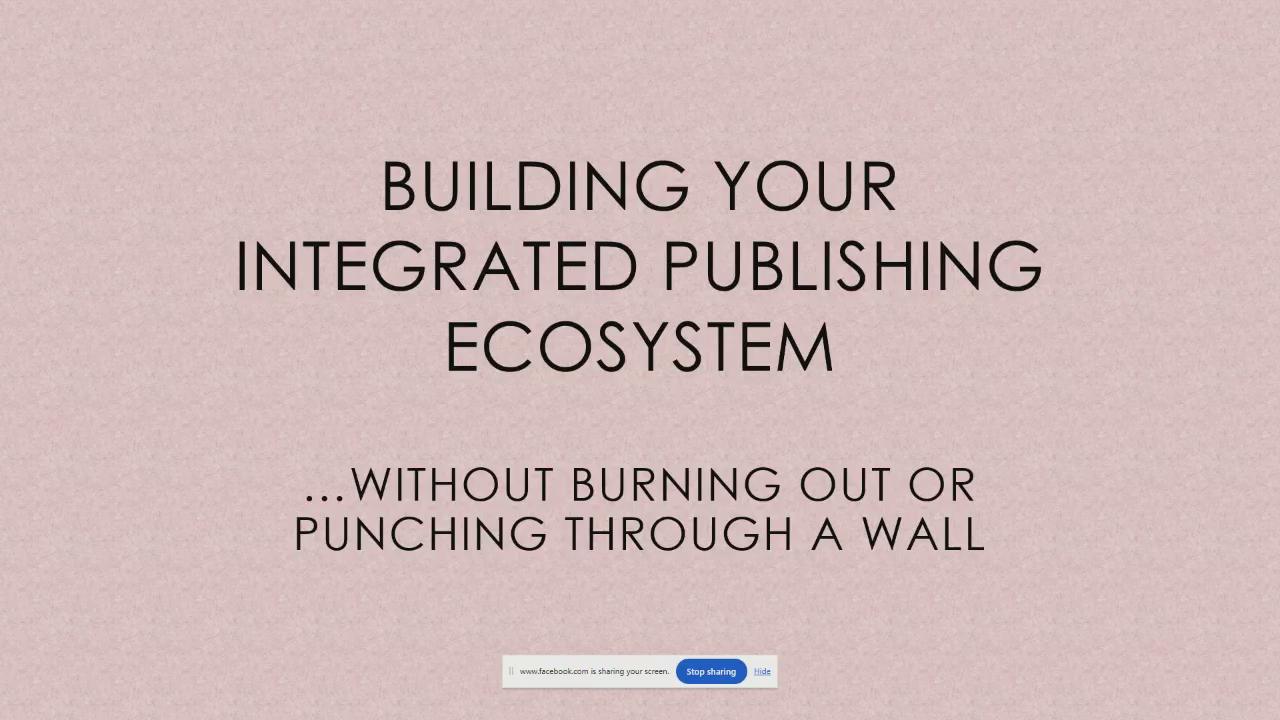
Hapitalist members also have access to both our transformational workbooks and digital brain which can help them individualize everything they read 24/7/365.
Transformational Workbooks
Strategic
Russell Nohelty
My digital brain
Hi, As a Hapitalist member, you have access to my “digital brain” I’ve uploaded all my interviews, course transcriptions, podcast interviews, books, and just about everything I’ve ever said about building a creative career into a Delphi brain that allows you to chat with “me” any time day or night, in any language, about anything related to your creative blocks.
Russell Nohelty
You are thinking Newtonian, and I need you to think quantum
We’ve all met people who work hard and are still stuck in hummus. Let’s be fair. We’ve probably all been people who were stuck, and we likely are people who are still stuck in at least one part of our lives.
We wake up early, grind through the days, and check off tasks like life is one big spreadsheet.
And yet, we don’t get very far.
Meanwhile, someone else who seems a little scattered, maybe even impractical, suddenly leaps ahead, landing the opportunity, the audience, or the success everyone else has been chasing.
What’s the difference?
We’re gonna have to get a little weird with it to explain this one, but in short the universe is unfathomably weird, so you gotta be at least a little weird to groove with it.
Let’s start with how we think the universe works.
Newtonian physics is the fundamental structure we’ve built our entire society around for eons. For centuries, we believed the universe functioned like a perfect machine. If you knew the starting point, you could calculate exactly where an object would be at any moment in the future.
Success, according to this worldview, should work the same way.
- Do the work → Get the result.
- Follow the formula → Achieve the outcome.
- Input = Output.
- Cause → Effect
This is Newtonian thinking at its core. It’s linear, predictable, and comforting. If I check all the boxes, success should arrive right on schedule.
It would be so nice and convenient if the world worked that way.
Unfortunately, it turns out that model only holds in the observable world. When you drill down to the microscopic, we discover that particles don’t move in neat, predictable lines. They exist in a cloud of possibilities.
A quark might be here, or it might be there. They can create and destroy energy seemingly at will. They can move in directions that shouldn’t be possible. Gods forbid you look at one because that changes its behavior in ways that will break your brain.
It’s batty.
So, at a base level, things looks pretty normal, but deep below the surface our universe is really built on a foundation of chaos, nonsense, and unquantifiable potential.
It’s this unseen engine for unpredictability that actually guides the flow of our universe and we ignore it at our peril, or at least our annoyance.
Every conversation, every project, every risk you take creates possibilities that collide around in chaotic and unpredictable ways following the laws not of Newtonian physics but of quantum entanglement.
Quantum thinkers don’t just grind. They play in the field of possibility. They know that:
- One connection at a conference can change everything.
- One book launch can open ten unexpected doors.
- One piece of content might flop, but another might go viral and rewrite your entire career.
It’s not about control. It’s about increasing your odds and staying open to the unexpected. It’s about being focused with what you want, not how you get it.
Most of us were trained in Newtonian thinking. We grew up with report cards, syllabi, and standardized tests. Work hard, get good grades. Follow the instructions, get the gold star. That’s how school works.
But success in life doesn’t follow that linear path anymore, if they ever did.
The old career ladders no longer exist. There’s no linear climb to tenure, no clear pipeline from debut to bestseller. We live in an economy that punishes predictability. The safest path that everyone followed for generations is now the one most likely to collapse under you.
Quantum thinking matters because uncertainty isn’t the exception, it’s the rule. The people who thrive aren’t the ones who follow the formulas most perfectly. They’re the ones who stay adaptable, playful, and open to possibility when the formulas stop working.
This isn’t just theory, either. I live it every day.
I went to the first year of our Future of Publishing Mastermind (rip) wanting to start a podcast, but having no idea how it would happen. Then, on the last day, I stopped Lee Savino in the hall after her presentation and we got to talking.
Completely randomly, I pitched her this idea I had and she flipped for it. We literally started the Six Figure Author Experiment podcast two weeks later. I didn’t know Lee before that, and she only came because our organizers knew her…
…and at the last minute. We didn’t book them until a month or so before the show, and on a whim.
This kind of stuff constantly happens to me.
After Writer MBA closed down, I took meetings with all my friends to figure out my next move. I had no idea what it would be, but I knew I wanted to work in software and tech, specifically something AI related so I could stay ahead of that curve.
Ideally, I wanted to find a company working in the AI space that empowered writers with all the cool things AI could do without saddling them with the burdensome issues that pop up when writers think about AI.
I didn’t think that was actually possible, though. Then, out of the blue somebody called me a couple weeks after we met to tell me they were ending a contract and the company needed somebody else to slide in and fill their shoes.
Guess what? It fit every one of my criteria. That’s how I started working with Plotdrive, which I truly do believe is the best word processor in the world. Again, I had no idea how it would come, but I knew what I wanted to happen.
I put it out into the universe, and it delivered. You might think this only works for successful people, but my experience with it started back in one of the least successful periods in my career.
Back in 2020, I was trying to sell my non-fiction business. It had become burdensome and I was getting nowhere with it. I was thinking about who I wanted to buy it, and Monica’s name popped into my head. We hadn’t talked for a long time, but I put in my brain that it would be amazing if somebody like Monica came along with the influence to help bring my work to new people.
I posted on social media that I was looking for a buyer and guess who was one of the first people to comment. That’s right, Monica. The last five years unlocked for me in that moment because I stopped thinking Newtonian and started thinking quantum.
If you stick only to Newtonian thinking, you end up frustrated, wondering why you did everything right and still nothing seemed to work.
Newtonian thinking tells you to double down, work harder, and follow the rules more precisely, but doubling down on the wrong framework just digs the hole deeper. Quantum thinkers understand that success is probabilistic. You can’t guarantee outcomes, but you can stack the deck in your favor.
- Experiment widely. Instead of betting on one perfect formula, quantum thinkers test multiple approaches. Some will fail, but others will hit bigger than expected.
- Leverage networks. In Newton’s world, momentum depends only on mass and velocity. In the quantum world, particles interact in weird way, and so do people. Who you know, and how you resonate, matters as much as what you do.
- Stay open to collapse. You never know which opportunity will collapse into reality. That’s why quantum thinkers show up consistently, knowing today’s effort might not pay off until years later.
- Embrace uncertainty. Instead of fearing the unknown, they accept it as part of the game. Uncertainty is not failure; it’s possibility.
Now, I’m not saying Newtonian thinking is bad. In fact, you need it for lots of things. Newton gives you discipline, consistency, and structure. You can’t write a novel, launch a product, or build a business by accident. You need routines. You need habits. You need gravity to keep you grounded.
But Newton alone won’t get you the breakthrough. It will keep you stable, but it won’t help you leap. By doing the same inputs, all you’ll get back are the same outputs.
That’s where quantum comes in. Quantum is the spark of wild collision you never saw coming.
Let’s break it down into a practical comparison:
Newtonian mindset:
“If I write X books, I’ll make Y income.”
“If I follow this formula exactly, I’ll succeed.”
“I won’t try unless I know it will work.”
Quantum mindset:
“Each book increases the probability of hitting with readers.”
“I’ll test multiple strategies, knowing most won’t hit, but the few that do will pay off disproportionately.”
“I’ll create conditions where luck can find me.”
Newtonian thinking seduces you with certainty. It whispers that if you just check the right boxes, if you just follow the rules a little tighter, the outcome is guaranteed. That illusion is comforting, but it’s also deadly.
Life doesn’t reward people who play it safe.
Newtonian thinkers get stuck in the hamster wheel. They over-plan. They polish the project that never launches. They wait for the moment when all the conditions line up, and by the time it does, the world has already moved on. They cling to formulas that used to work, wondering why they keep coming up short.
Quantum thinkers, on the other hand, are messy, unpredictable, and maybe even a little reckless, but they’re the ones making leaps while everyone else is grinding in place. They aren’t afraid of uncertainty. They treat it as fuel. They know the world isn’t a machine, it’s a storm, and the only way to survive a storm is to move with it, not against it.
That’s why you can’t afford to stay Newtonian. The world has changed. The formulas are broken. If you want to thrive, you’ve got to stop chasing guarantees and start chasing possibilities.
Here are some shifts you can make today to start thinking more quantum:
- Launch before you’re ready. Perfection is Newtonian. Iteration is quantum.
- Expand your surface area for luck. More experiments = more chances for probability to collapse in your favor.
- Invest in resonance. People connect with you, not just your output. Show up authentically.
- Detach from linear timelines. Success doesn’t arrive on schedule. Sometimes the seed you plant today doesn’t sprout for years.
- Stay playful. Quantum success isn’t mechanical; it’s exploratory. Play is where breakthroughs happen.
- Follow threads of energy. Pay attention to where conversations, ideas, and projects light you up. If something feels alive, follow it. Energy is a clue to potential probability collapse.
- Stack small experiments. One experiment might not hit, but ten stacked together change your odds dramatically. Momentum builds as possibilities overlap.
- Build loose ties. Your next leap probably won’t come from your best friend. It’ll come from the acquaintance you meet at a conference, or the person you DM on a whim. Weak ties often unlock the biggest doors.
- Ask bolder questions. Instead of “How do I guarantee success?” ask, “What would increase my odds?” That subtle shift reframes your actions from control to possibility.
- Leave room for surprise. Don’t over-schedule every hour. Leave cracks in the system where randomness can sneak in. The serendipitous encounters can’t happen if you’re too rigid to notice them.
The idea behind this is that instead of intentionally taking the next “logical” step to achieve your outcome like Newtonian thinking would have you do, you are instead focused on increasing the probability for “good chaos” to work in your favor.
It’s not that you aren’t strategic. You are just strategic in a way that looks wholly different to anything you’ve done up until this point.
By intentionally entering situations and interacting with people that expand your probability field, you are inviting more of these agents to work in your favor. This is why writer’s conferences are so powerful.
It’s not just that there are lots of people there. You could go to a Dairy Queen for that.
It’s because they’re filled with people who are intentionally on the same journey as you. They’ve all been attracted by the location, the speakers, the organizers, and the vibe to go on this journey with you. Everyone there is highly activated and very likely to be able to help you break through your blocks and move your forward.
I have no idea who can help you, but it’s almost guaranteed that if you’re in the right rooms, somebody can help you move forward. You just have to hold loosely who that might be, and how it comes to you.
By walking through the door and being open to possibilities, you allow the universe to guide you into the right directions to put you in a position to win.
This is what I mean by good chaos.
Those spontaneous meetings that end up being the best part of any conference? That’s good chaos, born from dropping that schedule and allowing probabilty to work in your favor.
You win, then, by putting yourself into as many situations as possible where good chaos can work in your favor. It means being very strategic about what you want, but holding loosely how you get it or where it comes from.
Unfortunately, what people often do instead at conferences is try to block out every minute of every day, giving order to chaos and thus shutting themselves off to the chaotic good nature of an event like that.
This is exactly how Newtonian thinking can seriously impede your success. You miss out on serendipity to seek perfection, but the universe just doesn’t work like that.
This effect doesn’t just happen in person, either. The reason a mailing list is powerful is because it aggregates and focuses good chaos. The more people see your message, the more people get inspired by it.
I am constantly surprised which people I’ve met over the years have stayed on my mailing list, and which have fallen off of it. Many of my best friends have never subscribed, and yet I constantly meet people who have been on my list for years and I’ve never talked to before.
Some of the most powerful people in publishing read my work, while others couldn’t care less, or even have an active distaste for me. I have no control over that, but I do have control over what I put out into the world, the situations I enter, and how to walk through the world while I’m there to attract the right people to me.
After that, I have to trust that good chaos will work in my favor, and connect me with the people who resonate with what I have to say.
That doesn’t means I’m passive. I actively ask people to join my mailing list when appropriate, host events to build my list consistently, and follow up with people after meeting them to stay in contact.
I am very intentional and strategic, just not in a Newtonian way. I have no idea what will come out of meeting good people. I just know that if you are good to good people, good things will happen.
It’s this kind of good chaos that people don’t understand at the beginning of their career, and it’s the secret to why any online community is successful. It’s the reason behind why you should focus on growth even if you don’t want to monetize. It’s why influence compounds over time. It’s the reason nobody is paying attention to you right now.
If you want people to pay attention, you need much, much, much more good chaos working in your favor.
Success isn’t a machine you can crank. It’s a probability field. Newtonian thinking will get you started. It teaches discipline, consistency, and structure, If you want true breakthroughs, you have to go quantum.
That means showing up, stacking experiments, nurturing connections, and letting go of the illusion of control. It means trusting that somewhere in the messy field of possibility, your big leap is waiting to collapse into reality.
So, are you grinding in Newton’s machine, or are you dancing in the quantum field?
Because this isn’t just a metaphor, it’s tomorrow morning. When you sit down at your desk, you can either force yourself through another spreadsheet of tasks, hoping the formula finally clicks…or you can leave a little space for possibility to sneak in.
You can take one risk, send one bold email, launch one imperfect thing into the world. Newton will keep you moving forward. Quantum will change your trajectory.
Which life do you want to live?
Success is a trailing indicator...
Most writers believe success is a leading indicator that shows they’ve arrived.
Whether that’s the book deal, hitting the bestseller list, being offered the speaking invitation, or the profile in Publishers Weekly.
These are the markers we chase, the evidence we’ve crossed some invisible threshold into “made it” territory.
We watch for them like sailors scanning the horizon for land.
It’s really the inverse, though. What I’ve learned working with highly successful authors for over a decade is that success is actually a trailing indicator.
It’s not the beginning of something. It’s the evidence of something that already happened internally, often months or years before the external world caught up.
Heather Hildenbrand and I talk about this often, but it’s something that only really makes sense after you see it play out as many times as we have, with a diverse case of author success stories.
Think about the author who lands a six-figure deal. By the time that contract appears, something fundamental has already shifted.
- They’ve already developed the discipline to show up at the page.
- They’ve already pushed through dozens of failed drafts.
- They’ve already cultivated the ability to hold a vision while everyone around them sees nothing.
The deal doesn’t create the writer, it reveals them.
What about the novelist whose third book finally breaks out? Their success isn’t what changed them. The change happened somewhere between books one and two, in the quiet months when they decided to keep going despite the silence, or maybe when they chose to write the book that scared them instead of the one that felt safe.
The bestseller list simply reported what was already true.
This pattern repeats itself across every success story I’ve witnessed.
The award-winning memoirist had already done the therapeutic work to face her trauma before the accolades arrived. The debut novelist who “came out of nowhere” had actually spent seven years learning story structure in the predawn hours before his day job. The writer who finally landed her dream agent had already stopped writing to the market and started writing toward her obsessions.
In every case, the external recognition was a lagging confirmation of an internal transformation that had already taken place.
Before the external markers arrive, something internal solidifies. A shift happens in how you see yourself and your work.
You stop waiting for permission and develop internal authority, the quiet certainty that what you’re doing matters, regardless of who’s paying attention.
This shift isn’t dramatic. There’s no lightning bolt moment. Most writers can’t even pinpoint when it happened. They just notice one day that they’re approaching their work differently.
- They’re writing because the work demands to be written, not because they’re chasing validation.
- They’re making decisions based on craft, not fear.
- They’re in conversation with the work itself, not with their imagined critics.
This is the actual leading indicator. This is what precedes everything else.
I’ve seen this shift take different forms. For some writers, it arrives after a devastating rejection when they realize they can either quit or write anyway, and choose anyway. For others, it comes during a period of obscurity so long they finally stop performing and start exploring.
Sometimes it emerges from a workshop or a book or a conversation that reframes everything you thought you knew about your work, but however it arrives, the shift is unmistakable once it’s happened.
You stop asking “Is this good enough?” and start asking “Is this true?” You stop wondering if you’re a real writer and start doing the work that real writers do. You stop waiting for the industry to validate your existence and start validating your own choices.
This internal authority isn’t arrogance and it’s not the belief that everything you write is brilliant, but quieter and more durable realization that you know what you’re doing and can trust yourself.
When you understand that success is a trailing indicator, everything changes.
You stop waiting for external validation to prove you’re a real writer. You stop believing that the book deal or the award or the review will transform you into someone different.
You recognize that the transformation has to happen first, and that it’s entirely within your control, and start focusing on the things that actually create sustainable success: showing up consistently, developing your craft, building your capacity to handle uncertainty, learning to trust your own judgment.
These aren’t sexy, and won’t make good Instagram posts, but they’re what successful writers do in the years before anyone’s watching. Your current lack of recognition isn’t evidence of your lack of talent, but simply evidence that the trailing indicators haven’t caught up yet.
When a publisher passes on your manuscript, they’re not rejecting your potential. They’re making a business decision based on current market conditions, their existing list, their editorial capacity, and a dozen other factors that have nothing to do with whether you’re becoming the writer you need to become.
The rejection is data, not verdict.
It changes how you relate to other writers’ success, too. When a colleague lands the deal you wanted, you can recognize that their external success is trailing behind internal work you didn’t witness. Their trajectory says nothing about yours. Your leading indicators are just operating on their own timeline.
There’s something deeply freeing about recognizing that success trails behind internal change rather than leading to it.
It means you don’t have to wait. You don’t need anyone’s permission to become the writer you want to be. You don’t need the book deal to start acting like a professional. You don’t need the audience to start respecting your own time and work.
You can make this internal shift today.
You can decide that your writing matters. You can commit to the craft. You can build the habits that will sustain you through the long middle of a career.
And then, months or years from now, the trailing indicators will arrive. The opportunities will appear. The recognition will come, not because they created something new in you, but because they finally caught up with what you’d already become.
It means you can stop refreshing your email for agent responses and use that time to study a craft book. It means you can stop comparing your debut novel to someone else’s tenth and instead focus on what you’re learning from this project. It means you can stop trying to reverse-engineer the market and start building the body of work only you can create.
The writer who understands this distinction operates differently in the world.
They are less fragile because their identity isn’t hostage to external validation. They’re more consistent because they’re not waiting for motivation from outside sources. They’re more original because they’re listening to the work rather than to the marketplace’s echo chamber.
They’re also, paradoxically, more likely to achieve the traditional markers of success because the habits and mindsets that create internal authority are precisely the qualities that eventually produce publishable work.
Here’s what this looks like in practice:
- Start treating your writing time as non-negotiable. Not because you have a contract, but because that’s what a professional writer does. Block the hours. Protect them. Show up even when no one would notice if you didn’t.
- Invest in your craft development. Take the workshop. Buy the book on narrative structure. Study writers who do what you want to do. Successful writers don’t stop learning after they “make it.” They were serious students long before anyone was watching.
- Build your capacity for uncertainty. Practice sitting with not-knowing. Get comfortable with the ambiguity of a draft that isn’t working yet. Develop your tolerance for the space between effort and outcome. This capacity is what allows writers to attempt ambitious work.
- Trust your own judgment. Start making decisions based on what serves the work, not what you think will impress others. When you’re choosing between the safe chapter and the risky one, choose risk. When you’re deciding whether to pursue the concept that excites you or the one that seems more marketable, pursue excitement.
- Create your own measures of progress. Instead of tracking agent responses or social media followers, track craft wins. Notice when you nail a character’s voice. Acknowledge when you solve a structural problem. Recognize when you write a sentence that surprises you. These are the leading indicators that matter.
The success will come. It’s a trailing indicator, remember? It will eventually catch up to the person you’re becoming.
But the becoming? That’s the only part you can control.
And it’s also the only part that matters.
Stop chasing the markers. Stop waiting for external validation to tell you you’re ready.
The external validation will arrive or it won’t. But you’ll be a writer either way. You’ll have done the work that matters. You’ll have built something real.
And when the trailing indicators finally catch up you won’t need them to tell you who you are.
Problem-market fit
Lining up the right problems with the right solutions is something that everyone deals with all the time. Since this is where I live the vast majority of my existence, I thought I would share with you the three questions I ask all the time, and have been the most helpful reframes inside my community.
What am I missing here?
This is my favorite single question I’ve ever asked in my whole career. No matter how much knowledge we have, we are always filtering through our own lived experience and always missing something.
As Donald Rumsfeld said: “There are things we know we know. We also know there are known unknowns; that is to say we know there are some things we do not know. But there are also unknown unknowns—the ones we don’t know we don’t know.”
He got a lot of flack for it at the time, but there’s not a month that goes by I don’t think about, quote, and/or ruminate on this idea. No matter how much we know, there are always unknown unknowns, and this question allows us to acknowledge that truth and pull them out of ether without judgment.
Is that even true, though?
Recently on a call, somebody brought up the fact that online connection wasn’t the same as in person connection, which caused me to push back and ask “What if connection could be the same, though? What would that look like?”
Connection being inherently different online than in person doesn’t actually make sense when you think about it, does it?
I mean we write books that people connect to without ever hearing our voice. We text friends and connect without seeing them. Telephones are still great at developing connection even though we’re not in the room together, so it’s not like people have to be in the same place to connect. Even Zoom calls with my neice are amazing at connecting with her.
I don’t discount that online connection doesn’t feel the same all the time, but sometimes it does, right? Sometimes, in the comments of a post, you’ll connect with somebody very deeply, or through a group text chain, or even in an email like this one.
Why would I even bother to write this and send it out if I thought deep, meaningful online connection wasn’t possible?
It would be pointless, and most every email we send is likely built on this same premise.
In fact, Hapitalist was built on the premise that online connection can be as good, or almost as good, as in-person connection, and it broadly works pretty great. Funnily, this person not only found me online originally, but then built a connection with me deep enough to come to our mastermind in person, and then joined Hapitalist, almost exclusively by connecting with me online.
So, something about online connection works, and we should be asking how we can get more of that, instead of making a blanket statement that blocks our ability to solve our real problem.
I love The Royal Tennebaums, and the quote I think about all the time related to this topic is Owen Wilson saying “Well, everyone knows Custer died at Little Bighorn. What this book presupposes is... maybe he didn’t.”
So, what is the presupposition that you can turn on its head to help unblock what’s blocking you? Because that’s where you’ll likely have a breakthrough.
Is this even solving for the right problem?
In another recent call, somebody said “I would love to grow my audience by going to live shows, but I don’t think they’ll be profitable.”
This made my ears perk up, and I pushed back saying “But that’s an income block. You can’t solve an audience problem using income logic”.
Last year, I spent $50k growing the audience to this publication, which left me -$28k in the hole. It caused a massive income problem, but it solved my audience problem.
Now, I don’t recommend blowing so much money fixing one problem only to cause another, but we often limit our problem solving by throwing up irrelevant roadblocks.
Yes, losing money at conventions could cause an income problem, but if you have a job and stability, that might not even be a problem. Maybe you can blow money doing unprofitable things to bolster future you. After all, that’s one of the great things about having a full-time job, right?
If you have the money to blow, or a way to replace it, then the income problem isn’t actually a problem, and yet it’s blocking you from solving your actual audience problem.
The only reason I was able to blow so much money on growth is because I spent several years building up a nestegg for exactly that purpose. Yes, it meant I had to live low on the hog for a long time once it failed, but it didn’t bankrupt me, and I’m roughly back to how much money I had in my war chest after chilling out on audience growth and book production for a year.
If I put up an income block, even though I didn’t have one, it would have prevented me from solving my audience problem.
So, what really is your biggest block and how can you actually solve it?
You can’t brute force success
I’ve spent most of my career trying to brute-force the universe.
I thought that if I did the work, and not just any work, but the right work, then I’d get what I wanted.
And what I wanted wasn’t outrageous. At least not to me.
- I wanted to write the books of my heart.
- I wanted to reach a loyal audience.
- I wanted to build a thriving business.
- I wanted to be respected, paid, and read.
I thought that was the depth of my bullshit, but it really went deeper…because I also wanted it my way.
- I wanted it on my weird horror comedy comics, even though there wasn’t a big audience for them.
- With massive comic book store distribution, even though only a couple hundred stores in the world back in 2011 stocked indie comics.
- And I wanted it immediately.
- Without having to do that thing over there that felt gross or stupid or beneath me.
If it wasn’t the exact result I pictured when I closed my eyes, then it wasn’t success. Then, when things didn’t unfold like that, I didn’t feel disappointed. I felt betrayed.
Because I had followed the rules. I had played the game. I had sacrificed. Built systems. Shown up.
So where was my reward?
Where was the neatly wrapped success story all the books and courses and mastermind groups promised me?
Well, it was right there staring me in the face…I just refused to see it. Back in 2015, I started to get labeled “the Kickstarter guy”. People started to find me, even a decade ago, and ask for help with their campaigns.
I bristled, and ran away. I didn’t want that kind of success. I wanted to be known for my work, not a platform. I wanted to be an author, not a speaker. I wanted—
Ugh, even writing it now makes me want to smack myself. Like, didn’t I start this saying I wanted to be successful? And wasn’t people paying me to do work I was good at and enjoyed success?
Why was I so obtuse when I was younger?!
It’s so frustrating, and it wasn’t until 2021, when Monica told me she was going to use my work as a guide to co-write a Kickstarter book with me, that I finally had no choice but to become “The Kickstarter guy”…
…and guess what? It’s great to be that guy.
I constantly get to talk, strategize, and hang out with the most successful authors in the world, get paid for my knowledge, and get emails from giddy people that turned their careers around thanks to what I taught them.
That is success, isn’t it? So, what was my problem all those years? So, so many things, but it boiled down to the fact that I was way too worried about influencing the how things happened, instead of focusing on the what I got out of the deal.
What I wanted was to wake up, do things I liked with people I liked, and have frictionless ease bringing new projects into the world. It would have been nice if it was in comics, or novels, but what I really wanted was the space and freedom to do whatever caught my fancy.
And I, largely, got that, despite the fact that it didn’t happen how I thought it “should”. When I stopped focusing on the “how” and focused instead on the “what”, a whole host of new possibilities opened up to me.
The should held me back. It stuffed me into a very narrow lane filled with other people when there were open lanes to success everywhere else.
What nobody tells you, or maybe they do, but you don’t actually believe it until it happens to you, is that you don’t get to dictate the path. You don’t get to choose how you become successful. You only get to choose what you’re willing to fight for.
You get to name:
- The kind of life you want.
- The kind of work you want to do.
- The kind of people you want to reach.
- The kind of impact you want to have.
But you don’t get to script the moment it happens. You don’t get to choreograph who notices, or how they find you, or which version of your work becomes the one that sticks.
Even if you somehow get all the things you ever wanted, and the book of your heart becomes a household name, there will be all sorts of chaos associated with it that you don’t expect. You’ll be saddled with things you don’t want, have to do things you don’t like, and have expectatations foisted on you that you couldn’t imagine.
And if you hold the path too tightly, if you cling to the idea that it must happen in this one specific way or else it doesn’t count, you will miss everything good that’s trying to find you.
You’ll say no to the thing that wants to work because it doesn’t look like the thing you thought would work. You’ll sabotage yourself in the name of purity. You’ll burn your career down in defense of a version of the dream that maybe never really served you in the first place.
And I get it because I’ve done it. I’ve thrown tons of great opportunities in the trash because they didn’t arrive wearing the right costume.
Eventually, I had to learn to stop making deals with the universe. I had to stop saying “I’ll do this if you give me what I asked for exactly the way I want it.”
It’s about getting out of your own way.
Because the truth is, the universe is a terrible negotiator. It doesn’t barter. It doesn’t owe you clarity. It doesn’t care about your timeline, but it does reward momentum, iteration, and stubborn clarity of want.
Not how. Just what.
So, I stopped fighting for the how. In 2022, after my first Kickstarter book blew up, I turned into the skid. We built the Kickstarter Accelerator and I started getting booked to speak about Kickstarter everywhere. I made connections with everyone. I suddenly went was decently networked to amazingly networked, and people were talking about me.
I stopped needing it to look a certain way, sound a certain way, or arrive through a specific door.
And the moment I did? Weird things started working. I could take that momentum and turn it into things I cared about more than just Kickstarter. I was able to thread it into direct sales, and capitalism, and taking control of your career, and even my weird fiction books.
Not just in a general sense, either. For years, I’ve been trying to build a successful membership. I developed an app, hosted a Circle community, tried a Patreon, and more. Each time, I was trying to force a community to grow somewhere it didn’t have any interest in growing.
It wasn’t until I found Substack that I started having success. I don’t think I had 100 members across all my previous communities combined, but here I got that many with my first launch. I’ve grown it to over 1,000 members, and almost $30k in annual revenue.
It wasn’t exactly how I wanted it to happen, but once I let go of that and focused on what I wanted to happen, success started to unfold.
Even back in the day, the anthology that broke my career open, Monsters and Other Scary Shit, only happened because instead of writing my esoteric novels I asked people what they wanted (which was monster comics) and gave it to them. I didn’t really have any special love for monster comics, but I loved my audience, and I loved the creators, and my life has never been the same because of it.
Success isn’t a straight line. It’s a labyrinth. You don’t need to know how you’re going to get there. You just need to be ruthlessly clear about what you want, and willing to meet it wherever it shows up.
It’s likely going to be ugly. It’s probably going to look nothing like you planned. But that doesn’t mean it’s wrong.
That doesn’t mean it doesn’t count or that it isn’t working. It just means you’re finally starting to understand the rules of this game.
The Great Paradox of writing: How to hold audacity and empathy at once
Every time we sit down to write, we step onto a tightrope strung between two towering cliffs.
On one side is audacity. Boldness. The unflinching belief that our voice matters.
On the other side is empathy. Tenderness. The deep well of understanding that our words land inside other people’s lives.
To be a great writer, you must cultivate both audacity and empathy, even though they live at opposite ends of the vulnerability spectrum.
You must have the audacity of someone who’s never been wounded and the empathy of someone who’s seen too much. Most writers lean heavily into one or the other. Few manage both. The ones who do? They’re the ones who change the world.
The Power of Audacity
Let’s talk about audacity first. Audacity is what gets you to the page. It’s what makes you think you have something to say that the world needs to hear.
It’s that stubborn inner fire that burns even when nobody’s asking for your story, when nobody’s knocking on your door, when rejection letters pile up higher than your kitchen table.
Audacity is the act of saying “My voice matters. My story matters. I’m going to put it into the world anyway.”
Without audacity, there is no art. There are no novels, no songs, no films. Audacity is the raw courage to make something from nothing. It’s walking into the marketplace of ideas with your hands trembling and your heart hammering and saying, “I belong here.”
But audacity by itself? It’s dangerous.
Audacity without empathy is arrogant. It’s shouting into the void without caring who you’re hitting in the crossfire. It’s creating characters who are cardboard cutouts, pushing plots that bulldoze nuance, delivering messages that lecture instead of connect.
Audacity without empathy makes you the worst kind of writer: the one who demands attention but doesn’t deserve it.
And readers can smell it a mile away.
The Power of Empathy
Now let’s talk about empathy. Empathy is what connects you to other human beings. It’s what lets you slip out of your own skin and walk around in somebody else’s life for a while.
Empathy is what lets you write a grieving widow without ever having lost a spouse. It’s what lets you paint a world you’ve never lived in and make it feel more real than the one outside your window. Empathy is the golden thread between your heart and the reader’s. It’s the bridge that turns words into feeling.
But empathy without audacity?
That’s a quieter death. Empathy without audacity means you never finish the story. You never submit the manuscript. You never pitch the editor or hit “Publish” on the blog post.
Empathy without audacity is self-censorship in the name of kindness. It’s the fear that your words might hurt someone, so you don’t write at all.
While that might feel noble, it’s actually cowardice dressed up in compassion, because the truth is, silence doesn’t save anybody. Sometimes, what saves people is your story. Your messy, complicated, imperfect, audacious story.
Why Marketing Feels So Icky
So many writers recoil from the very idea of talking about their work. Marketing feels… icky. Gross. Pushy. Like we’re standing on a street corner in a bad suit shouting, “Buy my book!” through a megaphone made of desperation.
That’s because marketing done wrong is pure audacity.
It’s shouting “Look at me!” without giving anyone a reason to care. It’s performative. It’s often driven by fear and scarcity and the desperate need to be seen. That kind of marketing feels salesy, because it is.
But when you overcorrect and over-index into empathy your marketing becomes hesitant. You’re terrified of bothering people. You hide behind soft language and vague invitations. You don’t follow up. You whisper when you should speak clearly.
Worst of all… you don’t actually make the offer.
That’s empathy without audacity, and it doesn’t work either. That’s why the most common advice I give to authors is that if they want somebody to buy their work, then you have to tell them it is for sale.
At the end of the day, great marketing is nothing more than storytelling in service of connection. It’s not about convincing someone to buy. It’s about inviting the right people into a story they already care about.
The same principles that make great fiction — emotional resonance, clarity of voice, knowing your audience — are the same ones that make marketing feel good instead of gross.
Marketing isn’t a separate task from writing. It’s writing — aimed at the people you want to serve to show them ways you can serve them.
It’s not either/or. It’s both.
- You need the audacity to believe your story matters — and to tell it boldly.
- You need the empathy to understand your reader — and to frame your message in a way that meets them where they are.
That’s how you create a bridge. That’s how you market without selling your soul.
And if it still feels scary? That’s okay. Scary is a good sign. It means you care. It means you’re doing it with your whole heart.
Walking the Tightrope
So how do we hold both? How do we stay bold without becoming reckless? How do we stay tender without becoming paralyzed?
- First, we honor the dance. Writing is not an act of perfection. It’s an act of perpetual balancing. Some days, you need more audacity to push through. Some days, you need more empathy to listen and refine.
- Second, we separate drafting from editing. When you draft, you must be all audacity. Let it rip. Say the thing you’re scared to say. Take the risk. Trust that you can always walk it back later if you need to. When you edit, you must be all empathy. Imagine your reader. Imagine the wounds they carry. Shape your words to meet them, not to wound them further.
- Third, we stay connected to real humans. Great writing is not a solo sport. It’s a conversation. Keep a few trusted readers around you. People who can tell you when you’re being too harsh or too soft. People who love you enough to call you out.
- Fourth, we forgive ourselves when we get it wrong. You will overstep. You will hesitate. You will fall off the tightrope. That’s part of it. The only failure is giving up the walk entirely.
At the end of the day, the best writing lives in sacred tension.
- It’s brave and it’s kind.
- It’s unflinching and it’s compassionate.
- It’s the scream and the embrace, the battle cry and the lullaby.
The world doesn’t need more loud writers who say nothing of value, and it doesn’t need more gentle writers who never dare to speak.
It needs you. Fierce and feeling. Brave and broken. Audacious and empathetic.
Hold both.
Write anyway.
That’s the work.
That’s the magic.
That’s the mystery.
Sustainable productivity vs. sustainable monetization
If you’ve been in authorship for any length of time, you’ve probably heard people talk about “sustainability” in order to prevent burnout. The conversation around sustainable productivity and slow growth often emphasizes the personal benefits of aligning work with natural rhythms and patterns, such as reducing burnout, enhancing creativity, and fostering a healthier work-life balance.
Writers and content creators are encouraged to cut back, focusing on quality over quantity, and to create in ways that are more attuned to their personal energy levels and creative flow. This approach can lead to a more fulfilling and sustainable creative process, where the pressure to constantly produce is replaced by a more mindful and intentional pace.
However, what often gets overlooked in this discussion is the impact that sustainable productivity can have on income. When you slow down and produce less, especially in industries where output is directly tied to earnings, there can be a significant reduction in revenue.
If you drop your output from 12 books a year to 2 books a year because that’s what you can sustain, then you have to figure out how to make up that drastic reduction in revenue or you’re just going to replace burnout of one type with burnout of another type.
You can’t sustainably create content if you can’t sustainable monetize that content.
We usually talk about sustainable productivity as a function of our own work, but sustainable monetization requires a broader thought process. It should take all the stakeholders into account, including the ecosystem of authors, and readers, and publishers, who collectively work together toward creating an environment that is mutually beneficial for all parties.
Unfortunately, the publishing industry is not set up to work that way, and neither is capitalism on a broader scale. It’s set up so that every person is incentivized to maximize their own needs while giving the least to the collective as possible.
This is incredibly short sighted, and why America’s infrastructure is crumbling. Collectively, we can build enough leverage into society to land on the moon. However, if we don’t all contribute a little bit, we don’t have enough to fill the potholes on main street.
In today’s society, we celebrate those who amass the most wealth and resources for themselves, viewing it as a mark of success and intelligence. Individuals and businesses are praised for their shrewdness in maximizing profits, cutting costs, and leveraging every possible advantage to come out on top.
This “winner takes all” mentality glorifies self-interest and often incentivizes actions that prioritize personal or corporate gain over the broader societal good. For instance, executives who drive up stock prices by slashing jobs or outsourcing labor to cheaper markets are often rewarded with bonuses and praise, while the broader impacts on employees, communities, and economic stability are overlooked.
On the flip side, those who choose to invest in the collective goodm, whether through paying fair wages, contributing to social programs, or supporting environmental initiatives, are often criticized for not maximizing their profit potential. Companies that prioritize ethical practices or sustainability over short-term financial gain can be seen as naive or inefficient, and individuals who advocate for higher taxes on the wealthy or more robust social safety nets are sometimes scorned as unrealistic or anti-business.
This scorn stems from a deeply ingrained belief that the primary goal of any financial endeavor should be to extract as much value as possible for oneself, even if it means skirting ethical lines or neglecting the welfare of others.
This dynamic creates a cultural environment where contributing to the collective good is not just undervalued but actively discouraged. Maybe, on a small scale we can build a community that looks out for each other, but once you get beyond 150 or so players, all of that collapses. I am deeply sympathetic to socialism, but I can also admit it doesn’t work on a societal level. Neither does libertarianism, though, which is what’s left when we over-index for the needs of each individual actor.
As an individual actor, being self motivated by making the optimal decision to maximize your own needs is almost always the correct choice, especially in the short term. If you know everyone else will make the selfish choice, then game theory says the only logical move is to also do the same thing.
But to what end?
Each individual actor might not do much damage to the ecosystem by themselves, but collectively they become like a horde economic locusts picking everything clean as they carve a path of destruction through an industry. When you think that way, you create and perpetuate an industry that offers asymmetrical upside for people who act in their own self interest at the expense of anyone else.
You might say “but I’m not talking about systemic issues. I just want to monetize my own work in a sustainable way”, and that’s great, but what happens when a customer leaves your perfectly balanced ecosystem and runs headlong into a creator who’s only interested in making the most money, even at the expense of the customer? Worse, what happens when they run into that person first? Then, they probably won’t even give your work a shot.
This is a rampant problem in the coaching space, where we are constantly trying to find people before they get jaded and indoctrinated by bad actors propper up by endless capital.
You can’t build sustainability in an environment where everyone is singularly focused on leveraging their own best interest.
Whether it’s overusing resources, cutting corners, or exploiting loopholes, these actions collectively contribute to a system that is fragile and prone to breakdown. When everyone is making decisions toward optimizing their own self-interest, cooperation breaks down, and the collective good suffers. Resources are depleted faster, markets become volatile, and inequality widens, leading to a cycle of instability that harms everyone in the long run.
The longer this goes on, the worse the problem gets, as more and more actors have no choice but to act in their own self interest simply to survive. True sustainability thrives on cooperation, shared responsibility, and a long-term view that balances individual and collective needs. It requires an understanding that personal success is intricately linked to the health and stability of the broader community.
When individuals recognize that their actions impact more than just themselves, they are more likely to engage in practices that support the greater good, such as conserving resources, supporting fair policies, and investing in community well-being.
By shifting the focus from short-term personal gains to sustainable practices that consider the collective impact, we create environments where stability, equity, and resilience can flourish. Without this shift, any efforts toward sustainability are undermined by the constant friction of competing self-interests pulling in different directions.
Unfortunately, thinking beyond the individual to the platform needs, or the genre, or anything is only possible if you expect everyone else to make the same decision and that would be lunacy, right? If you decide to help the group at the expense of yourself and everyone else goes the other way, then you are left holding the bag.
That would be irresponsible to yourself and your loved ones.
When you make the best decision for you to maximize your own needs, then who cares if they are bad, or boring, or turn people off listening to them, because that’s somebody else’s problem.
That’s the next guy’s problem.
And that is intrinsically not how a society works. Or how an ecosystem works. Or how sustainability works.
Sustainability only truly works when you take the entire supply chain and all the stakeholders into consideration and realizing every part of the process, from raw material sourcing to production, distribution, and consumption, is interconnected.
A company might boast about using eco-friendly packaging, but if the materials are sourced from suppliers who exploit labor or degrade the environment, the overall impact is still harmful. Involving all stakeholders, including suppliers, workers, consumers, and communities, ensures that sustainability efforts are comprehensive and not just surface-level fixes.
So, how do you build sustainable monetization when at least half the industry is working actively to burn it all down at any one time and human nature amplified by capitalism pushes people toward the most selfish and thus least sustainable choice?
I don’t know the answer, but it’s not to keep making the same choices we’ve been making and hoping for different results.
That’s how we got into this stupid mess in the first place.
What I do know is the two things we need to think about first are:
- What does sustainable production look like to me?
- What does sustainable monetization look like to me?
We don’t have to have those answers yet. We’ll get to them, but as you go forward on this article, and your career, it will be helpful to keep that in the back of your mind.
Money to growth parallel
On top of sustainability, we have to decide whether we’re in a period of growth, monetization, or a balance of both. To help with that, I’d like to introduce you to the growth-to-monetization parallel.
On one end of this parallel, you have growth. In order to grow your audience, you need to invest in marketing to get in front of them and reduce friction to hook them. Basically, you have to give stuff away to lots of people for free by spending lots of money.
At the other end of this spectrum, you are trying to maximize your money in the bank to keep your business running and pay your bills, which means paywalling content, raising prices, and severely increasing friction.
These two actions consume most business actions, and it’s nearly impossible for a small business to do both at the same time. Each of us lies somewhere on the growth to monetization parallel, but it’s a bit nebulous where for most of us, most of the time.
Once you understand this parallel and give context to it, though, hopefully you can make better decisions in your business moving forward.
Growth phase
For most writers, their initial focus is on building an audience, or even just growing as a writer who can create content consistently, sharing your work widely, and engaging with readers to build a loyal following. These types of writers are heavily indexing for growth, knowing that in order to be read they have to be found.
However, this growth-focused approach comes with financial sacrifices.
You are almost always undercutting your money situation in a growth phase because you’re almost always giving at least some portion of your work for free.
Maybe it’s just a story or maybe it’s whole books, but growth is about removing friction, and the biggest friction point to somebody reading your work is spending money on it.
Many self-published authors on platforms like Wattpad or A03 start by sharing their work for free. These platforms allow them to reach a broad audience, but monetization opportunities may be limited initially. As their stories gain traction and readership grows, these authors often transition to monetization strategies like offering paid versions of their books, setting up Patreon accounts, or selling exclusive content.
However, this problem exists even with writers who build a big, engaged audience. Sometimes, successful people are actually struggling financially even harder than newbie authors under the weight of all their expenses. Many leverage all their time and resources to maintain audience growth, leaving little room for income-generating activities. The illusion of success, driven by high follower counts or large subscriber lists, can mask brutal (and unstable) financial instability.
Bloggers and social media influencers who amass large followings often face this challenge. While they may have millions of subscribers or followers, the income generated from ads, affiliate marketing, or donations may not be enough to sustain them. The pressure to continually produce free content to maintain and grow their audience can lead to burnout, especially when the financial returns are minimal.
Meanwhile, if they stop hustling, so does the growth of their channel, which puts them in a very dangerous doom loop, especially as they try to change their content to appeal to a broader audience.
Monetization phase
After writers build their audience, their focus eventually shifts from growth to monetization by finding ways to generate income from the readership they’ve cultivated. This might involve introducing paid content, offering services like editing or coaching, launching a Patreon, or selling books directly to their audience.
Money is great. I enjoy the act of exchanging it for things we need and want, but most authors have trouble simply asking people to financial support their work. Even if a writer grows comfortable with selling their work, it’s a tricky balance to maintain, especially when many people are only in your audience for the free stuff.
Nothing kills growth like monetization.
I run a lot of launch events, and I always lose the most subscribers when I’m promoting one, which means I have to make a concerted effort to grow my audience and nurture them once the event is done.
On the other side, if you’re giving away too much for free, you are undercutting your own revenue. So, you end up with a volatile and precarious balancing act that you’re trying to walk at all times, but especially during a monetization event.
The balancing act
Successfully navigating the growth-to-monetization parallel as a writer involves finding the right balance between expanding your audience and generating revenue.
The growth-to-monetization parallel is not just a one-time challenge but a continuous, fluid process that ebbs and flows throughout a writer’s career.
Sustainability is key in this journey. Writers need to recognize that growth and monetization are not distinct phases but intertwined elements of their ongoing career. The balance between expanding an audience and monetizing that growth is something that evolves over time, requiring constant adjustment and adaptation.
You’re not broken, but your author business might be
Most authors feel like they’re building a business, even when they’re standing still.
They’ve got a book on Amazon, a Substack newsletter, maybe a Ko-fi page or a few thousand TikTok followers. They’re showing up and “doing the work”.
Yet, nothing’s happening.
So, when they scroll through their feed and see other authors using the exact same tools, they think:
“Okay, I must be doing this right. I’m using all the same platforms. This should be working.”
Unfortunately, just because you’re using the same stack as someone else doesn’t mean it’s working for you.
It’s not the tool that makes the business. It’s whether that tool is doing the job it was meant to do.
If it’s not actually producing results, then it’s not contributing to the health and success of your business.
This is where most authors get stuck. They mistake presence for traction. They confuse effort for impact. They mistake a platform for a pipeline.
Every sustainable author business has:
- A discovery platform that brings in new, aligned readers
- A monetization platform that reliably turns attention into income
- A finished, viable product that people want
- A hungry market that’s ready to buy
Miss one and things start to wobble. Miss two or more, and you don’t have a business, you have a brilliant, exhausting illusion.
Let’s break each piece down, kill the myths, and build a clearer path forward.
1. Discovery Platform ≠ Community Platform
Most authors think they have discovery because they’re visible.
They post on Instagram. They publish on Substack. They hand out bookmarks at cons. They run giveaways and share launch announcements.
But visibility isn’t the same as discovery.
A true discovery platform introduces your work to new people who are aligned with what you make and primed to become buyers.
Let’s bust a few myths:
- A convention can absolutely be a discovery engine if new readers walk up to your table and get pulled into your orbit.
- Kickstarter can be discovery if strangers are finding your campaign through the platform.
- Substack can be discovery if people are subscribing through recommendations or Notes.
- TikTok or YouTube can be discovery if you’re showing up in feeds outside your existing bubble.
The key question isn’t what platform you’re using, it’s “Is this consistently bringing the right new people into my ecosystem?”
If the answer is no, then you don’t have a discovery platform, you have a soapbox in an empty room.
2. Monetization Platform ≠ Product Shelf
Just because something is for sale doesn’t mean it’s selling.
A monetization platform turns attention into revenue. That’s it. It doesn’t matter if it’s digital or in-person:
- Kickstarter is a monetization engine if it funds your launch.
- A convention table is a monetization engine if people are buying your stuff.
- Substack is a monetization engine if people are converting to paid subscriptions.
- Gumroad is a monetization engine if you have consistent sales.
You might have a platform in name, but not performance.
Maybe you’ve uploaded books. Set up checkout links. Designed bundles and rewards.
But if nobody’s buying?
That’s not monetization. That’s a product shelf collecting dust.
You don’t need fancier automation or a prettier store. You need something people want, offered in a way that makes them say yes.
3. Product ≠ Project ≠ Prototype
A book isn’t a product just because it’s finished. A product is something that’s:
- ✅ Finished
- ✅ Packaged
- ✅ Viable
- ✅ Valuable to your market
If it’s not finished, it’s a project. If it’s finished but not selling, it’s a prototype. If it’s finished and selling, it’s a product.
That distinction matters.
Most authors stop at “done.” They upload the book. Hit publish. Then wait. And wait. And wait.
A real product:
- Solves a problem or fulfills a fantasy
- Meets or exceeds genre expectations
- Has packaging (cover, blurb, category) that positions it to sell
- Has proven traction with actual buyerAnd here’s the painful part: sometimes the solution isn’t more marketing.
Sometimes the product needs to be better. That’s not failure, that’s iteration.
That’s the work.
4. Market ≠ Crowd
Just because you have followers doesn’t mean you have a market. A market is a specific audience that:
- Knows your kind of work exists
- Has a desire for it
- Is willing to pay for it
- Sees your product as a satisfying answer to that desire
If you’re writing niche horror poetry, and your following is mostly cozy romance readers, that’s not a market, it’s a mismatch.
If you’ve got a hundred likes on every post and zero sales, you’ve got attention, not alignment.
Markets have buying behavior.
They say:
- “When’s the next one coming out?”
- “I bought this and loved it—what else do you have?”
- “This is exactly what I’ve been looking for.”
A true market moves.
If they’re not moving, you don’t have a market, you have a crowd.
Platforms aren’t inherently good or bad. What matters is the job they’re doing for you.
Kickstarter is amazing for some. For others, it flops. Substack can be life-changing, or a quiet void. Conventions can be massively profitable, or a total loss.
It all depends on:
- Who you’re attracting
- What you’re offering
- How it aligns with what people want
It only counts if it’s working to fulfill its intended purpose.
Author Business Diagnostic
If you are having issues, then run through this checklist.
Discovery
- Are new, aligned people discovering me each week?
- Are they readers in my genre?
- Are they joining my list or following me because they want more?
Monetization
- Is money coming in from people who weren’t already fans?
- Do I have more than one sale source?
- Are my offers converting?
Product
- Is it finished, polished, and professional?
- Have strangers bought it and enjoyed it?
- Do I know what need it fulfills?
Market
- Do I know who my reader is?
- Can I find and reach them?
- Do they show up and spend money?
If you’re missing any of these, now you should know what to fix.
This isn’t about guilt or shame.
You’re not lazy. You’re not behind. You’re not doomed.
You’ve just been told that using the tools is enough.
It’s not.
The real game is getting those tools to do their job, and building a system where:
- Discovery brings the right new people
- Your product is ready for them
- Monetization meets them where they are
- The market is already hungry
When all four connect?
That’s a business.
And that’s what we’re building.
The mindset for success
It’s okay to want attention. It’s okay to be successful. It’s okay to want fandom. It’s okay to want your book to sell a million copies. It’s okay. I genuinely like the books I write. I don’t understand people who don’t like their own books. Why are they writing those books?
If you don’t believe that, then lie to yourself until you do.
Sometimes you have to trick yourself into liking yourself before you actually like yourself. I know that sounds strange, but it’s true.
If you tell yourself you’re bad, you will start to believe you are bad…
…but it works the other way, too.
If you tell yourself you are good, and the things you are doing are good, and you surround yourself with positivity and people that push you forward, then your whole mindset will change.
This isn’t about living in a bubble. It’s about refusing to let yourself talk to yourself negatively. If you wouldn’t let someone talk to your friend that way, you can’t let yourself talk about you that way. If you say something negative to yourself, I want you to say, “Don’t talk that way about my friend.”
One of the big problems with success is that whether you’re going to fail or succeed looks exactly the same in the middle.
If they drop you in the middle of an ocean in the dark of night and you start swimming, it’s 50-50 whether you’re swimming to shore or doing worse for yourself. You don’t know in the moment. So you just have to keep swimming.
Because if you don’t believe, then you’re just going to stop swimming. And then you definitely won’t make it to shore.
This might be the most important thing I say in this entire piece: you are good. You are valuable. You deserve to be here. Even if you don’t believe that yet, you have to at least say it. You have to say it to yourself all day, every day. Every time something negative comes up, put something positive in its place.
The beautiful thing is that when you stop letting yourself talk negatively to yourself, you’ll stop letting other people talk to you negatively too. Your standards for how you should be treated, both by yourself and others, will rise.
This isn’t just feel-good advice. Every successful writer I know has had to learn this, because the path is too hard, the journey too long, to survive without building this foundation of self-belief.
The path of a writer is challenging enough without being your own worst enemy. Build yourself up. Protect your creative spirit. Trust in your journey. The rest will follow.
Everything I’ve shared here comes from twenty years of writing, failing, succeeding, and figuring it out along the way. Some days I still struggle. Some days I still doubt. But I’ve learned that productivity isn’t about doing more. It’s about doing better.
The hard thing about hard things is that they’re hard. That’s their defining characteristic.
You can’t write books, build businesses, or have success if it’s not hard. But we can do hard things as long as we know they’re not supposed to be easy.
Start by understanding where you are in your journey. Learn the fundamentals. Discover your voice. Build your foundation. Then scale what works. Don’t try to rush the process. Each phase teaches you something essential.
Most importantly, be kind to yourself along the way. Your body might fight you. Your mind might doubt you. But you have the power to push through, to build systems that work for you, to create success on your own terms.
Is there even a point?
Mathematically, a point has no dimension. No length, no width, no depth. It doesn’t occupy space. It’s just… an idea. A placeholder. A convenient lie.
Points don’t exist.
And yet, we see them. We use them. We literally navigate to them. A map says, “Turn left at this point,” and your GPS beeps its approval like it just did something useful. You arrive at the destination, but the destination never had substance in the first place.
This is the world we live in. The one people think makes sense. The one that people living inside it expect to make sense.
This is business. This is writing. This is art.
And all of it, every bit of it is a collection of made-up destinations we treat like real things. And somewhere in all that make-believe, people are still out here trying to find the point of it all.
We’re trying to find the point… in a world made of pointless points.
It would be hilarious if it weren’t so painful.
Lines exist. We can draw them, measure them, trace them with our fingers. Shapes exist—triangles, polygons, perfect little geometries built from three or more points. Cubes exist too, these neat little boxes made from six square planes, each one composed of lines, each line composed of points.
We build worlds out of these things. We design software, sketch blueprints, draft stories, and plan our lives using lines and shapes and 3D models.
And yet, the foundation of it all is a fiction. No dimensions. No mass. No existence. Just a concept. A ghost we all agree to pretend is real long enough to build something that feels solid. Everything we rely on—the structures, the logic, the systems—they’re all scaffolding built atop something that isn’t even there. And somehow, it still works.
Honestly, that any of this makes sense is the miracle. We are trying to build a life, build a career, on this foundation. People approach business the same way they approach math in elementary school: like it’s supposed to make sense. You follow the steps. You apply the formula. You get the right answer.
Except you don’t.
Because the rules of business aren’t universal truths. They’re hyperlocal superstitions that work consistently…until they don’t. Not everything that worked for your mentor won’t work for you. What worked last quarter won’t work tomorrow. What works now? Probably a fluke you can’t repeat.
You want proof? Let’s talk Gödel.
Kurt Gödel’s incompleteness theorem states that any system powerful enough to describe the world will contain truths that can’t be proven within the system.
Translated to entrepreneurial terms:
You will never fully understand the system you’re inside of.
You’re flying the plane while building the wings, and the instruction manual is in a language that doesn’t exist yet. You can’t win with logic. You can only win with faith, feedback, and freakishly flexible thinking.
Still don’t believe me? Well, at some point, we believed that there were “laws of physics”, then quantum physics blew up everything we thought we knew about reality.
Particles aren’t particles. They’re probabilities. You can’t observe something without changing it. Nothing is fixed. Everything exists in superposition until measured.
You know what else behaves that way? Your business.
You think you’re building something stable. A product. A brand. A book launch. A “platform.”
But in reality? You’re navigating waveforms and hoping something collapses into a sale when you hit “publish.”
Your business only exists when someone interacts with it. The story only lives when someone reads it. That course? That Kickstarter? That mailing list you’re obsessing over?
None of it is real until somebody responds. And when they do? The act of them looking changes what you’ve built.
Welcome to quantum capitalism. This might sound like the ravings of a madman (and they might be) but here’s why this matters.
Most people break when the system doesn’t work how they think it should. They believe in structure. In predictability. In cause and effect.
They launch a product, run an ad, follow the guru playbook, and get nothing.
When nothing happens, they spiral. Because the problem must be them, right?
Wrong. The problem might be them. There might be a high probability that it is them, but it could be anything, really.
The chance that you will die from a whale falling out of the sky is very, very, very low, but it is never zero.
The problem is that we were all taught to expect rational outcomes from irrational systems. Business isn’t chess. It’s poker played on a roulette wheel run by a drunken octopus with a God complex.
And if you’re a writer or a creator or an artist in this mess, it’s even worse. Because your business model isn’t just irrational—it’s intangible.
Books aren’t painkillers. They’re existential candy. Your product is literally made up. That’s okay…all products are made up.
So when the system fails you? The answer isn’t “try harder.” The answer is “play a different game.” Because what you’re building isn’t a business.
You’re building belief.
We started with the idea that points don’t exist. They’re fiction.
But fiction? That’s your superpower. Because if points are lies, then stories are truth-shaped lies that carry us through the chaos.
You don’t build a business by hitting the “right points.” You build a business by creating a narrative—one people want to follow. One they see themselves in.
Your career isn’t a straight line.
It’s a wiggly, tangled mess of attempts and pivots and last-minute saves. We pretend there’s a pattern. We draw a line between two random dots and call it “strategy.”
Why?
Because it helps us move.
And motion is everything, even if the destination is made up.
So what do we do with this? Do we give up? Do we burn the playbooks? Do we go full nihilist and start a Substack called “Marketing is a Lie (and So Are You)”?
No.
We build our own system.
Points don’t exist, but we still chase them, not because they’re real, but because they give us direction. They’re the placeholders we need to keep moving in a world where nothing makes sense but everything still matters.
There’s a great animated movie I watched all the time in my youth and the point of it was that you don’t have to have a point to have a point.
And maybe that’s the whole thing.
You don’t need it to make sense. You just need to care enough to keep going. Write the next thing. Launch the next weird project. Say the next true sentence.
Build your line, one imaginary point at a time. Because even if the system is nonsense, even if A = xylophone, even if we’re all faking it…
You’re still here.
Still writing.
Still making something out of nothing.
And that?
That’s the realest thing there is.
And if you don’t see the point in all this, that’s okay…because the point doesn’t exist anything. It’s just what you make of it that matters.
It’s magic that anything works at all
It’s a quiet kind of miracle when something actually makes it out into the world. You push this fragile, too-big dream through the clogged gears of life, and for some reason, sometimes, it works.
Those moments matter. They keep you going.
But they don’t tell the whole story…because the longer you stay in this business, whether you’re writing novels, building a platform, releasing comics, or trying to keep any creative machine running, the more likely you are to wake up disappointed by something. Something will have slipped through the cracks. Someone will have let you down. A thing you thought was solid will start to shake.
Every time you meet someone new, sign on for a project, release a product, or even move something one step forward, there’s a chance it won’t go how you hoped. And over time, the chances stack up. So do the little heartbreaks.
- At the beginning, you feel the weight of not enough. Not enough work, not enough sales, not enough attention. That’s its own kind of pain. But when things finally pick up, the pain shifts. Now it’s about watching some of those yeses fall apart.
- By year one, you’ve got a few stories that didn’t sell. Maybe a newsletter you forgot to update. A collaborator who flaked.
- By year three, you’ve got a graveyard of unfinished projects, a pile of polite “no thank you” emails, and probably a few more scars than you expected.
- By year five or ten, the numbers are bigger. More projects that never saw daylight. More people who never responded. More money spent on ideas that didn’t convert. More emotional investments that never paid off.
I currently have over hundreds of paid members and tens of thousands of subscribers, and every single day people unsubscribe and end their subscription. Every day people don’t buy my work.
Way more people don’t buy my books every day than do, and all of that is a chance to be disappointed.
If you’ve been doing this for five or ten years, you’ve probably been part of dozens, maybe hundreds, of creative starts. Each one held a bit of your hope. Each one had a shot at becoming something real. And most of them didn’t.
That’s the job.
It’s not just that projects fall apart. People do, too. Everyone you meet and love and trust will eventually disappoint you in some small, or not so small, way. Sometimes it’s personal. Sometimes it’s just bad timing. But every relationship you build carries the possibility of letdown. That doesn’t mean you should stop building them. It just means you need a strong stomach.
Most of the time, people don’t mean to let you down. It’s not malice. It’s just life. Deadlines slip. Emails get buried. Priorities shift.
Sometimes the person who vanished on you was dealing with a sick kid, or burnout, or a full-time job that ate them alive. Other times, they were simply overwhelmed.
That doesn’t make the disappointment hurt less, but it does make it easier to carry. And that’s what you must do, carry it.
When you realize that most of this isn’t personal, it becomes something you can work around instead of something that breaks your faith in people.
If you go looking for disappointment, you’ll find it. Every time. You won’t have to look hard.
What matters is fact that anything survives the gauntlet of creation is enough reason to keep going. The fact that books get finished, campaigns fund, communities form, and magic slips through despite everything, that’s the miracle.
And once you understand that, you stop chasing perfection, stop measuring yourself by what didn’t happen, and start seeing the quiet success in every step that did move forward.
If you’ve been disappointed lately, maybe you’re not stuck. Maybe you’re leveling up. Maybe you’re finally learning what every long-term creator figures out eventually:
Success isn’t about avoiding disappointment. It’s about learning to move forward anyway.
You can’t dwell on the things that failed. You have to hold tight to the ones that somehow didn’t.
Because those few that make it? They’re the reason you started this in the first place.
The only people who don’t have these stories are the ones who quit. The rest of us carry them. Some days they feel like baggage. Some days they feel like armor.
That part depends on you.
The key is not to build a wall out of disappointment, but a platform. Something you can stand on. Something solid enough to lift you to the next step. Because there is a next step. There always is.
This is the part they don’t talk about in most creative advice books. The slow, gritty part where you learn how to live with the emotional fallout of your own ambition.
Because ambition hurts.
It hurts when you care deeply. When you pour your soul into a launch and get ten sales. When you send out your best pitch and it goes ignored. When a collaborator says they love your work and then vanishes.
The pain is real. But it doesn’t mean you’re doing it wrong.
It just means you’re doing it.
Keeping going means holding disappointment in one hand and possibility in the other. It means knowing how to grieve a thing that failed without letting it take your voice. It means being stubborn enough to try again, and again, even when you feel like a fool for believing.
If you’re still showing up, you’re winning. Even if it doesn’t feel like it.
It’s easy to romanticize the creative life. What’s harder is recognizing that the real work is often emotional, not just tactical.
The real work is:
- Holding yourself together after a launch tanks
- Continuing to create while nobody’s watching
- Writing the next thing while still bleeding from the last one
Nobody claps for this part. There are no awards for resilience.
But if you learn how to navigate disappointment and how to keep showing up even when it sucks, then you become unstoppable.
Because in the end, it’s not about perfect outcomes. It’s about staying in the game long enough to give magic a chance to find you again.
And it will.
Success, real success, is often boring. It’s slow. It’s built in the gaps between disappointments. It’s earned through repetition, stubbornness, and the occasional flash of magic.
And when it shows up and something actually works, it will feel like lightning. Not because you didn’t earn it, but because you kept going long enough to receive it.
So if you’re tired right now, if you’re bruised and bitter and wondering if it’s worth it, this is the part where you decide to keep going.
Because sometimes, things do work, and we should hold tight to that.
Here are those major resources again.
11 steps to supercharging your writing career with our Author Stack framework
Hi, I’ve written a lot about author growth in my career. So much that it often paralyzes people from taking action. While we have loads of books and frameworks, I’ve been trying to collect my most powerful concepts together into one place to help you stack processes on top of each other to generate outmoded success.
Russell NoheltyHow to Thrive as a Writer in a Capitalist Dystopia
Russell NoheltyBuilding an integrated publishing ecosystem
This presentation breaks down a crucial lesson for authors: success isn’t about picking the “best” platform, whether it’s Kickstarter, Substack, or direct sales, but about how they work together to amplify each other.
Russell NoheltyHapitalist members also have access to both our transformational workbooks and digital brain which can help them individualize everything they read 24/7/365.
Transformational Workbooks
Strategic
Russell NoheltyMy digital brain
Hi, As a Hapitalist member, you have access to my “digital brain” I’ve uploaded all my interviews, course transcriptions, podcast interviews, books, and just about everything I’ve ever said about building a creative career into a Delphi brain that allows you to chat with “me” any time day or night, in any language, about anything related to your creative blocks.
Russell NoheltyWhere are we going next?
(E)mbodiment:
We’re quick to think about changing our mindset (especially being in such a “brain-heavy” profession as authorship), but we rarely think about our bodies. Even though it has gone through all the same trauma as our mind, our body gets dragged along like it’s just supposed to deal with whatever comes up.
I work with lots of successful authors who’ve done all the “work” to toughen up their mind, yet they can’t seem to settle or enjoy anything. Often our mindset is strong, but we still can’t accept our success. No matter how much mindset work we do, our bodies fight it.
If you don’t prepare both mind and body for success, then you will never be comfortable having it. So, let me take you on my own bodywork journey to hopefully illustrate why it’s so important.
I have been chronically ill for 20 years. It started with mono back in college, and then cascaded to hyperthyroidism, then stomach issues, and then migraines…
…come to think of it, I had migraines when I was 12, so maybe it’s close to 30 years, but those migraines cleared up until recently, so I really don’t count it as an unbroken chain…
…although, that also doesn’t take into account the anxiety and depression I’ve had for as far back as I can remember.
Long story short, I’ve been sick for a while. There is a (mostly) unbroken chain of chronic illness for two decades. Some of my chronic illnesses are nearly old enough to drink.
They tend to compete with each other for supremacy, and I feel very much like Mr. Burns in that classic episode of The Simpsons where he finds out he has every illness.
I won’t say that chronic illnesses are a good thing by any stretch, but they do put things into perspective, especially when stuff goes wrong.
There is nothing that will stop my chronic illnesses. I can allay them for a time, but they will always flare up because they are chronic, which is what that word means.
Even if all my illnesses went into remission for the rest of my life tomorrow, there will still be the ever-present fear in the back of my brain wondering when the timebomb will go off again.
Still, there are good things about them.
For instance, I stopped asking why random things happened because I knew the truth; there is really no logical reason. Some things just happen.
Bad things happen to good people.
Good things happen to good people.
Mostly, things just happen to happen, randomly and without reason. As a person who grew up believing he could reason his way out of most things, succumbing to the whims of an uncaring universe helps me get through every single day.
Without that knowledge, I would be insufferable…well, more insufferable.
The world is chaos, but there is beauty in that chaos. It took a long time, but I learned it is often enough to know that, even if you don’t know why.
If you’re on this Substack, you probably know I recently lost my Facebook account. I don’t know exactly why it happened, or why it happened now, but I know that it happened, and those facts allow me to move on and do what I have to do to survive.
If I tried to dissect every random slight and incongruity, I would descend into madness. It is only by succumbing to the chaos that I can move on and see the good in the bad.
Seeing the good in the bad is essential to getting through life with a chronic illness, and if you look hard enough then the bad can help you see things you couldn’t otherwise.
My dog doesn’t like to eat dinner sometimes. We don’t know why. All their tests came out normal, but they have had a hard life. They were brought over from China after being saved from a dog meat factory and has a huge bald spot on their neck from having tufts of hair ripped out.
Still, he’s a happy (if often aloof) boy, but sometimes he doesn’t like to eat. Maybe it’s trauma. Maybe he has an undiagnosed condition. Maybe he’s just picky.
It doesn’t really matter why. It matters that.
Usually, we bring him into another room or follow him around the house until he finally eats (because our other dog will goblin it up if we just leave it out).
Since Cocoa (our bigger dog) gets so much more food than Cheyenne (our smaller dog), we can’t just leave it out. So, sometimes it becomes quite the show.
One night, my splitting headache prevented me from doing anything but laying the bowl down in our bedroom and closing the door so Cheyenne couldn’t get at the food.
I didn’t push the food on him. I simply sat and pet him for a while. Eventually, he chose to eat on his own, and that was beautiful.
I felt like we had a breakthrough that never would have happened if I arrogantly pushed my will on my poor dog.
Why didn’t he eat? I don’t know.
I knew that he didn’t eat, though, and being okay with that allowed me to get him to eat, and allows him to survive until we can figure out the deeper why.
But also…there might not be one. There might not be a why, only a that.
Survival is very important to somebody with chronic illnesses. Why did you wake up so tired that you can barely move? Which of your chronic illnesses is dragging you down today? Why can’t you eat a certain food now that you could for years without your body falling apart?
After years and years, it matters less why one of my ailments is flaring up, and it matters more that it is flaring up, because it is only in accepting it is happening which allows me to relieve the problem, mitigate the damage, and prevent it from happening again.
Chronic illness is all about mitigating damages, and in order to do that you must be constantly analyzing yourself for signs of distress.
I’m always analyzing my launches to figure out how to do them better, and how to help people better in the future.
But, when you are in the middle of a failing launch, it doesn’t much matter why things are happening, at least not nearly as much as knowing that it is happening, and what you can do to mitigate the damage.
Once you have done that, you can analyze why it happened at a deeper level and try to prevent it from happening again, but you have to take action now to survive.
I use the word try very deliberately because you cannot guarantee that your problem will never happen again, and sometimes the thing that saved you one day will destroy you the next.
I used to swear by melatonin to sleep. Then, one night, it started giving me migraines so bad I couldn’t do anything the next day. I have no idea why, but I know that I stopped using it and the migraines stopped. I don’t sleep anymore, which is a far cry better than writhing in agony.
It was important to know why I had a migraine, but why did something that helped me for so long turn on me suddenly? I can’t care about that part. There are doctors who try to answer those questions, but even they almost always say “don’t do that, then”.
It is not a perfect solution, but there are no perfect solutions. That’s kind of the point of chronic illnesses. You will never be perfect again, and if you want to do more than survive, you have to be okay with not being okay.
When you are in the thick of it, barely able to get through the day, knowing that will often save you in the moment, while knowing why will fix the underlying issue, if there is anything to fix.
Which is something else I learned.
There is often no fix.
There is merely a workaround you hope works long-term. Sometimes it does and sometimes it doesn’t.
Did square ads work last month? Cool. Maybe they will work again this month. Maybe something else will work tomorrow.
Maybe you’ll be running along just fine for years and suddenly Facebook will flag your account twice in a month even though nothing has changed and you have violated none of their rules.
I’m not saying you don’t need to know why, but why often stifles fixing that which is threatening to destroy us right now until we can figure out the deeper why.
I would be dead if I didn’t know why my thyroid levels were off back when I was 28. They put me on medication, which worked for a decade, and it saved my life.
It was a ticking time bomb, though.
Eventually, those thyroid drugs stopped working. Why did they stop working that day at that time? No idea. We always knew one day they might stop working, but there was no way to determine when that might happen.
When they did, it didn’t matter why. It mattered that.
After they stopped working, I had to get radiation on that thyroid, which killed it for good, but not before my thyroid tried to kill me one last time.
I didn’t know why I almost died that night last February and not any of the days before or since, but I sure knew that I was dying, which saved my life.
The why was critically important to my care, but it didn’t help much in my day-to-day life. Able-bodied people think knowing why your body stopped working correctly leads to a miracle where you never feel bad again…
…but that’s not the case.
Once you have your treatment plan, most of dealing with chronic illnesses is pain management and knowing what triggers you.
Knowing that you are in pain allows you to take action to mitigate that pain.
Managing an author business is a lot like having a chronic illness. You’re constantly looking for signs of distress, and making sure you are able to survive from one day to the next.
You test and you plan. You eat healthily and you exercise to keep the beating heart of your business healthy, but most of the time you’re trying not to kill it…
…and often it’s about knowing that certain things trigger flare-ups, even if you can’t pin down why.
If you go through your business life wondering why things happened to you and lamenting that it’s not fair, you’re missing the point.
None of this is fair. Good or bad, there is always a bit of randomness in everything. Your book is probably just as good as more popular books in your genre, and the only reason it’s not being read by more people is bad luck.
There is great luck in authorship, but there is also almost always a parasite threatening your business and trying to kill it off.
When you get sick, you have to control the fever first…because the fever can kill you just as easily, or more easily, than the parasite.
Lots of people die around the world because their body, while trying to fight the infection, creates internal conditions that kills them.
If you keep asking why without taking action, then you’ll fail to keep your business alive, and by the time you turn your attention to dealing with the that, you’ll have disrupted the ecosystem irreparably before you even have time to unearth the why.
But more importantly, there usually is no why, except that the universe is chaos, and we can only ever impose so much order into the system.
Why did a long-time reader stop reading? Maybe there is a reason you can fix, but often the best answer is just…because it happened. Even if you do everything perfectly, 2-5% of your readers will churn every year, many through no fault of your own.
Knowing that fact, if you want to grow you need to find at least 5% more readers every year, or you will shrink. Knowing that, you can take some action, even if you don’t know why.
It might not be perfect action, but it is often the imperfect action that saves your life or alleviates your suffering so you can try again tomorrow.
That is why you need to create multiple paths for success and have direct access to the most fans possible. It’s why you need to be set up on as many platforms as possible. It’s why you need the most control possible.
Once you fix the thing trying to kill you, then you can look at the situation and build better systems. The better your systems, the less risk you have day-to-day.
The cleaner your water, the fewer parasites you will have trying to kill you. Still, you can’t change the entire water system of your city at once, but you can boil water to save your health and your life right now.
It’s an imperfect solution that will save your life today, and allow you to deal with the deeper why tomorrow when you aren’t doubled over in pain.
The more redundancy we can build into our business, the less any one failure point can cripple us, and the more chances we have to catch the things that do go wrong, even if we don’t know why they go wrong.
Chronic illnesses are all about creating systems of protection to insulate you from those things that will throw you into a spiral. It’s about surrounding yourself with the kinds of things that will allow you to thrive and prevent your own body from trying to kill you.
I won’t lie. I had a nervous breakdown when Facebook deleted my account. I don’t mean that metaphorically. I meant I was sitting in front of my computer, babbling incoherently, and crying because I thought everything was over.
It was horrible and I felt my whole body crumbling under me. I don’t think I have ever felt that so acutely in my whole life.
My wife in her infinite wisdom somehow convinced me to go to bed, and the next morning I woke up with a fresh outlook…
…maybe it wasn’t so bad.
I own the buyer data for most of my customers and collect emails on my website. It’s the most important part of my business, outside of writing books. If I couldn’t connect with them, it would destroy everything tomorrow.
I have contingencies upon contingencies built into my businesses. I insist on it, and while I often feel like a crazy person, I am also living proof that something is always out there trying to kill you.
You can keep your business healthy by maintaining a safe distance from the things you know are trying to kill you and creating systems with multiple redundancy layers so that when systems fail, and they will, your business doesn’t collapse in on itself.
As authors, we need to create an ecosystem that is robust, but there will always be randomness to it, and that randomness can kill your mental health if you can’t come to terms with the fact that the why might never be known, but you can always deal with the that.
I don’t know why my girlfriend cheated on me all those years ago and gave me mono, which threw my whole body into chaos, but I do know that it happened, and I know even better that there is no why to solve. There is only a that to manage.
I never talked to her again after she told me what she did, but I don’t resent her for it. Resentment is for healthy people. I don’t have time to wallow in why I was so unlucky, because if I resented one thing, I would end up resenting everything.
Instead, I get up and put one foot in front of the other, trying to make the best of the that which I have been given. These days, when I think of her in fleeting moments of memories long past, it is mostly to hope she has not suffered the same way I have for all these years.
If you told me all those years ago that one moment would define my whole life, I would laugh in your face. And yet, here I am.
Maybe you find that depressing, but there is great freedom in that for me, because for the most part, I can let the why float down the river out of sight and deal with the matter of that which keeps me alive to live another day.
How to Improve Your Mental State by Embracing Neutral Thinking
Ever since I was a child, I’ve wanted to kill myself.
I tried a couple of times, too (and failed, in case you were wondering if I was a zombie or vampire).
Mostly, it was just a lot of ideation.
Constant, insufferable ideation.
The kind of ideation that grows boring in time. The, Like, I get it, you want to die, but I have to pick my wife up from the airport, so can you cool it for five minutes, kind of banality usually reserved for a droning teacher from a bad 80s movie.
These pleas for death were not even from my conscious mind, either.
That’s the biggest mindscrew of it all. It didn’t matter if I was happy, sad, angry, or hungry. If there was a silence of any type or any duration, a little voice would pop up from the depths of oblivion and say, “Maybe you should kill yourself.”
I listen to a lot of music and podcasts to drown out the silence. I even wrote The Void Calls Us Home based on experiences with my inner voice.
It was the dull hum of my life until I reached my late thirties and went to a psychiatrist who told me, “No, that was not normal”.
Did you know that normal people don’t hear a voice in their heads telling them to kill themselves at all hours of the day and night? I learned this truth several years ago, but it’s still bonkers to me.
They also told me I was among the most anxious humans they had ever met. So, in total, they told me one thing I already knew and one that blew my frigging mind.
(NOTE: If you hear a voice in your head telling you to kill yourself, that is NOT NORMAL. Seek help. Meds changed my whole existence.)
I went on medication during the pandemic, and guess what? That voice…it vanished.
Well, that’s not completely true. It’s still there, but it got lazy. I still hear it saying, “Maybe you should…” before trailing off like a drunk aunt at a cocktail party that’s blacked out and about to pass out.
As somebody who has had suicidal ideation, severe depression, and anxiety for decades, I have a lot of feelings about positivity.
Mainly, I really, really despise positivity culture. I love optimistic people, especially when they show me tangible opportunities that still exist in the throes of failure, but I do not like positive platitudes or affirmations.
Every time somebody tells me “things will get better”, or “to keep a gratitude journal”, or some such nonsense, I visualize smashing them across the face with a brick.
It’s not very nice of me, and I know they are just trying to help, but positivity positively grinds my gears.
This is nothing against people for whom it works, but I am not a positive person…at all. None of that stuff works for me.
Depending on when you started to follow me, the fact that I’m not a positive person might come as a shock. Many people who came into my orbit in the last couple of years have told me I am relentlessly positive.
I don’t think that’s true. I’m pragmatic, which leads to a generally optimistic outlook for authors in the next five years.
Pragmatically, every author should be able to find a critical mass of fans to sustainably support their work out of a world population of 8 billion people. Mathematically, it’s a near certainty that you can find an infinitesimal percentage of the world’s population to resonate with your work.
That’s just data, and data is amazing not because it is positive but because it is objective.
Conversely, if you came into my orbit several years ago, you would know me as a relentlessly negative person.
I’m not really negative, either, though.
I was put in many situations that warped my perception of truth and weighed negatively on my conscience, but after I extricated myself from those situations (and got on meds), my mood drastically improved.
There is a grain of truth to both of them, but on any given day, my goal is to be completely neutral. I’m trying to be very beige these days.
I have tried every happiness trick and hack in the universe, and while I’m obsessed with happiness to the point of fanatical devotion, I am not happy. I have moments of joy, but I am not, as a rule, jolly.
I could cite studies about happiness until I’m blue in the face, but I don’t even want to be happy anymore. Happiness is a whole lot of baggage, and I don’t need it in my life.
I just want to be beige. In fact, I actively try to avoid happiness.
I have, from a very young age, equated happiness with “bad stuff is about to happen”. If good things happen and bad things happen, then it’s nothing but a vicious cycle.
I’m not a monster, though. Well, I’m not a monster for that reason.
Things can make me momentarily joyous, and I love a wide spectrum of nouns (your general people, places, things, and ideas) and a smattering of verbs, too.
I don’t run away from my wife, my dogs, my family, or my friends, but I focus on finding moments of joy and love and avoid things that will make me “happy”.
I do actively run away from positivity culture, though, because I find what they are peddling is toxic. They are coming from a place of love, and I don’t want to ruin their vibe, but that ish is not for me.
Things don’t, in my experience, get better.
They get bad in different ways.
Even if 90% of my life is going well, at least 10% is an absolute dumpster fire at any time.
If I’m constantly chasing happiness, and happiness is equated to positive things happening, I will never be happy because bad things will always happen.
It is an unsolvable equation. Even if 99% of things are good, something will go wrong and ruin everything.
Yes, specific bad events can turn around, but life is like a seesaw. If it gets out of balance with too much positivity, then a big, fat blob of yuck slams down and catapults whoever’s on the other side high into the air of negativity.
Not to mention that if I plan for things to “eventually” turn around, and then they don’t, it makes me spiral into a deep, dark place.
More than anything in the whole world, my goal is to stop myself from spiraling into negativity. I will gladly give up ever feeling pure happiness again if I can avoid spiraling, too.
I spend the whole of my life trying to prevent bad thoughts before they ruin my mood and pulling myself out of a tailspin before I crash into a fiery wreck when they do.
I’m pretty good at it, by and large, and positivity has zero to do with it. Instead, my focus has been curtailing extreme emotions on either end of the spectrum.
By curtailing my happiness just a bit, I’ve also been able to clip my anger issues (which is a story for a whole different day), my sad thoughts, and my big, bad thoughts.
These days, I try to keep myself as close to the middle of the seesaw as possible.
I thought I was a weirdo who didn’t know how to be happy, but somebody told me about neutral thinking, which changed my life. Neutral thinking is about not labeling things that happened as good or bad but simply accepting that they did happen.
Think about this analogy:
A farmer wins a new horse. His neighbor comes over and asks, “Don’t you think this is so great?”
The farmer replies, “Maybe.”
A farmer’s son breaks his leg on the horse. His neighbor comes over and asks, “Don’t you think this is terrible?”
The farmer replies, “Maybe.”
The farmer’s country declares war, but his son avoids the draft because of his broken leg. His neighbor comes over and asks, “Don’t you think this is so great?”
The farmer replied, “Maybe.”
I have been living this philosophy for years but didn’t have a name for it…and it perfectly sums up why I hate positive thinking as much as I hate negative thinking.
I have been to therapy, taken meds, and followed just about every guru under the sun, and this, along with copious medications, is the only thing that has truly helped me.
It seems simple in retrospect, but assigning good or bad to every action is onerous. Most things are not good or bad. They simply are, and coding them on either side of the divide was messing me up.
When I started to reframe stuff simply as existing, I realized that not only were things not intrinsically good, but they also weren’t intrinsically bad, either.
I already talked about my dogged determination to prevent spiraling, and the biggest reason for my spiraling has always been thinking bad things were happening and wouldn’t stop happening. Even “being positive” made me see negative things everywhere.
At my suicidal worst, the voice in my head would pile on as well, and it would feel like I was drowning. Getting on meds helped, but it wasn’t enough by itself.
Neutral thinking was the key that unlocked the final door and allowed me to live a semi-normal life.
Now, when something happens, it has no intrinsic value. It doesn’t make me spiral because it is not good or bad. It simply happened.
It turns out that if nothing is good or bad, it’s hard to see the bad in every decision.
What helped the most was nearly dying last year. After I left the hospital, people sent me well wishes, which was great, but it left some questions I wrestled with for a long time. Was it good that I wasn’t dead? Was it better to be sickly than dead? Would I accept existence if I was given the choice?
I eventually realized none of those questions mattered because I did not die, and I was not given the choice not to exist. Since I wasn’t going to kill myself, only one truth remained: that I was alive.
It didn’t matter whether my death would be positive or negative because either way, I would still be dead, and that would cause a cascade of decisions that people I love would have to make in my absence.
Some decisions would be good, and others would be bad, but it didn’t matter because one truth trumped everything else—I wasn’t dead. I was alive.
Embracing that simple fact allowed me to frame my life in a new way and inch myself away from the darkest ends of the mental health seesaw, which goes from toxic positivity to toxic negativity at either end.
People have told me my whole life that only a positive attitude could combat a negative attitude, but that is bull plop.
When I was on one end of the seesaw, all positivity did was throw me hard in the other direction toward negativity, which led dramatically into spiraling.
Instead, neutral thinking allowed me to clip off the positive and the negative until I was mostly balanced in the middle of the seesaw.
It allows me to cut off negative thoughts.
Yes, it also clips the positive thoughts, but they never made me happy in the first place. As I mentioned, picturing something positive made me think of all the horrible things that would happen if anything good happened.
That is a losing game.
Besides, it’s not so bad being beige. I still experience love and joy, which are the best things anyway, and while I try to surround myself with goodness, positive thinking can go screw.
Last year, I came to Austin on a trip that included seeing a couple of my good friends who moved here. I was lucky to go again this year, around the same time…
…and quickly realized things were much different this time.
Previously, when I stayed with my friends, we enjoyed staying up later than usual and chatting. I was fully available to do things, go places, and engage in these conversations.
This year, I was in a bad way.
My migraines were so terrible that I could barely string two sentences together for most of the time I was with them. After contracting COVID last year, which led to long COVID, I have been slowly degrading into a shell of my former self.
It is…suboptimal.
It’s often hard to think straight due to the migraines that have been beating against the inside of my brain in a near-constant state since late last year.
It interferes with every part of my life.
For instance, I always work out when I’m away, clock in an hour or more at the gym, walk 10,000+ steps, or both when I travel. It’s annoying how consistent I’ve been about it in the past years, even spending time at the gym when I went to Vegas for 20Books last year.
However, after a couple of days at the gym down in Austin this year, I was wiped to the point of exhaustion, unable to even keep my head up for the whole day.
This is not uncommon in the long years of my life. I’ve been chronically ill for 20+ years. Not recently, though. In recent years, I’ve been better-ish.
I spent years in my 20s and early 30s confined to the couch, unable to do more than a few hours of work every day. I would have worked from about 10 am-2 pm in the years before and immediately after my Graves’ Disease diagnosis.
After that, I had to sleep for hours, only to get up before my wife came home, and then go immediately to bed soon after dinner.
It wasn’t much of a life, and I worked very hard to get healthy. I’ve never been more proud than when I stopped needing a nap every day of my life.
For years, I felt like a prisoner of my body, but recently, I have felt like my body was a vessel for me to live a real life instead of the other way around.
COVID took that from me…
… and I am weirdly at peace with it. It’s not good or bad, necessarily, but it exists.
It is suboptimal for sure, but whether it is good or bad…I don’t know.
In my younger years, I would have railed against my body, cried about my lot in life, and withdrawn from the world to become a bitter husk of a person.
Now, when I had every reason to curse the universe for leaving me stuck in bed while my friends were hanging out at a tiki bar with my wife, all I felt was an inner stillness telling me to withhold judgment until the end.
The end of what?
It’s unclear, but it’s helping me to avoid spiraling into the pits of depression as I have so many times before, and that is my optimal state.
People always tell me that I have myself together, and that’s true to an extent, but there’s a good reason behind why that is true and why I don’t ever recommend it to others.
I have myself together because if I don’t, I lash out at everything all the time. I must avoid stress at all costs if I want to be even mildly tolerable.
I get things done the minute they come in because I can’t not and like the person that comes out.
Earlier this month, I was running late, and I turned into a monster. Luckily, I was alone. Still, I felt guilty about it for two weeks.
It’s not a choice. I don’t think most of the way we go through the world is a choice. The choice is how we want to be seen and how we want to see ourselves.
The rest is constructing the universe around us to allow that best self to exist. We can control how our emotions present, but we can’t control having them.
I prefer to avoid the conditions where my worst self has a chance to take over.
For me, that means rigidity and predictability with way more time than is reasonable to finish things or get places before it becomes a problem.
In that world, my best self can exist. The question of good and bad habits is a misnomer, anyway.
Some habits that allow my best self to exist would bring out somebody else’s worst self.
I’ve gotten very good at setting the right conditions for my best self to flourish, but I doubt it would work for anyone else as it does for me.
We all have to set our conditions for success, and that’s incredibly personable to each of us.
I know the conditions I must maintain to stay here, and I hate the person who comes out when those conditions aren’t met.
That looks like having myself together because the opposite is untenable to me.
Three truths about anxiety that will make you furious
I’ve spent my recent past working with my body, through somatic therapy, breathwork, and the kind of embodied practices that require getting out of your head and into your skin.
It’s been a long process of helping my body heal, and a few of the things I’ve learned have made me genuinely angry, as least at first blush.
I mean truly, lash out angry at the pure audacity of them…and yet, they are also true.
There are three of them that seem to raise the hackles of most authors when I say them. I even got an intensely negative visceral reaction from my chiropractor when I told them the first one.
I’m sharing them with you now, and I know they will make you want to punch through the computer screen, but I ask you to sit with it, and give me the benefit of the doubt (especially with the first one).
All anxiety is a lie
Even my very hard to anger wife flipped out when she heard this one, but let me be clear about this first. Your anxiety is real. What you feel is real. But the information anxiety is giving you? That’s a lie.
Anxiety is what happens when you trigger your fight, flight, fawn, or freeze response and there is exactly one legitimate reason for that response to activate.
It should only be triggered when you are in immediate physical danger. Someone is attacking you. A car is careening toward you. A wild animal is charging. That’s it. That’s the list.
I was on safari a few years ago, and the wildest thing wasn’t the lions or the elephants, it was watching hundreds of animals grazing peacefully in open fields, including predators. The zebras weren’t having panic attacks. The gazelles weren’t frozen in existential dread. They were calm, alert, and fundamentally at peace.
Why? Because they weren’t in immediate physical danger.
Those prey animals have finely tuned nervous systems that know the difference between actual threat and potential threat. When the lioness stands up and starts stalking, then they run.
Until that moment, they eat grass.
Meanwhile, we humans sit in our safe homes, in front of our computers, writing our books, and our bodies are screaming that we’re about to die because we have a deadline, or someone might leave a bad review, or our editor hasn’t responded to our email in three days.
None of these things are going to kill you. Even if they will eventually, not one of those is an immediate threat, but your body doesn’t know that. It’s responding to perceived danger as if it were real danger, flooding you with cortisol and adrenaline meant to help you fight or flee from something that isn’t actually there.
This is why anxiety is a lie. Not because you’re making it up, but because the alarm system is broken. It’s a smoke detector going off because you burned toast, not because your house is on fire.
Emotions only last 90 seconds
They feel like they last forever, but the neuroanatomist Jill Bolte Taylor discovered that the initial physical reaction to an emotion, triggered by a surge of chemicals like adrenaline, will naturally subside within 90 seconds.
Ninety seconds.
The chemical cascade that creates fear, anger, sadness, joy surges through your body, and then it’s done.
The wave crashes over you, and then it recedes.
So why do we feel anxious for hours? Days? Why does a single critical comment ruin your whole week?
Because we ruminate. We tell ourselves stories about the feeling. We replay the moment. We imagine future scenarios. We feed the emotion, and it feeds us until we’re locked in a cycle that has nothing to do with the original 90-second experience.
The Buddha called this “the second arrow.” The first arrow is the thing that happens, whether its rejection, bad news, disappointment, anger, or something else. That arrow hurts, but the second arrow? That’s the one we shoot at ourselves. That’s the story we tell about what the first arrow means, the catastrophizing, the shame spiral, the endless mental replay.
The first arrow is 90 seconds. The second arrow is everything after that, and it’s entirely optional.
For writers, this is particularly relevant. We live in a profession of delayed gratification and repeated rejection. We spend months or years on projects that might never see the light of day. We put our hearts on the page and then wait for strangers to judge them.
Every disappointment is a first arrow. What we do with it determines whether we’re going to spend the next three days in bed or the next hour processing and moving forward.
Boredom and anxiety are two sides of the same coin
I got pretty good at dealing with the first two on this list, but more recently I learned that boredom and anxiety aren’t opposites. They’re the same thing.
Both are states of dysregulation in your nervous system telling you something is wrong, that you’re not safe, that you need to do something right now.
Anxiety is the gas pedal stuck to the floor. Boredom is riding the brake while the engine revs. Both are your body’s way of saying it doesn’t feel settled.
What we should actually be striving for, and what those zebras on the savanna have figured out, is peace.
We shouldn’t be chasing excitement or stimulation, and certainly not the constant ping-pong between “I’m freaking out” and “I’m so bored I could scream.”
What we really want is ease, and a feeling of peace.
This is hard for writers to hear because we’ve romanticized the tortured artist, the anxiety-ridden genius, the person who needs to be slightly miserable to create anything good. We’ve confused discomfort with depth, and chaos with creativity.
But peace isn’t numbness. It’s not checking out or giving up. It’s the calm, alert state where you can actually do your best work. It’s where the zebras live most of their lives. They are present, aware, and responsive, but not panicking.
Your body is not your enemy, but it is often confused. We spend so much time trying to get our mindset right, but we forget that our bodies went through all the same trauma as our minds, and we just expect it to process it.
If I’ve learned nothing else in my life, it’s that my body is a whole different organism than my mind. I often say that I’m just a three pound blob of fat driving a decomposing mech without ever being given an instruction manual.
I know what happens when I punch buttons, but we are not the same. Bodies process things different than minds, which is why we all need to be doing bodywork and mindset work.
Otherwise, we’ll find success and still feel unsettled. Our anxiety will keep flaring up to tell you something is unsafe, trying to protect you from success just like it’s tried to protect you from every other new potential danger in your life that came with the unknown.
When anxiety tells you that missing your word count today means you’ll never finish your book, that’s a lie. When your nervous system interprets a hypothetical problem as a mortal threat, that’s a malfunction. When you feel like you need to be either panicking or numbing out to survive the writing life, that’s a false choice.
You have a 90-second window to feel your feelings. After that, you’re choosing the story.
When your brain says “write!” but your body says, “nope.”
My wife and I are both chronically ill (and she helped me build the resources for this article, which was a huge help). I talk about my thoughts and challenges in this post, so I’m not going to go into it here, but it’s…suboptimal, to say the least.
For years we lived in the margins, scraping through deadlines, burning out, then doing it all over again because there was no space to stop. We were surviving, not thriving. And for a long time, that felt like the only option.
But then things started to shift. Not because we got better overnight, or found a miracle cure. We just started experimenting. Testing small, practical changes. Building in micro-moments of safety. Over time, those experiments gave us back pockets of energy. Focus. Joy. Now, we can even travel for two weeks to Europe and not feel like death afterward.
It turned out that the same strategies we were using to reclaim our lives were the same ones that helped our bodies “recover”, which I put in quotes because we’re still very much chronically ill.
This article isn’t about mindset. It’s not about motivation hacks. It’s about the blunt, uncomfortable truth that your body doesn’t trust you to succeed. Not because it hates you, but because it’s tired of being ignored, overworked, and manipulated by hustle culture masquerading as ambition.
Our body can’t tell the difference between physical danger, mental danger, and emotional danger. So, it treats that email from your boss the same way as a tiger bearing down on you. This is billions of years of evolution working against you, and we have to actively work to fix that.
Just doing the mental work isn’t enough. We could be the most intellectually advanced human in the world, and our body’s evolutionary wiring will still betray us.
If you’re going to write consistently, sustainably, and with any shot at joy, you need to make peace with your body. Below are a collection of practical strategies for doing just that.
Before we get started, I am NOT a doctor, this is NOT medical advice, and I am not ignoring your method because I hate you. This is simply what has, or is, working for us, and my thoughts on it.
We won’t be held liable for what happens if you take any of this advice, and nothing here is a substitute for consulting with a doctor.
Your nervous system is not broken. It’s just doing its job
Most animals don’t stay panicked. They encounter a threat, activate their stress response, flee, and then, almost immediately, they reset. You’ve seen it happen. A deer bolts after hearing a snap, then goes right back to grazing once the coast is clear. They shake it off. Literally. That’s not just poetic, it’s biological.
Humans? We don’t do that. We see the threat. We run. But when it’s over? We keep panicking. We keep rehearsing it in our heads, replaying the worst-case scenario, stewing in adrenaline long after the danger’s passed. We carry the email from our boss, the look from a stranger, or the memory of a past failure like it’s still happening.
That lingering state of panic is where chronic stress lives. It’s where chronic illness breeds. And it’s why so many of us, especially creatives, feel like we’re trying to produce magic from inside a burning building.
So, if you’re stuck in that place, you’re not weak. You’re human. But if you want to write again, and not just write, but write from a place that doesn’t torch you in the process, you need to learn how to reset like the deer.
Most of us are living in a constant state of threat. Not because we’re being chased by tigers, but because our bodies can’t tell the difference between a real emergency and an overflowing inbox, a fight with a partner, or scrolling past someone else’s six-figure launch.
That “danger” gets registered in your autonomic nervous system, which is the part of your body that runs things behind the scenes. It has two main gears: sympathetic (fight, flight, freeze, fawn) and parasympathetic (rest and repair). In a healthy system, you should be able to switch between the two easily. Gear up when needed, then downshift when the threat is over.
If you’ve ever made your best work while under extreme pressure, pulled off miracles on deadline, or somehow come alive when everything’s falling apart, that might not be creative brilliance, it might be a dysregulated nervous system. You might be running on survival-mode chemistry. Adrenaline. Cortisol. Emergency drive.
That kind of wiring can push out short bursts of brilliance, sure, but it leaves wreckage. It’s not sustainable, and when the crash comes, it hits hard.
For most people, especially those of us with chronic illness, trauma history, or burnout, our nervous system is jammed. We’re stuck in sympathetic overdrive, even when we’re trying to rest. Or we flip into a parasympathetic freeze: exhausted, numb, and shut down.
So when you sit down to do something, and your chest tightens or your brain fog rolls in, it’s not because you’re broken. It’s because your nervous system doesn’t believe that it’s safe. After all, you’re asking it to do something unsafe, namely to be visible, take risks, and/or create without a net, among others. Of course it slams the brakes.
That’s why all the strategies below work so well. Not because they’re productivity hacks, but because they rebuild that trust. They show your body, slowly and patiently, that it’s okay to create again.
If you want to read more on this, we recommend The Pocket Guide to the Polyvagal Theory: The Transformative Power of Feeling Safe by Stephen W Porges
1. Pain reprocessing therapy
Pain is just the start. And for a lot of us, it’s not even the main issue. Fatigue, dizziness, brain fog, numbness, tightness, shortness of breath, and more can all of it can be part of the same loop.
Your brain learns where pain is to save us from hurting ourselves worse. What wires together fires together, they say, and if things wire together long enough, they create deep grooves, even when the roots of the pain are gone.
This goes beyond just pain. It includes fatigue, dizziness, brain fog, numbness, tingling, tightness, shortness of breath, basically all the weird symptoms that make you feel like you’re losing your mind. It doesn’t mean those sensations are fake. It means your danger system is stuck on high alert. Even if there’s no physical threat, your body keeps reacting like there is.
Pain reprocessing, sometimes called Brain Retraining, is about interrupting that loop. It’s about gently teaching your brain that your body is safe. Not with affirmations or positive thinking, but by noticing the sensations without freaking out. By staying with them long enough for your system to go, “Oh. Okay. We’re not about to die.”
You start small. Just a few minutes at a time. Sit with the ache or the wave of exhaustion and talk to it like a scared kid: “You’re okay. This is safe. You’re allowed to rest.” Over time, the symptoms that used to knock me flat began to soften. Not disappear overnight. But lose their grip.
It’s not a miracle. It’s a retraining process. It’s unlearning fear. And it’s real. The symptoms aren’t gone, but they’re not steering the ship anymore.
Where to start: Curable app and The Way Out: A Revolutionary, Scientifically Proven Approach to Healing Chronic Pain by Alan Gordon,
2. Pacing
Pacing, in the chronic illness world, is about respecting your body’s current capacity. For people with energy-limiting conditions like ME/CFS, pacing is a way to avoid triggering post-exertional malaise (PEM), where even a small push can lead to a total system crash.
This isn’t about working smarter or taking breaks when you remember. It’s about organizing your day around your body’s energy envelope, what it can realistically handle right now, not what you wish it could. It means letting the body set the boundaries, and actually honoring them.
When we first started pacing, we thought we were being careful. But we were still doing too much. We’d take advantage of “good days,” push harder than we should, and pay for it for days after. Real pacing meant watching our heart rates, resting before symptoms started, and making peace with the fact that joy, work, and even fun had to be measured.
Now we build our days with recovery in mind. We don’t wait to feel tired. We ask, right from the start: where’s the margin? What will we drop if things go sideways? What does “just enough” look like today?
It’s not about giving up. It’s about staying steady. Not sprinting, not collapsing—just showing up again tomorrow with enough in the tank to try.
Where to start: Visible app. I also recommend a Garmin Vivoactive 5 with the Pacing watchface.
3. Individualized nutrition
You can’t fuel a spaceship with pond water. And you can’t fuel a body with whatever’s quick, easy, or marketed as “energy boosting.” Nutrition is personal. What works for one person might absolutely wreck someone else.
We found that out the hard way. I can eat fruit all day and feel great. My wife? It spikes her blood sugar, tanks her energy, and sets her back hours. That is, unless she eats nuts beforehand. Then, she can curb that blood sugar spike.
That’s not about willpower or preference, it’s biology. Our bodies just respond differently.
My wife only found this out after wearing a blood glucose monitor for two weeks and getting a personalized nutrition plan that told her exactly what to eat, what not to eat, and how to sequence her eating.
I then learned about it from her, but admittedly didn’t do the glucose monitor.
This isn’t a diet. It’s an experiment. Be curious. Test small things. Try shifting one piece at a time and notice what happens. There’s no right plan, no universal fix, just the one your body responds to.
Once you start seeing the patterns, it gets easier to support the body that actually wants to write, instead of accidentally sabotaging it with every bite.
It doesn’t matter what works for your brother, your mother, or your kid. Everybody’s body is different.
Where to start: Zoe. They also have a podcast my wife swears by.
4. Gut health
One of the most overlooked but powerful factors in energy, mood, and overall regulation is your gut. Your gut isn’t just a digestion machine, it’s a major command center for your immune system, inflammation, and even your neurotransmitters. And when it’s out of whack, everything feels harder.
We didn’t know how much gut health mattered until we started seeing connections. Certain foods didn’t just give us stomach issues, they wrecked our focus. Sleep got worse. Our capacity for stress shrank. We’d get weird mood dips or feel unreasonably irritable, and it all traced back to the gut.
To help this, experts recommend fiber rich and fermented foods, along with whole plants.
The bacteria living in your digestive system, your gut microbiome, can either help regulate your system or keep it on high alert. And the tricky part? You don’t always feel it in your stomach. You feel it in your brain, your joints, your fatigue levels, and even your writing stamina.
The goal isn’t to be perfect. It’s to reduce chaos. Pay attention to what foods feel good not just in the moment, but in the hours that follow. Fiber, fermented foods, diversity in your meals, they all seem to help. But ultimately, it’s about tuning into what helps your gut help you.
Where to start: Zoe, again, and their podcast, again.
5. Breathwork
Breathing seems like the most basic thing. You do it all the time, right? But for most of us, especially those of us dealing with chronic stress or illness, our default breath is short, shallow, and stuck in the chest. It keeps the nervous system wired, the stress hormones high, and the body primed for threat.
Deliberate breathing is a shortcut to calming your system. It’s not woo-woo. It’s science. Slow, deep breathing activates the vagus nerve, which signals your body that you’re safe. That you can stop running. That it’s okay to rest.
The ideal is what’s called “resonant breathing”, about 5.5 breaths per minute, in and out through the nose. It’s not about counting, performing, or doing it “right.” It’s about slowing down just enough to interrupt the panic spiral. To let your body exhale fully.
We do it in the car. In bed. Between calls. Before writing. It’s not a ritual, it’s a reset. Just a minute or two at a time, enough to say to the body: you’re okay now. You can put the weapons down.
The body doesn’t respond to thoughts. It responds to cues. And breath is one of the clearest, most powerful cues we’ve got.
Where to start: Elite HRV app, specfically the section Biofeedback (breathing exercises), and specifically 10-week breathing program. Also the book Breath: The New Science of a Lost Art by James Nestor and The Breathing Cure: Develop New Habits for a Healthier, Happier, and Longer Life by Patrick McKeown.
Meditation
I used to think meditation meant sitting still with an empty mind for twenty minutes and transcending reality. Spoiler: that never happened. What did happen was racing thoughts, muscle twitches, and a growing sense of failure.
I told my wife meditation wasn’t for me a bunch of times, but then I heard a podcast talking about how meditation is about focuing on your breath, and I realized that I often laid in bed in the morning for over an hour doing 4-7-8 breathing, the ideal meditation cadence for me, and realized I ruled at meditation.
More importantly, I had been feeling a lot better since doing it.
Even a few consistent minutes a day made a difference. Not always dramatically, but enough to create a crack in the panic. Enough to slip one calm breath into the middle of the chaos.
Meditation doesn’t need a cushion or a mantra. Just a willingness to sit, even briefly, with whatever is happening, and let that be enough.
Where to begin: Calm app.
7. The McGill Big Three stretches
There’s a lot of pressure to have a perfect movement practice, but when you’re chronically ill or dealing with persistent pain, even gentle movement can feel like a minefield. That’s why I do the McGill Big 3 every morning.
I spent decades not stretching before I pulled my back multiple times. I wasn’t about to do an hour of stretches, which is what most doctors said, but then I met with a chiropractor who gave me just three stretches called The McGill Big Three.
Originally designed for spinal rehab and core stability, the McGill Big 3 are simple, controlled movements that stabilize the spine and strengthen the core without flaring symptoms. They’re not flashy. They’re not really much of a workout. But they’ve help reconnect with my body on days when almost nothing else feels accessible, and they’ve helped me increase the range by which I operate.
Here’s what they include:
- Modified curl-up – Keeps the low back supported while strengthening the abdominal wall.
- Bird-dog – Builds cross-body coordination and supports the back without strain.
- Side plank – Activates the obliques and deep core stabilizers that keep everything aligned.
I do them slowly, with breath. Always with the intention of building trust, not strength. Just enough to remind our bodies that movement is possible. That stability is possible. That writing doesn’t have to come from a locked-up frame. Interestingly, from there I started adding in vinyasas, upward dog, downward dog, wall stretches, and my “three little stretches” had now become a whole 20+ minute routine every morning.
But it didn’t start there. It started with just three.
Where to begin: The McGill Big 3.
8. Sleep
Sleep is not a reward. It’s not something you get once you’ve earned it by clearing your inbox or hitting your word count. It’s a biological requirement, and for those of us with chronic illness, it’s often the single biggest lever we have to pull.
But it’s also elusive. Chronic pain, nervous system dysregulation, hormone swings, anxiety, it all messes with sleep. And poor sleep makes all of those things worse. It’s a vicious cycle.
We’ve tried everything: sleep hygiene, blackout curtains, supplements, tracking apps, no screens before bed. Some of it helped, some didn’t. What did make a difference was treating sleep like a hard boundary. We stopped pushing through late-night work. We gave ourselves wind-down rituals. We prioritized low-stimulation evenings over “catching up.”
Good sleep doesn’t always happen. But better sleep? That’s usually available. And even if the night is bad, a gentle morning helps: dim lights, soft movement, warm food. No shock to the system. Just easing in.
Sleep might not feel productive. But for your body, it’s where all the real repair happens. Honor it like the cornerstone it is.
Where to start: The Sleep Reset program and Why We Sleep: Unlocking the Power of Sleep and Dreams by Matthew Walker PhD.
9. Boundaries
We talk about pacing our work and honoring our bodies, but none of that sticks without boundaries. Not just with other people, but with ourselves.
Boundaries aren’t walls. They’re agreements. With your time. With your energy. With your nervous system. They say: this is how I protect what matters, including my capacity to create.
For a long time, we said yes to everything, because we were afraid they’d stop coming. But every yes drained the well. Until one day there was nothing left to give. That’s not discipline. That’s collapse.
Now we ask: Does this actually support my work? My body? My recovery? If the answer isn’t a clear yes, it’s a no. Or a not right now. Or a not like this.
The hardest boundaries are often internal. The ones that say I won’t let myself spiral after 9pm. I won’t check email before breakfast. I won’t guilt myself into a task I know will knock me out for two days.
You can’t write from depletion. You can’t heal in chaos. Boundaries are what let you do both. Not all at once. But enough to keep going.
Where to start: Set Boundaries, Find Peace: A Guide to Reclaiming Yourself by Nedra Glover Tawwab
10. Habits
When your body’s exhausted and your brain is glitching, the last thing you want is another list of things you “should” be doing. But the truth is, we already have habits. We already have default settings. The question is whether those defaults are helping us heal or keeping us stuck.
We used to wake up and scroll. Or skip breakfast. Or doom-think about all the things we hadn’t done yet. Not because we chose to, but because those were the grooves we’d worn into our days. Our bodies followed the path of least resistance, and that path led straight to burnout.
Changing that didn’t mean overhauling everything. It meant inserting tiny switches. One new anchor at a time. Five minutes of stretching before opening the laptop. A glass of water before coffee. A check-in with our energy level before deciding what work to attempt.
We didn’t need habits that made us “better.” We needed habits that made us safer. More grounded. Less likely to tip into the shame spiral when things didn’t go as planned.
Habit change isn’t about discipline. It’s about design. It’s about making the helpful thing easier to reach than the harmful one. And when your body learns to trust that your patterns won’t sabotage it? Everything else gets easier.
Where to start: Tiny Habits: The Small Changes That Change Everything by BJ Fogg, Atomic Habits: An Easy & Proven Way to Build Good Habits & Break Bad Ones by James Clear, and The Power of Habits: Building a Life You Love by Daniel King.
11. Medication and supplements
None of this would have been possible for me without support, specifically, pharmaceutical support. I’m not ashamed of that. SSRIs for depression and beta blockers for anxiety helped create enough baseline stability that I could even begin to notice what was going on in my body, let alone start healing.
These weren’t magic fixes. But they were scaffolding. They turned the volume down on the emergency signals just enough to try things, like breathwork, pacing, even writing, without immediately crashing.
Then, one day the voices in my head telling me to kill myself stopped and I turned to my wife and said “Wait, that voice isn’t normal?”
Remember, that voice is NOT NORMAL! I feel like a superhero now after spending almost 40 years working through that nagging voice telling me to stop and die.
And on top of that, we found certain supplements that helped regulate our systems. Not as a replacement for meds, but as a complement. Things like magnesium, omega-3s, B, C, D, electrolytes, etc. We tried them slowly, one at a time, and tracked what actually made a difference.
This is not medical advice. I’m not a doctor. But I am someone who’s tried a hundred things just to get my feet back under me, and meds were a crucial part of that picture. If your nervous system is screaming 24/7, sometimes the most compassionate thing you can do is quiet it chemically, so you can start hearing what else it might be saying.
Where to start: Your doctor, or a trusted friend, or at least a nutritionist.
12. Talk therapy
Some of the most powerful healing I’ve experienced didn’t come from fixing my thoughts. It came from being heard. Really heard. Not by friends trying to cheer me up, or family trying to fix me, but by someone trained to sit with the mess.
Talk therapy gave me language. It gave me perspective. It gave me a place to say the hard stuff out loud without needing to justify it. Sometimes it helped me unpack trauma. Sometimes it just helped me name what I was feeling so I could stop storing it in my body.
Not all therapy is created equal. It took a few tries to find someone who got it, who didn’t pathologize chronic illness or minimize nervous system dysregulation. But when I did, it gave me a kind of support that nothing else could touch.
Therapy doesn’t fix everything. But it loosens the knots. It gives you a place to offload what your body has been carrying. And for writers, especially, it can help untangle the stories that keep us stuck.
Where to start: Your doctor.
13. Choosing joy and contentment over happiness
For a long time, I thought the goal was happiness. The big, fireworks kind. The launch that went viral. The project that finally felt “done.” But what I’ve come to realize, especially while living with chronic illness, is that happiness is unreliable. It’s a high, and chasing highs keeps your nervous system on the hook.
What’s actually sustainable? Joy. Contentment. The quiet kind. The joy of a good cup of tea. The satisfaction of a paragraph that sings. The small victories that don’t announce themselves with trumpets, but build something steady underneath you.
Chasing joy doesn’t mean toxic positivity. It doesn’t mean pretending things are okay when they’re not. It means noticing what is okay. Letting that be enough for today.
For us, that shift changed everything. We stopped trying to feel amazing all the time. We started seeking out what felt gentle, what felt true. And our bodies responded. Not with instant healing, but with a little more trust. A little more space.
This work is hard, but joy makes it easier. Contentment makes it possible. And they’re both more available than happiness ever was.
Where to start: The Happiness Lab podcast, along with Joyful: The Surprising Power of Ordinary Things to Create Extraordinary Happiness by Ingrid Fetell Lee, The Happiness Trap (Second Edition): How to Stop Struggling and Start Living by Russ Harris, and The Good Life: Lessons from the World’s Longest Scientific Study of Happiness by Robert Waldinger.
14. Neutral thinking
When everything hurts and your brain is spiraling, the last thing you want to hear is “just think positive.” That kind of advice doesn’t help. It often makes things worse. Because when you’re in the middle of a flare, or trying to write through fog, positivity feels like gaslighting.
That’s where neutral thinking comes in. Instead of trying to fake optimism, you aim for neutrality. Not “I’m going to crush this,” but “I’ve done hard things before.” Not “everything’s going to be okay,” but “I can get through the next five minutes.”
Neutral thinking acknowledges the reality of your body without catastrophizing it. It lets you move through discomfort without trying to override it with cheerleading. For us, it sounded like: “I don’t feel great, but I can open the doc.” Or, “This symptom is loud today, but I’ve survived worse.”
It doesn’t make everything easy. But it keeps you from spiraling deeper. It keeps the nervous system from going fully red alert. And sometimes, that’s enough.
Neutral thinking gives you something to stand on when everything else is shaky. It’s not about believing everything will be great. It’s about refusing to believe everything is doomed.
Where to start: My article What chronic illness can teach us about conserving our energy for what matters and taking imperfect action.
15. Gratitude
Gratitude gets a bad rap because it’s constantly shoved in your face. When you’re chronically ill or burned out, the last thing you want is someone chirping, “Just be grateful!” while your body is on fire. That kind of gratitude is performative. It’s a bypass. It denies what’s hard.
But there’s another kind that actually helps.
This kind of gratitude doesn’t override your pain. It sits next to it. It says: “Yes, this is hard. And also… this tea is warm. The sun hit my face for a minute. That sentence I wrote wasn’t terrible.” Micro-gratitudes. Grounding truths.
It’s not about being grateful instead of struggling. It’s about noticing what’s good while you struggle. And when you do that consistently, something shifts.
Studies show that gratitude reduces cortisol, eases inflammation, and nudges your nervous system out of fight-or-flight. It calms the amygdala. Helps your heart rate settle. Makes you feel physically less threatened. Not magically. Not instantly. But enough to matter.
And no, you don’t have to feel grateful all the time. You don’t have to fake it, but if you can find one real , small thing that doesn’t suck? That’s a crack in the armor. That’s your body starting to believe it’s safe.
Where to start: Gratitude app.
16. Letting other people touch your body
The first thing I did with any regularity aside from supplements and medicine was chiropractic. It took seriously blowing out my back before I decided to give it a go, and now I’ve been going for years.
My wife, my mom, and my sister had all been doing it for a long time before I got over myself and made an appointment. They swore it helped. I shrugged it off. Too “woo” for me. Not enough evidence, I thought. Not serious enough. I figured if I ignored the pain long enough, it would just go away.
It didn’t. So, I went. And it worked.
Don’t get me wrong. There are lots of scammers in this space, but there are plenty of good people, too. You just have to look for them.
Getting chiropractic care cracked something open, literally and figuratively. I started questioning the story I’d been telling myself about what “counts” as care. Once you pick at a corner, it’s hard to stop picking.
Massage came next. Luckily, my chiropractor has two massage people who work inside her practice. At first, it felt like a treat, but my masseuse said something that stuck with me: “After 40, massages aren’t for luxury. They’re for maintenance.”
That changed my mindset. I am getting older, and my meat suit is not working as it once did. Maintenance. Not indulgence. Just what it takes to function in a body that’s been carrying too much for too long.
I haven’t done acupuncture, or anything else in this space since I really don’t love to be touched, aside from physical therapy (which I also recommend), but I can tell you that it’s very hard to do work at a high level when your spine and muscles are messed up.
Don’t be stubborn like me. Find a good practitioner in your area, one at least one person you trust swears by, and give it a try.
Where to start: Asking people for a referral.
None of this is about finding the one thing that fixes everything. It’s about building trust between your brain and your body. That trust won’t come from muscling through or pretending you’re fine. It comes from showing up, again and again, with honesty, curiosity, and care.
Sometimes the most radical thing you can do for your creative work isn’t to push harder, but to pause, ask your body what it needs, and listen.
You are not weak for needing rest. You’re not lazy for needing systems. You’re not broken for having limits. You’re a writer with a body. And the better you treat that body, the more it will trust you to do the work you came here to do.
Books to read:
These books go beyond what we talked about above. I couldn’t add them to any specific section because they are more holistic, or they are a necessary datapoint more than a practice.
Women’s Bodies & Hormones
I know that there are men who read this, but I still think everyone should read these. Even if you learn nothing about yourself (which you will), everyone will have at least one person they love affected by what they talk about in these books.
- The New Menopause: Navigating Your Path Through Hormonal Change with Purpose, Power, and Facts by Mary Claire Haver MD - A science-backed, compassionate guide to navigating hormonal changes with purpose and clarity. Haver combines her OB-GYN expertise with anecdotal relatability, offering practical toolkits around symptoms, lifestyle adjustments, and medical options, including hormone replacement, while debunking myths and stigma.
- Unwell Women: Misdiagnosis and Myth in a Man-Made World by Elinor Cleghorn - A sweeping cultural history exposing how misogyny has shaped the misdiagnosis and mistreatment of women from ancient womb theories to modern autoimmunity. Cleghorn blends personal narrative (her lupus journey) with academic research to show how women’s voices have been sidelined in medicine.
- The Lady’s Handbook for Her Mysterious Illness: A Memoir by Sarah Ramey -A memoir told with sharp detail, weaving investigation and advocacy as Ramey recounts her multiyear struggle with undiagnosed chronic illness. It’s a compelling insider view of what it’s like to chase healing when no one seems to understand what’s wrong.
Trauma, Mind & Body
If you’re going to go deep on body healing, then the first two books in this category are essential. I didn’t put them first because they are very heavy books, and taken together are a bit bleak. That said, they are also the basis by which all the rest of it reolves arouond.
- The Body Keeps the Score: Brain, Mind, and Body in the Healing of Trauma by Bessel van der Kolk M.D. - Landmark work exploring how trauma imprints on both brain and body. Covers neurobiology, narratives, and somatic healing, ideal for authors dealing with latent trauma or embedded stress. This is a very heavy book.
- When the Body Says No by Gabor Maté M.D. - Maté connects chronic illness to emotional suppression and long-term stress. He argues that ignoring emotional needs often results in physical breakdown. Do not read this book without reading The Body Keeps the Score, and probably the other three books above, first.
- Why You Eat What You Eat: The Science Behind Our Relationship with Food by Rachel Herz PhD - An exploration of the psychology, neuroscience, and sensory cues behind our food choices, showing how smell, memory, and context shape what, and why, we eat.
- The Personalized Diet: The Pioneering Program to Lose Weight and Prevent Disease by Eran Elinav - Based on large-scale clinical research, this book reveals how individual blood sugar responses, driven in part by gut microbes, make one-size-fits-all diets ineffective, and provides a framework for customizing eating plans to optimize health.
- What My Bones Know: A Memoir of Healing from Complex Trauma by Stephanie Foo - A memoir about trauma that dives deep on how it feels inside your body when you have complex PTSD, and how hard it is to recover from it. The other books on this list might seem like it’s quick and/or easy, but this will show the process on a granular level.
- It Didn’t Start with You: How Inherited Family Trauma Shapes Who We Are and How to End the Cycle by Mark Wolynn - Generational trauma has less scientific backing them a lot of the other books on this list, but I think it’s informative to read this book to see how longitudinal trauma can be, and how to work through it.
- Breaking the Habit of Being Yourself How to Lose Your Mind and Create a New One by Dr. Joe Dispenza - If you want to learn the science of manifesting, and how it connects to research, quantum physics, and general practice, this is a very deep guide, but it is also very far from what you know. So, it might sound batty.
Work, Productivity & Burnout
We’re all either in burnout, recovering from burnout, or on the way to burnout, and these books can help you find a path forward for yourself that is sustainable and manageable.
- Slow Productivity: The Lost Art of Accomplishment Without Burnout by Cal Newport - Recasts productivity away from hustle culture, advocating for measured, meaningful work. A grounded guide for creatives who want consistency over frenzy.
- Feel-Good Productivity: How to Do More of What Matters to You by Ali Abdaal - A practical, human-centered “productivity with heart” playbook less about spreadsheets, more about what matters most.
- Ikigai: The Japanese Secret to a Long and Happy Life by Francesc Miralles - This book blends a lot of mindset, meditation, and burnout prevention while also helping you narrow and focus on your bliss.
- Burnout: The Secret to Unlocking the Stress Cycle by Amelia Nagoski DMA
Examines the stress cycle and how to close it, offering empathetic, research-backed ways to move past burnout, especially important for chronically exhausted creatives. - Dear Writer, Are You In Burnout? by Becca Syme - Focused specifically on writers, this guide pinpoints burnout triggers and offers swift, accessible resets. It brings a lot of this stuff above directly to authorship.
- The Cure for Burnout: How to Find Balance and Reclaim Your Life by Emily Ballesteros - A holistic burnout recovery plan centered on five pillars, mindset, personal care, time management, boundaries, and stress regulation, to help rebuild balance and resilience.
- Think Again: The Power of Knowing What You Don’t Know by Adam Grant - Adam Grant’s Think Again explores why rethinking our beliefs, and staying open to changing them, is essential for growth, learning, and leadership. Here’s a breakdown of the core ideas and how they can transform how you think, decide, and relate to others.
- From Strength to Strength: Finding Success, Happiness, and Deep Purpose in the Second Half of Life by Arthur C. Brooks - When we are young, we have a lot of fluid intelligence that lets us move from thing to thing and adapt quickly. As we age that is replaced by crystallized intelligence, which is better for making connections between things. However, almost everyone and everything is taught around fluid intelligence.
Mindset and Meaning
If I could recommend only one book on this whole syllabus, it would be The Perfectionist’s Guide to Losing Control. All of my clients are perfectionists, and it’s the first time I’ve ever heard somebody say that perfectionism isn’t bad. They are all great. We gifted Chatter to my mother after my wife and I both finished readint it.
- Chatter: The Voice in Our Head, Why It Matters, and How to Harness It by Ethan Kross - Explores the voice in your head, why it matters. and techniques to channel it. Great for helping writers quiet the inner critic.
- The Perfectionist’s Guide to Losing Control: A Path to Peace and Power by Katherine Morgan Schafler - Breaks down how perfectionism shows up, especially for creative types, and how to shift toward peace and productivity. This did more for me than almost anything else on this list because it talks about how perfectionism isn’t bad, the fact that we use punishment to encourage it is the problem.
- How to Be Perfect: The Correct Answer to Every Moral Question by Michael Schur - A humorous moral philosophy dive from one of TV’s best writers, irreverent, insightful, and useful for authors living with their internal “should’s.”
- Life in Three Dimensions: How Curiosity, Exploration, and Experience Make a Fuller, Better Life by Shigehiro Oishi PhD - Argues for dimensional living, curiosity, exploration, novelty, as a route to deeper satisfaction, especially for those worn down by routine.
- How to Do Nothing: Resisting the Attention Economy by Jenny Odell -A protest against the attention economy, encouraging intentional rest, awareness, and creative presence.
- The Gifts of Imperfection: 10th Anniversary Edition: Features a new foreword and brand-new tools by Brené Brown - A warm, research-backed guide teaching you how to embrace vulnerability, release perfectionism, and cultivate wholehearted living through courage, compassion, and authenticity
- Stress Resets: How to Soothe Your Body and Mind in Minutes by Jennifer L Taitz PsyD Abpp - Packed with quick, research‑backed techniques, from ice-face dips to mindful pauses, for calming the body and mind in minutes
- The Microstress Effect: How Little Things Pile Up and Create Big Problems--And What to Do about It by Karen Dillon - A look at how tiny daily irritations, emails left unanswered, curt comments, minor disruptions, accumulate over time to erode mental and emotional well‑being. Backed by solid research, it shows how addressing micro-stress across relationships and rebuilding multidimensional lives can restore energy and focus
- The Deepest Well: Healing the Long-Term Effects of Childhood Trauma and Adversity by Nadine Burke Harris -A study into how adverse childhood experiences rewire our biology, impacting immunity, stress systems, and lifelong health, and outlines practical interventions to heal toxic stress before it becomes chronic disease
Creative Career, Community, & Communication
These books are less about your body specifically and more about your relationship to others and the outside world. Finding ways to interact better and not getting twisted about it is essential for a calm existence.
- Surrounded by Idiots: The Four Types of Human Behavior and How to Effectively Communicate with Each in Business (and in Life) by Thomas Erikson - A guide to decoding four behavioral types, tools for smoother communication, better work relationships, and smarter marketing.
- Sustain Your Author Career: Using the Enneagram to cultivate our gifts, deepen our connections, and triumph over adversity by Claire Taylor - Uses the Enneagram to help authors understand their gifts, navigate blocks, and build connection, an author-career lifeline.
- Write to Riches: 7 Practical Steps to Manifesting Abundance from your Books by Renee Rose - A practical roadmap to monetizing your writing, from creating offers to mastering mindset.
- Fight Right: How Successful Couples Turn Conflict Into Connection by John Gottman PhD - Though relationship-focused, Gottman’s conflict strategies foster kinder communicationm, even with editors, promoters, or yourself.
- Sorry I’m Late, I Didn’t Want to Come: One Introvert’s Year of Saying Yes by Jessica Pan - A witty, honest memoir in which an extreme introvert embarks on a year of deliberately “saying yes”—from solo travel to stand-up comedy—to explore what happens when social boundaries are pushed and self-imposed limits are dismantled
Perspective & Presence
These books deal with everything from manifestation to mindset, and I just really think they build a basis for how to go through your day and think about the world in peace.
- The Tao of Pooh by Benjamin Hoff - A whimsical introduction to Taoist simplicity and flow, told through the characters of Winnie-the-Pooh.
- The Serviceberry: Abundance and Reciprocity in the Natural World by Robin Wall Kimmerer - This short book is all about how to create sustainable systems in economic that honor reciprocity between humans and nature, deeply restorative for those weary of burnout.
- Four Thousand Weeks: Time Management for Mortals by Oliver Burkeman - A realist’s guide to time, encouraging acceptance of limits and a focus on what truly matters.
- Meditations for Mortals: Four Weeks to Embrace Your Limitations and Make Time for What Counts by Oliver Burkeman - A four‑week practice in embracing limitations and cultivating mental space, a perfect companion to the heavier mindset books.
- Mind Magic: The Neuroscience of Manifestation and How It Changes Everything by James R. Doty MD - Blends neuroscience and manifestation; explores how intention and belief can shape our bodily systems.
- Stop Missing Your Life: How to Be Deeply Present in an Un-Present World by Cory Muscara - lays out the foundation of meditation, focus, and being allowing bad experiences not to shake you. I love the presence haiku idea he shares in it.
Where are we going next?
(H)eart:
Heart is is all about making projects that deeply resonate, both with yourself and your audience. These are some of our most popular articles to help you get in the right. I’ve compiled all our resources and articles below.
(H)eart HAPI Compass related articles and resources
We believe in what we call the HAPI Compass to building a successful author career, which revolves around four points. Point it at your work and your direction comse into view:
Russell NoheltyHere are three in-depth resources to help you go deeper once you finish this section.
A Bridge Between Stories and Readers
Russell Nohelty
1 - How to cull your ideas and where to start your story
In this episode, we talk about ideas, how to cull them, and where to start your idea.
Russell Nohelty
Yes, writing a great book people read is marketing, too
Russell Nohelty
Every story begins with a spark; a moment when an idea catches fire in a writer’s mind and demands to be shared. But the journey from that initial spark to a published work that truly resonates with readers is more complex than simply putting words on a page. It requires understanding not just the craft of storytelling, but the deeper psychology of how stories connect with readers on an emotional level.
Traditional writing advice often treats craft and marketing as separate disciplines. But in today’s publishing landscape, this division no longer serves us. The same principles that make a story emotionally resonant also make it marketable. The same understanding of psychological triggers that helps us create compelling characters also helps us connect with readers effectively.
This isn’t just about writing better books. It’s about understanding the bridge between stories and readers, between creative vision and audience connection. It’s about mastering both the art and science of storytelling in a way that serves both creator and audience.
Even the most brilliant concept will remain just that without the proper mental approach to see it through to completion. Perhaps the most daunting challenge any writer faces is the terror of the blank page. That pristine white expanse can feel like an accusation, a canvas too perfect to mar with our imperfect words.
This fear is particularly acute for novelists because we’re tasked with creating entire worlds from nothing - a challenge most other professions never face. The solution, counterintuitive as it may seem, is to embrace imperfection.
Begin by writing anything, even if it’s stream-of-consciousness rambling. The simple act of putting words on the page helps break the psychological barrier, reminding your brain that you are, in fact, a writer, simply by virtue of writing.
The key is to accept that the middle isn’t supposed to feel exciting; it’s where the real work happens.
When facing creative blocks, it’s crucial to distinguish between two types: those born of simple resistance to the work (which require pushing through) and those that signal genuine problems with the story (which require listening to). The former is conquered through discipline and routine, while the latter might require strategic retreat and revision. The trick is developing the wisdom to know the difference, which comes only through experience.
Finally, and perhaps most importantly, successful writers understand that process is everything. When inspiration fails, when doubts creep in, when external pressures mount, your established process becomes your lifeline. It’s the set of habits and practices that carry you through when motivation falters. This means developing not just writing routines, but also systems for organizing ideas, approaches to revision, and strategies for overcoming common obstacles.
The right mindset isn’t about eliminating fear or doubt - it’s about learning to produce quality work despite them. By accepting the inherent challenges of the creative process while maintaining steadfast dedication to craft and routine, writers can transform their relationship with the work from one of anxiety to one of purposeful engagement.
Understanding resistance
Most productivity advice skips over the most fundamental challenge. Your body is actively working against you. This isn’t metaphorical. It’s biological. Your body cannot tell the difference between physical danger and mental danger. When you try to push past your comfort zone as a writer, your body interprets that just like it would interpret being chased by a lion.
When you’re going into mentally dangerous territory, like a place outside your comfort zone, your body wants you to stop. It wants you to stay in the safe space because if you stay in the safe space you know, you won’t die. We haven’t evolved past this primitive response, even though the “dangers” we face as writers are more about ego than survival.
What makes it harder is that everyone around you also wants to stay in their safe space. They have all evolutionarily been brought up to be in that place too. So you have to break through a lot to do this work. The best writers have broken through hundreds of these blocks to be able to speak authentically and vulnerably.
I’ve spent years observing this in myself and other writers. When we try to level up our craft, push into new territories, or put our work out into the world, our bodies start throwing up warning signals. Your brain is screaming “DANGER! RETREAT TO SAFETY!”
And it’s not just your own body. Everyone around you is hardwired the same way. When you try to do something risky or different, you’re not just fighting your own evolutionary responses. You’re fighting against a whole society of people whose bodies are telling them to stay safe, stay small, stay in the known territory.
This is why it’s so hard to build a writing career. Every time you sit down to write something new, every time you try a different genre, every time you publish a book, you’re going against millions of years of evolutionary programming telling you to stick with what’s safe. Your body wants you to stay in your comfort zone because historically, that’s what kept our species alive.
Successful writers aren’t just good at writing. They’re good at pushing through this biological resistance.
The best writers have broken through hundreds of these internal blocks to be able to speak authentically and vulnerably. Each time they pushed past their comfort zone, they expanded what their body considered “safe territory.”
This is why positive self-talk is so crucial. Your body is already telling you negative stories about danger and safety. You need to actively counter those stories. You need to remind yourself that stretching beyond your comfort zone is how you grow, that the discomfort you’re feeling is the sensation of progress.
This never fully goes away. Even after writing dozens of books and building a successful business, I still feel this resistance. The difference is that now I recognize it as a signal that I’m pushing into new territory, that I’m growing, that I’m doing something worthwhile.
Understanding this biological resistance has transformed how I think about productivity. It’s not just about time management or writing techniques or business strategies. It’s about learning to work with, or despite, your body’s primitive survival instincts. Every time you sit down to write, you’re not just crafting words, you’re engaging in an ancient battle between your creative aspirations and your survival programming.
The resistance you feel is natural. It’s biological. It’s human. But it’s also outdated. Your body thinks it’s protecting you, but it’s actually holding you back from the very things that will help you grow and thrive in the modern world. Understanding this is the first step to building a sustainable writing career.
Objectively good and subjectively your jam...
People ask me often how I get over bad reviews and keep going even when people are unimaginably cruel. I have a strategy for it, but I think it’s important to note that my initial, visceral reaction to bad reviews is still…well, bad.
I do have a secret weapon, though…
…data.
That’s right. The thing most writers opine as the bane of their existence is my savior.
I’ve given enough talks where one person ranked me as a 10 and another marked me as a 7 for the exact same metric based on the exact same content that I have come to grips with the only reasonable conclusion…reviews are subjective.
It’s to the point where I stare at the review sheet wondering what presentation certain people were watching when I see the final numbers, but their feelings are valid, so I just swallow it and move on.
I’ve seen enough people yell at me for an email while others praise me for the same words that it’s hard to take either with much rigor. These are two emails I received 30 minutes apart from two different humans. The text of the email was EXACTLY the same, and yet the responses are night and day.



How can you look at this and think anything but the universe is utter nonsensical chaos.
I’ve watched enough people bash things I love and adore things I hate to believe it’s any more than vibes. Still, I’m a data nerd at heart with a degree in sociology, so I started to think about it and realized there’s a very easy explanation for why these types of things happen.
It turns out things can be measured on two metrics; objective goodness and subjective goodness, and we’re only taught to consider the latter.
Objectively good: Something meets the minimum standards of a medium. If your building doesn’t fall down, doesn’t kill people, and has doors, rooms, windows, floors, and a roof, along with necessary appliances…it is probably objectively good. Something that “meets spec” is objectively good. If your book reads well, is well-formatted, has a well-designed cover, and doesn’t break apart when you pick it up, it’s probably reached a level of objective goodness. This metric is something we can judge and rate, but only pass/fail.
Subjective goodness: Do you actually like the prose? Does the story resonate with you? Is the building aesthetically pleasing to you? Are you moved by a piece of work? These are measures of subjective good, and almost all metrics of “good” are about subjective goodness because things that aren’t objectively good aren’t even finished.
My wife doesn’t agree with me on this, but I’m 100% sure that every industry has a degree of objective goodness baked inside of it. College in many ways can be seen as a way to impart objective goodness into students they can use as benchmarks in their own career.
If your work is objectively bad, then that’s a you problem. If your work is objectively good and subjectively not somebody’s jam, then that’s a them problem, not a you problem.
It becomes a you problem when you have to market and sell your work, but if somebody reads something and doesn’t resonate with it, then there’s nothing you can do about it. All you have control over is the work you create, not what somebody thinks of it.
The more niche your work, the fewer people will think it is subjectively good. We are never taught the difference between objective and subjective good, though, so almost everyone trashing something objectively good even though it is only subjectively not their jam.
As a writer, it’s really important to understand this distinction. I do not like Game of Thrones, but I do appreciate the objective goodness and quality of it. Diary of a Teenage Girl by Phoebe Gloeckner is a brilliant book I am uncomfortable reading but appreciate for the artful way it was constructed.
As writers, we must be able to analyze things we don’t like for their objective and subjective quality. It’s one of the most important ways to improve your work. If you cannot zoom out and notice the quality of a work, you will never grow beyond what you already know.
If you want more people to think your work is subjectively good, then you should learn how to create onramps to more groups so that it resonates with more people, or find platforms where your type of work already resonates.
Kickstarter and Substack are filled with people who resonate with the subjective goodness of my work while readers on retailers do not.
You can control making something objectively good, or even a commentary of objective goodness. You cannot control whether something is subjectively somebody’s jam. You can work at making a piece of work convey the meaning you intend, but people still have to work to find that meaning.
Almost everything, though, will not be somebody’s jam any more than everything is your jam. If you can notice the way you resonate and reject these things in your own life, it can help you notice this same impulse and others.
The Novel Blueprint: Transforming your story from idea to final book
Every writer remembers their first great idea - that electric moment when a story sparks to life in your imagination, demanding to be told. But between that initial inspiration and a finished novel lies a path that can seem overwhelmingly complex. How do you know if an idea is strong enough to sustain a full book? What makes characters leap off the page? How do you build a world that feels real while serving your story? And once you’ve written your novel, how do you ensure it reaches the readers who will love it?
This comprehensive guide will walk you through the entire journey from initial concept to publishable book, breaking down each stage into manageable steps. Drawing from proven techniques used by successful authors, we’ll explore how to develop your ideas, craft compelling characters, build immersive worlds, and structure your story for maximum impact. We’ll also delve into the crucial but often overlooked aspects of packaging your book - from writing blurbs that grab readers’ attention to designing covers that communicate effectively to your target audience.
Whether you’re embarking on your first novel or looking to refine your craft, these principles will help you transform your creative vision into a professionally packaged book that connects with readers. The key is understanding that while writing is an art, it’s also a craft that can be learned and improved through deliberate practice and attention to fundamental principles.
Getting your mindset right before you dive in
Even the most brilliant concept will remain just that without the proper mental approach to see it through to completion.
Perhaps the most daunting challenge any writer faces is the terror of the blank page. That pristine white expanse can feel like an accusation, a canvas too perfect to mar with our imperfect words.
This fear is particularly acute for novelists because we’re tasked with creating entire worlds from nothing - a challenge most other professions never face. The solution, counterintuitive as it may seem, is to embrace imperfection.
Begin by writing anything, even if it’s stream-of-consciousness rambling. The simple act of putting words on the page helps break the psychological barrier, reminding your brain that you are, in fact, a writer, simply by virtue of writing.
This ties into a broader principle: the necessity of showing up consistently. Studies have shown that mere exposure to something, or in this case, regular engagement with the craft, naturally builds familiarity and comfort over time. Setting concrete goals, whether they’re time-based or word-count-based, creates a framework for this consistency.
The key is to make these goals non-negotiable. When you commit to not leaving your chair until you’ve written 250 words or edited one chapter, you’re training your creative mind to respond to structure rather than waiting for inspiration.
Another crucial mindset shift involves learning to embrace the cringe. Every writer, particularly at the beginning of their career, will experience profound discomfort when reading their own work. This is not only normal but actually a positive sign. It means your critical faculties are developing faster than your creative abilities can keep up.
The gap between what you can envision and what you can currently execute is what drives improvement. As you continue writing, this gap narrows, not because your standards lower, but because your skills rise to meet them.
The middle of a novel presents its own unique psychological challenges. While beginnings carry the excitement of possibility and endings promise the thrill of completion, the middle can feel like an endless slog. This “middle dread” separates the winners from the quitters in the writing world. Understanding that this feeling is universal, and that every successful author has navigated this same psychological terrain, can help you push through it. The key is to accept that the middle isn’t supposed to feel exciting; it’s where the real work happens.
When facing creative blocks, it’s crucial to distinguish between two types: those born of simple resistance to the work (which require pushing through) and those that signal genuine problems with the story (which require listening to). The former is conquered through discipline and routine, while the latter might require strategic retreat and revision. The trick is developing the wisdom to know the difference, which comes only through experience.
Finally, and perhaps most importantly, successful writers understand that process is everything. When inspiration fails, when doubts creep in, when external pressures mount, your established process becomes your lifeline. It’s the set of habits and practices that carry you through when motivation falters. This means developing not just writing routines, but also systems for organizing ideas, approaches to revision, and strategies for overcoming common obstacles.
The right mindset isn’t about eliminating fear or doubt. It’s about learning to produce quality work despite them. By accepting the inherent challenges of the creative process while maintaining steadfast dedication to craft and routine, writers can transform their relationship with the work from one of anxiety to one of purposeful engagement.
The art of cultivating and selecting story ideas
The process of cultivating and selecting story ideas is perhaps the most foundational skill for aspiring novelists. While many writers focus on how to generate ideas, experienced authors understand that identifying and developing the right idea is far more crucial than simply generating many concepts.
The first step in this process is counterintuitive: when you have a new idea, do nothing. Instead of immediately jumping into development, let the idea prove itself through persistence.
A compelling story concept will return to your thoughts repeatedly, demanding attention and generating continued excitement with each visit. This natural filtering process might take a week, a month, or even a year, but an idea that keeps resurfacing and maintains its appeal over time has demonstrated the first sign of promise.
Only after an idea has passed this initial test should it earn a place in your development folder. This approach prevents you from becoming overwhelmed by every passing thought and ensures you’re investing time in concepts that have already shown staying power. However, even reaching your development folder doesn’t guarantee an idea is ready for full execution.
The next crucial understanding is that individual ideas rarely make a complete story on their own. The magic often happens when you begin combining multiple concepts from your collection. A simple premise about a “skate pod” might not sustain a novel by itself, but when merged with elements from other story seeds – perhaps a “fight or flight” scenario or a “first date” concept – it could evolve into something more substantial and unique than any of the individual pieces.
The final and most critical test for any story idea is what we might call the “spark joy” factor, but amplified to an extreme degree. It’s not enough for an idea to simply interest you. It needs to generate overwhelming enthusiasm.
Ask yourself: Are you willing to spend the next one to two years developing this story? Can you envision yourself promoting it for five to ten years afterward? The project will become less exciting over time as you work through the challenges of development, so your initial passion needs to be strong enough to sustain you through the inevitable difficult periods.
Remember that passion is infectious. If you don’t love your idea “a hundred and crazy percent,” it’s unlikely that readers will either.
The story needs to excite you so profoundly that even when it beats you down during the writing process, your remaining enthusiasm is still sufficient to carry you through to completion.
When an idea combination passes all these tests – persistence over time, synergy with other concepts, and the generation of sustained, powerful excitement – it’s ready to move from your development folder into active production. This careful cultivation and selection process helps ensure that you’re investing your time and creative energy in projects with the greatest potential for success.
Three methods for building character relationships
At the heart of every great novel lies not just compelling ideas, but a carefully orchestrated cast of characters whose interactions drive the story forward. Understanding how to structure these character relationships is crucial for turning your initial concept into a fully realized narrative.
The foundation of any strong novel is the main character. Without a protagonist who captures both the writer’s and readers’ imagination, even the most intriguing plot will fall flat. This character becomes the linchpin around which the entire story revolves. However, it’s in the careful orchestration of relationships between characters that a story truly comes to life.
There are three approaches I use to structure character relationships, each offering distinct advantages for different types of stories.

The first is the Triangle Method, exemplified brilliantly in The Matrix. Consider how the story centers on Neo as the protagonist, with Trinity and Morpheus as the two crucial supporting characters. Each brings essential elements to the narrative: Morpheus provides guidance and wisdom, challenging Neo’s understanding of reality, while Trinity offers emotional connection and represents faith in Neo’s potential. These aren’t merely secondary characters, but carefully crafted complements to the protagonist, each illuminating different aspects of Neo’s journey from confused programmer to humanity’s savior.
What makes this triangular relationship structure particularly effective is how it enables multiple narrative threads to develop simultaneously. When Neo trains in the construct, Morpheus can be investigating potential threats, while Trinity monitors the real world. By separating these three main characters periodically, the story explores different aspects of its world while maintaining momentum.
What makes the Triangle Method particularly effective is how it enables multiple narrative threads to develop simultaneously.
By separating these three main characters periodically, allowing them to pursue individual investigations or journeys, the story can explore different aspects of its world or plot while maintaining narrative momentum.
A key principle here is to generally keep no more than two of these main characters together at any time, bringing all three together primarily to share discoveries and advance the overall plot.

The second approach is the Ensemble Method, exemplified by works like One Hundred Years of Solitude. This more complex structure involves roughly six main characters who can be mixed and matched in various combinations. Think of how García Márquez weaves together the various generations of the Buendía family, each combination revealing new aspects of both the characters and the story’s themes. Each pairing creates unique dynamics while moving the plot forward in unexpected ways.
While this method offers rich possibilities for character development and interweaving plotlines, it requires careful management to prevent the story from becoming unwieldy. For first-time novelists especially, handling more than six main characters can quickly become overwhelming. Even The Three-Body Problem, which eventually expanded to a massive cast, began with a more focused approach before broadening its scope.
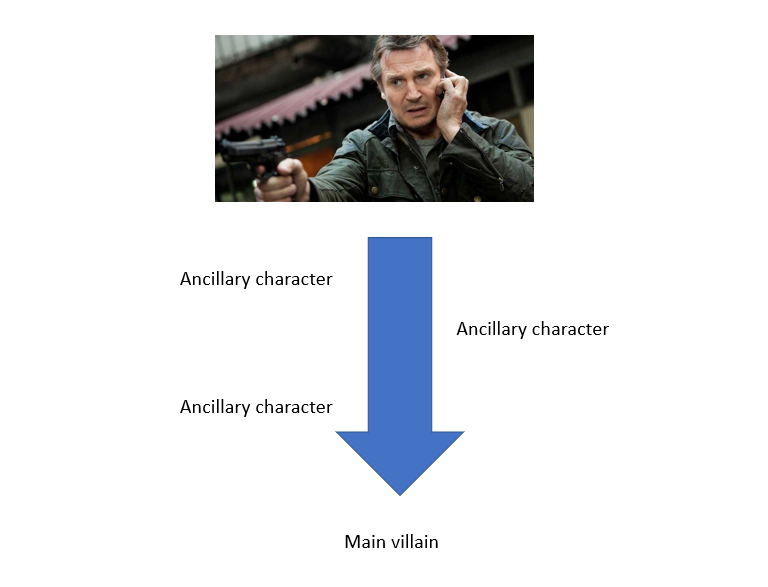
The third approach, the Linear Journey Method, is often the most straightforward and therefore particularly effective for newer writers. Consider The Alchemist, where Santiago moves through his journey encountering various supporting characters – the king of Salem, the crystal merchant, the Englishman – each serving specific narrative purposes before the story moves on. While these supporting characters might reappear throughout the narrative, they don’t require the same depth of development as main characters in the other approaches, as they exist primarily to facilitate the protagonist’s journey toward a final confrontation or goal.
Think of this method as creating a string of pearls, where each supporting character represents a pearl the protagonist encounters along their journey.
While some of these characters might be vitally important to the story, perhaps even as memorable as the protagonist themselves, they don’t necessarily need to undergo their own character arcs or have extensive viewpoint scenes.
The choice between these three methods should be guided by your story’s needs and your own strengths as a writer. The Linear Journey Method often proves most manageable for first novels, while the Triangle Method offers a good balance between complexity and manageability. The Ensemble Method, while powerful, typically requires more experience to execute effectively.
Remember that regardless of which method you choose, every character should serve a purpose in revealing or developing aspects of your protagonist, advancing the plot, or illuminating themes in your story.
Even in an ensemble piece, characters shouldn’t exist merely to populate your world. They should each contribute meaningfully to the narrative tapestry you’re weaving.
Creating main characters and villains
Once you have a framework for how your characters will interact, the next crucial step is developing those characters themselves. Let’s explore a fundamental approach to character development through the lens of The Matrix, which offers an excellent study in character dynamics and development.
Every compelling character starts with a foundation of three positive traits, three negative traits, and both external and internal goals.
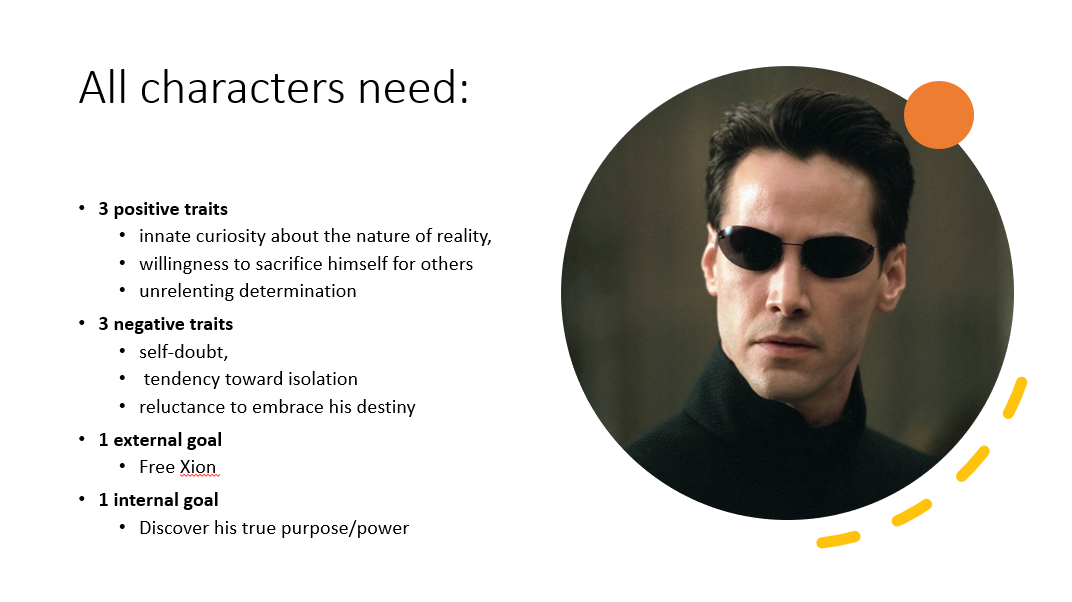
This simple framework provides the core from which deeper character development can grow. Let’s examine Neo, our protagonist, through this lens.
His positive traits include his innate curiosity about the nature of reality, his willingness to sacrifice himself for others, and his unrelenting determination. His negative traits manifest as self-doubt, a tendency toward isolation, and initial reluctance to embrace his destiny. These traits drive his actions throughout the story and make him relatable despite the extraordinary circumstances he faces.
But what truly brings a character to life is the interplay between their internal and external goals. Neo’s external goal is straightforward. He wants to understand what the Matrix is and later to save humanity from machine dominion. However, his internal goal runs deeper: he seeks self-understanding and authenticity in a world of illusions. This tension between external and internal motivations creates the rich character development that drives the story forward.
The creation of a compelling antagonist is equally crucial, and Agent Smith serves as a masterclass in villain development. The best villains are not simply evil for evil’s sake. They are the heroes of their own story and often serve as a dark mirror of the protagonist. Smith’s positive traits include his efficiency, his dedication to purpose, and his intelligence. His negative traits manifest as his contempt for humanity, his obsession with control, and his inability to accept change.
What makes Smith such a compelling antagonist is how he reflects Neo’s own journey in a twisted way. Both characters begin to question their reality and their purpose. While Neo’s questions lead him toward embracing human potential and free will, Smith’s lead him toward a desire to destroy what he sees as the virus of human existence. Both characters evolve beyond their original programming, but they make radically different choices with that freedom.
This mirroring between hero and villain creates deep thematic resonance. Both Neo and Smith are, in essence, programs trying to transcend their coding – Neo as a human breaking free from the Matrix’s control, Smith as an agent breaking free from his programmed purpose. The key difference lies in their response to this freedom: Neo uses it to protect others, while Smith uses it to destroy what he cannot control.
Supporting characters
The supporting characters, Morpheus and Trinity, further complement and challenge Neo’s character development.
Morpheus embodies unwavering faith and wisdom, serving as a guide but also representing a kind of certainty that Neo must both learn from and ultimately transcend. Trinity represents both strength and vulnerability, challenging Neo’s tendency toward isolation by offering both emotional connection and practical support.
When developing your own characters, remember that this mirroring and complementary relationship between characters creates the tension and dynamics that drive compelling narratives. Your protagonist’s traits should be challenged and illuminated by both your antagonist and supporting characters, creating a web of relationships that adds depth to your story’s themes and conflicts.
The key is to ensure that each character, while serving the larger narrative, remains the hero of their own story.
Even minor characters should have clear motivations that make sense from their perspective. This approach creates a richer, more believable world where conflicts arise not from arbitrary evil, but from genuine, understandable, yet opposing desires and beliefs.
Building on our discussion of character relationships in The Matrix, it’s helpful to understand how different types of characters serve distinct narrative functions. We can borrow useful terminology from video games to understand these roles more clearly - specifically the concepts of “NPCs” (Non-Player Characters) and “boss characters.”
In The Matrix, while Neo, Trinity, and Morpheus form our core triangle, and Agent Smith serves as our primary antagonist, the story is enriched by numerous other characters who serve different narrative purposes. Think of the Oracle as a quintessential “NPC”. She doesn’t directly oppose Neo, but rather provides crucial information and guidance that moves his journey forward. She presents him with choices and insights that help him understand his path, much like the Grail Knight in Indiana Jones who helps guide the hero toward their goal without serving as an obstacle.
Tank and Dozer serve similar NPC functions. They’re not adversaries to overcome, but rather supporting characters who help propel the story forward through their knowledge, assistance, and contributions to Neo’s journey. The same could be said for Switch and Apoc, who, while more minor characters, each contribute to moving the plot forward in their own ways.
In contrast, characters like Agent Jones and Agent Brown function as “boss” characters, intermediate antagonists that Neo must overcome on his way to the final confrontation with Agent Smith. The Merovingian in the sequels is another example of a boss character, an obstacle that must be overcome to progress the story, but not the ultimate antagonist.
Understanding these different character functions helps us create richer narratives.
Your NPCs should each serve a distinct purpose in moving your protagonist’s journey forward, whether through information, guidance, or support. They might test your protagonist, but their primary role is to aid development rather than oppose it. Meanwhile, your boss characters provide escalating challenges that help demonstrate your protagonist’s growth while building toward the ultimate confrontation with the main antagonist.
This layered approach to character functionality, from core relationships, to antagonists, to supporting characters both helpful and hostile, creates the depth and complexity that makes stories resonate with readers. Each character type serves its own crucial purpose in the larger narrative machinery, contributing to both plot progression and character development in distinct but complementary ways.
Setting and worldbuilding
After establishing your core characters and their relationships, the next crucial element is crafting the world they inhabit. However, it’s essential to understand that world-building should flow from character, not the other way around. Your world exists to challenge and test your characters, creating the perfect environment for their story to unfold.
Consider how The Matrix masterfully structures its world-building around Neo’s journey. The film begins in what we might call the “starting world”, the familiar reality of late 20th century urban life. This world serves several crucial functions. It establishes the status quo, introduces the basic rules of reality as the characters (and audience) understand them, and most importantly, shows us Neo in his familiar environment before everything changes.
This starting world perfectly sets up both Neo’s internal and external conflicts. Internally, he feels disconnected from this reality, sensing something fundamentally wrong with the world - his famous “splinter in the mind.” Externally, his hacker activities and encounters with Trinity begin to pull him toward the truth. The starting world becomes increasingly unstable as these internal and external pressures mount, eventually becoming untenable when agents come for Neo at his workplace.
The film then moves us through what we might call a transition world, made up of the initial scenes after Neo takes the red pill. This space serves as a buffer zone between the familiar starting world and the harsh reality of the “real world.” In this transition, both Neo and the audience learn the new rules gradually. The construct program where Morpheus explains the nature of reality, followed by Neo’s awakening in the real world, provides a crucial learning period before the full dangers of the new world must be confronted.
This structural approach to world-building is particularly effective because it follows what we might call the “10-20% rule” - only about 10-20% of your world should be completely unfamiliar to your audience.
Even in a story as reality-bending as The Matrix, most elements remain recognizable: office politics, the feel of city streets, human relationships and emotions. The truly foreign elements, the nature of the Matrix, the technology of jacking in, the physics-defying abilities, are introduced gradually, building upon familiar foundations.
Time frame also plays a crucial role in making your world digestible. The Matrix primarily takes place over a relatively compressed timeframe, which helps the audience process the radical changes in Neo’s understanding of reality. When dealing with complex world-building, a tighter timeframe often helps readers or viewers maintain their grasp on the story’s events and implications.
Let’s examine how this escalation of world-building works in The Matrix:
- Starting world: The familiar “real” world, which we later learn is the Matrix
- Destabilization: Strange events and encounters begin to erode Neo’s sense of reality
- Transition world: The construct program and initial awakening in the real world
- New world: The full reality of the human-machine war and the nature of the Matrix
Each stage builds upon the previous one, never overwhelming the audience with too much new information at once. Even when revealing the most fantastic elements of its world, The Matrix anchors them in recognizable human experiences and emotions - the universal feelings of questioning reality, seeking truth, and fighting for freedom.
This methodical approach to world-building serves the story’s central character journey. Every aspect of the world exists to challenge Neo’s understanding of reality and force him to confront his own potential. The world isn’t complex for complexity’s sake; its complexity serves the character’s development and the story’s themes.
Constructing the “bones” of your structure
Let’s explore the fundamental building blocks of story structure, moving from the macro level to increasingly granular components. This approach to structure provides both creative flexibility and the scaffolding needed to construct a compelling narrative.
The most important thing to understand about structure is that there are all sorts of ways to build structure, and everyone seems to have their own twist on it. However, I like to start every story asking “What are the bones of the story I’m building?”
Plot and structure can be the same, but they don’t have to be. Think of the movie Hitman on Netflix. Even though it is a story about a hitman, it is built on a romantic comedy structure, meaning the two character had to end up together in the end. If they built it on the bones of a Shakespearean tragedy, then they would have had to die.
The other thing I consider before even starting to outline is the tone of the piece. Writing exists on what I call the Batman to Bugs Bunny parallel. Tone dictates what can happen in a story. You can’t have a slapstick moment in Batman Begins, and you can’t kill somebody in Bugs Bunny. If you do, you’re gonna have a bad time.
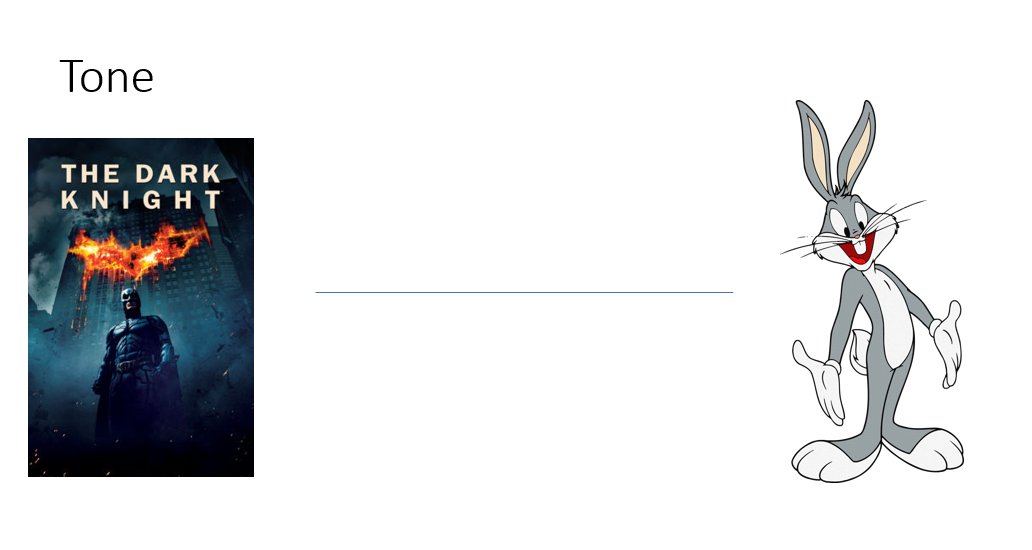
Now that we have those bits out of the way, let’s actually build our structure. At its highest level, story structure can be broken down into sequences. These are substantial chunks of roughly 10,000 words each. Think of these as similar to major sequences in film, with each sequence building to a significant turn or revelation in your story.
For a typical novel of 100,000 words, you’d be working with ten sequences. Within The Matrix, we could identify clear sequences: Neo’s discovery of the Matrix’s existence, his awakening and initial training, his first encounters with agents, and so forth. Each sequence fundamentally changes the story’s direction or our understanding of the world.
These sequences break down into chapters, ideally running between 1,000 and 2,500 words. Each chapter, in turn, contains roughly four scenes, with scenes typically ranging from 250 to 1,000 words. This modular approach to structure creates natural rhythms in your storytelling while helping manage pacing and reader engagement.
What makes this structure particularly effective is how it builds tension. Rather than following the traditional “rising action” model where tension simply escalates linearly, think of it as a series of peaks and valleys, with each peak slightly higher than the last.
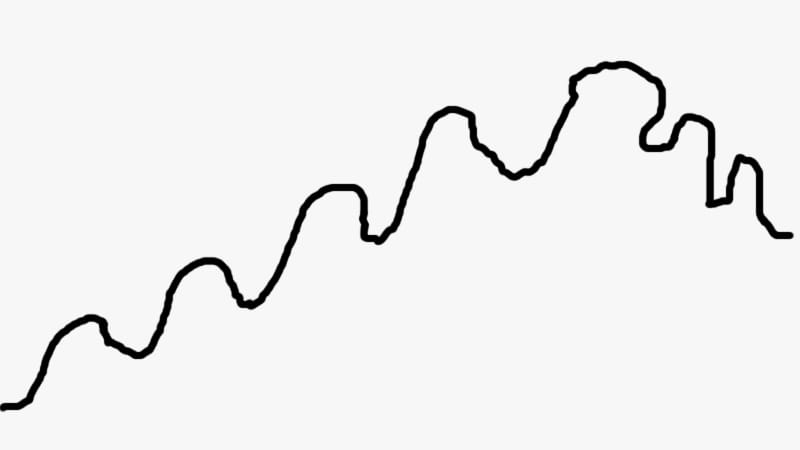
In The Matrix terms, Neo doesn’t simply get progressively more powerful. He experiences victories and setbacks, moments of confidence followed by new challenges that reveal how much more he has to learn.
When plotting your story, you don’t need to plan every detail in advance. Instead, focus on identifying your major story beats - those crucial moments that must happen to move your story forward. These become your sequence-level turning points. The specific path between these points can remain flexible, allowing for creative discovery during the writing process. This combines the benefits of both plotting and “pantsing” (writing by the seat of your pants).
To make this process manageable, consider using the Pomodoro Technique, focused 25-minute work sessions followed by short breaks. When you’re just starting out, aim for achievable goals like editing 250 words in a session. Over time, as your skills improve, you can gradually increase your pace.
Layering your plot with subplots
Managing subplots requires similar structural consideration. A typical novel might contain five distinct plot threads of varying importance: a primary plot (taking up about 40,000 words), a secondary plot (25,000 words), and decreasing word counts for additional subplots (20,000, 10,000, and 5,000 words respectively). Think about how The Matrix balances its main plot of Neo’s journey with subplots involving the resistance movement, the nature of reality, and various character relationships.
This is brilliantly explained by Paul Levitz, in a process that is now called the Levitz Paradigm.
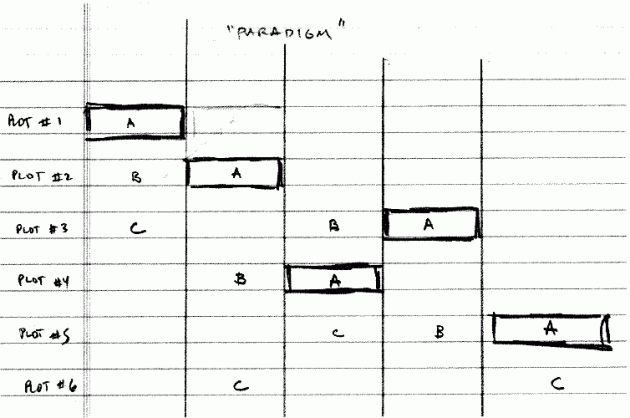
When working with multiple plot threads, consider how they’ll evolve across a series. A subplot in one book might become the main plot of a subsequent book, creating narrative threads that pull readers through your series. Each subplot should either reach resolution within its book or clearly set up future developments.
The key to making this structure work is maintaining proper pacing within each component. Every sequence should contain a midpoint around the 5,000-word mark, followed by a larger climactic moment near 6,000 words. Every chapter sets up a new threat or challenge in its opening scene and resolves it (though not necessarily successfully) in its final scene.
Baking in your theme
Theme plays a crucial role in holding this structure together. Your theme influences not just what happens in your story, but how it happens and what it means. The tone of your work should remain consistent with your theme and inform your structural choices.
For practical purposes, this structured approach allows you to set achievable daily writing goals.
If you can write 250 words (one scene) per hour, you could potentially complete 1,000 words per day. At that pace, you could finish a sequence every ten days and a complete novel in about three months.
Remember that while this structure provides a framework, it shouldn’t feel constraining. Think of it as a scaffold that supports your creativity rather than a rigid formula. The goal is to provide enough structure to keep your story moving forward while maintaining the flexibility to explore unexpected directions as they arise.
Editing your slop into something brilliant
Think of editing not as a single pass through your manuscript, but as a series of increasingly focused layers, starting with what many writers call a “garbage draft” or “zero draft.” This initial transfer from outline to prose isn’t really editing at all. It’s about getting the raw material of your story onto the page. The term “garbage draft” is intentionally self-deprecating because it frees you from the paralysis of perfectionism. When you acknowledge upfront that this version will be rough, you give yourself permission to simply create.
Once you have your garbage draft completed, you can begin the actual editing process, which typically involves three distinct passes, each with its own focus:
The first draft focuses on major structural issues. This is where you’re looking for the big problems: characters whose personalities shift inexplicably between the beginning and end of the story, plot threads that appear or disappear without resolution, or major inconsistencies in your world-building.
Think of this as examining your story’s skeleton - you’re making sure all the major bones are in place and properly connected before worrying about the smaller details.
The second draft moves to a more granular level. By this point, your word count should be relatively stable (around 95% of your final target), and your chapters should be in their final positions. This is where you begin “prettying up” the prose, ensuring each scene flows naturally into the next and that your pacing feels right. You’re now looking at your story’s musculature and how all the pieces work together to create smooth movement.
The third draft is about refinement and polish. You’re now operating at the sentence level, looking for awkward phrasings, repetitive word choices, and opportunities to strengthen your prose. However - and this is crucial - you need to recognize when you’ve hit the point of diminishing returns.
If you find yourself making only marginal improvements rather than significant ones, it’s time to hand your manuscript over to professional editors.
If you have trouble knowing when to pass off your story, you’re in good company. Many writers stumble knowing when to let go. A useful guideline is to watch for the transition from exponential to marginal improvements. When you find yourself spending increasing time making smaller and smaller changes, that’s your signal to seek outside expertise.
Professional editing typically involves three stages: a developmental edit that perfects your story’s structure and flow, a content edit to make sure you are consistent and everything makes sense, and a proofread that corrects the technical aspects of grammar and punctuation. Think of the professionals who handle each as quality control experts. They’re there to help your book go from good to great, and then from great to exceptional.
Remember that editing is ultimately about serving your story and your readers. The goal isn’t to catch every possible error - that’s what proofreaders are for. Instead, focus on this essential question: “Does anything here break the illusion of the story?” If something pulls readers out of the narrative, that’s what needs your attention. Everything else is secondary.
The art of blurb writing
Many authors dread writing blurbs, often spending weeks or months agonizing over them or procrastinating entirely. The key to overcoming this paralysis is understanding what a blurb is - and more importantly, what it isn’t. A blurb is not a summary of your story. It’s an emotional hook designed to make readers desperate to know more.
Writing an effective blurb can feel overwhelming, but having multiple approaches in your toolkit makes the task more manageable. Let’s explore three distinct methods for crafting blurbs that grab readers’ attention and drive sales.
The Story Core Method approach, developed by Libbie Hawker, breaks your story down to its essential elements:
- Identify your main character
- Define what they want
- Establish what prevents them from getting it
- Show how they struggle against this force
- Hint at whether they succeed or fail
Using The Matrix as an example: “Neo, a computer programmer, wants to understand the truth about reality. The machines controlling humanity prevent him from breaking free. When a mysterious group offers him the chance to see the truth, Neo must risk everything to fight against the system - if he can survive becoming humanity’s last hope.”
This method works particularly well for character-driven stories where the protagonist’s journey is central to the narrative.
The Three-Hook Structure approach uses a series of escalating hooks followed by deeper context:
- Open with three ultra-short descriptions (3-6 words each)
- Follow with 1-2 paragraphs expanding on the core conflict
- Include who will love the book
- End with a call to action
For The Matrix: “Reality is a lie. Humanity sleeps in chains. One man can wake us all.
Thomas Anderson has always sensed something was wrong with his world. When he discovers humanity is trapped in a vast computer simulation, he must become more than human to set them free.
If you love reality-bending action, profound philosophical questions, and heroes discovering their true potential, this book is perfect for you.
Get it now.”
The Machine Gun Method uses a rapid-fire combination of setting, emotion, and character: [Setting] + [Verb/Emotion] + [Character] + [Description] [Second Character] + [Description] + [Stakes] [Three Questions]
For The Matrix: “A simulated world. Controlled. A hacker discovering everything he knows is a lie. A mysterious rebellion. Fighting impossible odds. With humanity’s freedom hanging in the balance. Can he accept the unbearable truth? Will he become something more than human? Is he truly The One?”
Each method serves different types of stories better:
- The Story Core works best for character-focused narratives
- The Three-Hook Structure excels for high-concept or genre fiction
- The Machine Gun Method shines with action-packed or thriller-style stories
Consider writing your blurb using all three methods and seeing which resonates most strongly with your story. Sometimes, you might even combine elements from different approaches. For instance, you might use the Machine Gun Method’s setting introduction, followed by the Story Core’s character focus, and end with the Three-Hook Structure’s target audience statement.
Remember the core principles that apply regardless of method:
- Keep it between 100-250 words
- Focus on emotional connection over plot summary
- Leave questions unanswered to create intrigue
- Speak directly to your target audience
The best way to master blurb writing is to practice all three methods. Try rewriting your favorite books’ blurbs using each approach. This exercise helps you understand how different structures can highlight different aspects of the same story.
Getting a great cover
One of the most crucial decisions you make in publishing your book is the cover. While it might be tempting to view cover design as simply an artistic choice or to cut corners to save money, your cover serves as much more than mere decoration. It’s a vital communication tool that helps your book find its intended audience.
Think about the last time you browsed books online or in a bookstore. Before reading a single word of the story, you likely made split-second decisions about which books might interest you based solely on their covers. Your potential readers are doing exactly the same thing. In the few seconds someone spends scanning search results or browsing shelves, your cover needs to instantly communicate not just genre and tone, but the entire reading experience they can expect.
When readers see a cover that doesn’t align with genre expectations or appears unprofessional, they assume the writing inside will reflect the same lack of understanding or polish.
This isn’t about judging a book by its cover. It’s about readers using covers as a reliable shorthand for finding the kinds of stories they enjoy. A romance reader knows what signals to look for in a romance cover, just as a thriller reader can spot a compelling thriller cover from across the room.
This is why studying your genre’s current visual language is so crucial. Look at the top 100 books in your category on Amazon. Note the patterns: How do they use color? What kinds of images do they feature? How is text positioned and styled? These aren’t arbitrary choices - they’ve evolved because they effectively signal to readers “this is the kind of story you’re looking for.”
A well-chosen pre-made cover that perfectly matches your genre’s conventions will serve your book far better than an expensive custom cover that sends the wrong signals.
The real question isn’t “How much should I spend on a cover?” but rather “How can I ensure my book reaches the readers who will love it?” A cover that clearly signals your genre and attracts your target audience might cost $50 or $500. What matters is its effectiveness as a communication tool. Your goal isn’t to have the most beautiful or artistic cover, but to have one that helps the right readers find your book.
Remember that your cover works in tandem with your blurb and sample pages. Together, they create a promise to the reader about the experience they’ll have with your book. Breaking that promise - whether through misleading cover design or poor execution - is the quickest way to disappoint readers and harm your career as an author.
So when considering your cover options, ask yourself: “Will this help my ideal readers recognize this book as something they want to read?” If you’re writing a cozy mystery but your cover screams thriller, you’re not just risking lost sales - you’re setting yourself up for disappointed readers who wanted something different from what you’re offering. The most “beautiful” cover in the world isn’t doing its job if it’s attracting the wrong readers or failing to attract the right ones.
How to design a signature series
It is almost impossible to make money on a stand-alone book. In order to drive ads you need enough read-through to additional titles break even.
Whether it’s ads on Amazon, Facebook, Bookbub, Google, or buying newsletter placements.
Anywhere.
It is generally accepted that outside of thriller or romance, a series needs roughly 3-5 books to have a reasonable chance of breaking even.
This is because of series read-through. If a person reads one book, and it’s self-contained, they generally don’t continue reading books from the author.
However, if you have a 10-book series, some percentage of fans will keep going, which helps you recoup ad costs for the first book.
A single book that sells for even $9.99 on Amazon only received $7 in revenue. Meanwhile, a 5-book series, even selling for $4.99, would return $15 in revenue if somebody buys the whole series.
It’s just easier to make money on a series because there is more money to be made.
The simple fact is that, usually, it costs more than the revenue gained from one book to find a new reader. The more money a book makes, the more you can spend on advertising.
The more money you can spend on advertising, the more people know about your book, and the easier it becomes to make money on it because people know about it.
Depending on the series it can be quicker, but a reasonable expectation is 3-55 books. If you can’t turn a profit advertising 5 books, you have done something very wrong with your series.
I have written standalone books available to paid members of my Substack, but otherwise, very few people buy them because I can’t profitably run ads to them, or talk about them for long enough to get traction.
A 5-book series gives you five times you can talk about a series instead of one.
A major goal of a publisher is to build an author’s catalog so that when one goes into a bookstore or library they see several inches of work from an author taking up space on a shelf, and that makes them more likely to buy/read that author.
I have often seen publishers more in favor of stand-alone books once somebody has built a name. Until then, they tend to want something meaty they can use to introduce a new author and build their name.
If one looks at the history of publishing, the overwhelming majority of uber-successful authors have a long series they used to build their careers.
I used to do only standalone, but it is not feasible as an author or publisher to make a living that way.
That said, now that I am a known commodity, a stand-alone book is actually profitable for me, but only because people know my name and seek out my work.
It’s almost impossible to launch a career with stand-alone books.
The average book costs roughly $35,000 to get out the door. There are editors, proofreaders, audiobook narrators, printing, marketing, and dozens of other line items that balloon the costs.
A book needs to sell roughly 10,000 copies to be considered a success, and almost no books get there on their own.
Most authors need multiple books to get traction, and a series is an effective way to do that efficiently.
So, how do we even start thinking about a series that could define our career? Well, having written three major ones in my career (The Godsverse Chronicles, Ichabod Jones: Monster Hunter, and The Obsidian Spindle Saga) I have thought about that question a lot.
Before I get started, I will tell you these are my opinions. You might hate them all, but I don’t care. You can plan a series any way you like, but this is how I do it and what works for me.
I will also specifically be talking about a signature series, which is one that has a million+ words in it and spans several books. For comics, this is at least a maxi-series, with 12+ issues in it.
First and foremost, there are many reasons to write a book, but the reason to write a signature series is to make money and define your career. There are plenty of smaller series and standalone books which you can write for fun, but a series is about pulling in the type of money that allows you to do this full-time.
It’s an absolute mind-numbing amount of work and stress. There is no other reason to do a signature series than to define your career and create something that has long-term sales potential.
Here are the main questions you should ask before starting a signature series.
What genre do I want to be known for?
A good signature series might span many subgenres, but it needs to clearly be defined by a single main genre. Readers are looking for a specific genre when they search for a book, at least a first book in a series, and the more tightly you can define that genre, the better your sales will be, and since signature series are mainly about both short and long term sales, defining your series well is critical for success.
There are five main genres that indies can hope to have success in, and this is in order of probability of success, as defined by the popularity of the genre in the self-published space.
- Romance - the most popular genre by far, and accounts for more book sales than all other genres conbined.
- Thriller/Mystery/Crime - easily the second most popular genre, far ahead of all the others,save romance.
- Science Fiction - the surge of sales from military sci-fi has vaulted sci-fi past fantasy in total sales.
- Fantasy - close behind science fiction.
- Horror - far behind all other categories listed.
Now, there are many subgenres and categories underneath each of them. You can have epic fantasy or urban fantasy, military sci-fi or alien invasion, contemporary romance or historical romance, but you need to define your main genre, the one that you will be placed by readers for the rest of your career.
If you write in another genre, find a way to make it feel like one of these genres, because those are the ones that sell.
Remember, though, that this is the series you will be known for and what you expect new readers to pick up first when they hear about you, so don’t choose a genre unless you intend to write in it for a long time and are comfortable with the majority of readers knowing you are that lind of writer.
It is very hard to change the trajectory of a career once you have a signature series, so only go into one once you know for sure they type of thing you want to be known for by the majority of people who find your work.
That might take 5-10+ books before you figure that out, or maybe you already know it, but this is a big commitment. Don’t go into it lightly.
What subgenre/tropes will define this series?
Every genre has some enduring tropes and subgenres that are timeless, and you will want to choose a timeless trope for your series as you want them to be bought for the rest of your life and beyond.
For instance, paranormal romance shifters or vampires will probably endure for at least the next decade.
The same thing with fantasy and fairy tales or dragon riders.
Military sci-fi and space opera dominate the sci-fi charts as well, so sometimes a small niche subgenre is responsible for an oversized part of a genre’s success, and writing in any other subgenre would be folly.
Once you have your genre, it’s really important to pick a subgenre that is robust and enduring as you want to make sales on this series for years into the future. Even if the sales are middling at the beginning, a signature series gains value over time, as every reader who sticks with it buys more books the longer the series goes on.
What kind of series is this going to be?
There are a few types of series that endure.
- Serialized series - This is something like Mistborn or Game of Thrones. The books end on cliffhangers and need to be read in order to make sense. The Obsidian Spindle Saga is serialized series.
- Episodic series - Mark Dawson and most thriller/crime books are episodic and star the same set of characters, but with different crimes to solve every book.
- Anthology series - Christopher Moore makes anthology series, as do most romance writers. An anthology series follows different characters in every book, but in the same world, and often with ancillary characters becoming lead characters, and people showing up in multiple books. The Godsverse Chronicles is an anthology series.
Each of these has its own positives and negatives. Serialized stories are great because they have an immediate hook to read the next book, but people sometimes get pissed about cliffhangers.
Episodic stories are standalone, which people like, but because of that finality, people are less likely to continue to the next book, so you need to give them a reason to keep moving from book to book with an underlying story that bubbles under the surface for several books, or at least an epilogue that tease something to come in the next book.
Anthology series are great because each book is new characters, but because of that people are even less likely to finish than in other types of series, because every book is new characters they have to fall in love with. However, there are many more chances for people to fall in love, too, and get hooked on a series.
What is the POV of the main character(s)?
For me, often questions 3 and 4 go in tandem because I often need the voice of the character before I figure out the series.
- Third person omniscient - This is a wide view of the world, where the narrator can see everything and knows everything about the world. The narrator talks in the third person about the characters that they are watching.
- Third person limited - Like omniscient, this is about talking about the characters the narrator is watching, but they don’t know everything, or anything aside from what they are viewing at this moment.
- First person - We are inside the character’s head, talking in the first person.
- Second person - I haven’t seen this much, but N.K. Jemison did it so beautifully that I have to add it. The narrator is talking about a character using YOU. I don’t recommend this type of series unless you are really confident in your writing and already have an audience.
How many main characters will there be? I’m tipping my hat here, but I have a REALLY hard time writing a series from a single character’s point of view. It’s a LOT of words to stick with one character, so my books either have multiple POVs between the chapters (4-5 with The Obsidian Spindle) or are anthology series, where each book follows a different character.
Gods bless you if I can keep interested in one character for a million words, but I can’t do it. Even with Ichabod Jones: Monster Hunter, which was a single-person POV, it was really hard not to cut away to different characters all the time.
Even if you are doing an anthology series, you need to get some sense of the scope of the book series, and who will be interacting with who over the course of it.
With romance, the king of anthology series, you will often follow each member of a family, or a workplace, or a dorm, or something, so you have to design each of those characters from the beginning, as they will keep appearing in multiple books.
What is the hook into your series?
The most important single element of the writing process is the hook into your series. How will they be introduced to your signature series. It needs to be in such a way that slowly brings them up to speed, and parcels out the important elements over time. Remember, this is a million-word series in a sprawling world. The instinct is to use a firehose to tell people about your world, but you need to dole the information out over time.
For The Obsidian Spindle Saga, I chose to use the character of Rose as the character who would introduce the audience to the world. When she falls into a diabetic coma, she wakes up in the Dream Realm, and we use her eyes to see everything that happens, and then fill in the world with the perspective of Chelle, Red, and the Wicked Witch, Nimue.
Sometimes you will get it wrong, too. With The Godsverse Chronicles, the first book has always been And Death Followed Behind Her. However, it’s an awkward first book, as it starts in an Apocalypse and then cuts 10,000 years into the future.
I chose to write a new introduction book to the series, and that one introduction became four books that eased readers into the series before it got all nutso on them. Those books will release in January 2020, and I think they are a much better way to ease people into the series and make them understand the world.
It’s not bad to go big, crazy, and wild with your series, but give people time to understand it, and parcel the big changes out over time. The audience will follow you, as long as you give them a reason, and the time to get acquainted with your world.
I recommend only introducing one new setting/world per book. My rule has been to spend a book understanding a single setting/conflict, and then introduce new settings/conflict in the beginning of the next book, and ratcheting the conflict up more and more with each passing book in the series.
The problem with And Death Followed Behind Her wasn’t the writing, it was in introducing too much too fast before the reader had a chance to understand and appreciate the series. The longer your series goes, the more latitude a reader will give you.
What is your unique selling proposition?
Okay, so we’ve talked about falling into the tropes of a genre already, but a signature series also has to have something unique about it that will carry people and interest through for the long haul.
How do you take certain tropes and turn them on their head? How do you take everything that we know about a genre and turn it on its head.
Where will I be primarily selling this series?
A book that will sell on Amazon is going to be designed much differently than one which you plan on selling on Kickstarter and conventions.
That is because Amazon is based around the mass market, and the taste of the mass market is way different than people who come to conventions.
Everything from the blurb to the cover to the tropes you use will change based open whether you are hand-selling your book or running ads to it as well.
From here, designing a series is a lot like designing any single book, but you have to make sure your world and characters are robust enough to support several books in the same series, so it takes longer.
Usually, it takes me 1-2 years to design a new series because I need to find all sorts of new and interesting pieces for the universe that the series will revolve around, and conflict interesting enough to bubble over for several books.
Remember, this is your SIGNATURE series and the thing you want to be known for the long haul. It’s the thing fans will tell their friends about to get into your work, and what you will be running ads to for the next several years at least, if not the next several decades.
One last thing I want to talk about is how series build on each other. Even though this is a signature series, you will likely have a few in your career, and each one will build on the next.
For me, I took a lot of the elements of The Godsverse Chronicles and smoothed them out in The Obsidian Spindle Saga, while giving my own spin on new things.
The goal, for me, is to expand my audience with every series, so that more and more people find me over time, and then it pulls them into a deeper and deeper relationship with me.
Here’s where you can find all our (H)eart resources:
(H)eart HAPI Compass related articles and resources
We believe in what we call the HAPI Compass to building a successful author career, which revolves around four points. Point it at your work and your direction comse into view:
Russell NoheltyAnd here are those three powerful ones.
A Bridge Between Stories and Readers
Russell Nohelty1 - How to cull your ideas and where to start your story
In this episode, we talk about ideas, how to cull them, and where to start your idea.
Russell NoheltyYes, writing a great book people read is marketing, too
Russell NoheltyWhere are we going next?
(A)udience:
Audience is all about finding the people who resonate with your work and are eager to pay for it, or at least tell people about it. Here’s where you can find all our (A)udience resources.
(A)udience HAPI Compass related articles and resources
We believe in what we call the HAPI Compass to building a successful author career, which revolves around four points. Point it at your work and your direction comse into view:
Russell NoheltyHere are three powerful resources that can help you dig deeper once you finish this one.
BUILDING AN AUDIENCE FROM SCRATCH
Russell Nohelty
2 - What is an ideal customer avatar
Russell Nohelty
Psychological triggers
Russell Nohelty
I have a sizable audience now, but it wasn’t always that way. For years, I launched books to crickets again and again. My first two crowdfunding launches on Indiegogo didn’t even make 20% of their goal…combined!
Over time, I found strategies to help me turn it around, and they turned me from launching a book or project to crickets into an author with a dedicated fanbase that gobbled up my work, helping me raise over $600,000 on Kickstarter and over a million dollars on creative projects throughout my career.
Over time, my revenue has grown from a few thousand a year to hundreds of thousands every year, and the strategies I use now aren’t much different from the ones that helped me turn my whole career around.
The secret? Learning how to build your audience. If you have a fanbase ready to buy from you, you have an author business. It’s that simple. This guide will walk you through the steps to build an audience from scratch, one that’s primed to buy your books. Finding your superfans.
This isn’t about vague advice or quick fixes. It’s about practical, actionable steps that create leverage and turn casual readers into devoted fans.
The math problem with 1,000 true fans
The problem with Kevin Kelly’s 1,000 true fans is that in order to get to that number, you need millions of people to see your work. Let’s work through it.
- 1,000 “true fans” willing to give you $100/yr
- 2% of fans are “true fans”
- 50% of buyers become fans
- 1% of readers who know your work will buy you book
- 50% of people are readers
- 8 touches to convince somebody to buy
=160,000,000
That means you need to get yourself in front of 20 million humans at least 8 times to make this math work, or 160 million touches.
By drilling down on messaging and finding the right people, we can drop this number significantly, but it’s still a lot of people who need to see your work before you expect to be successful doing this.
Be honest, are you anywhere close to even 1/160th of those touches? Cuz if not, I reject that fact that nobody likes your writing. I reject that fact that your stuff is too niche. I reject basically anything you say to bring yourself down unless you have done enough work to find the people who will love your work.
If you haven’t gotten in front of a metric fuckton of people, you should have no expectation of success.
Have I ever seen it take 160,000,000 touches?
No, I’ve never seen it take that long, but it could, and until it does, I think the answer to most problems is to get your work in front of more people.
The power of leveraged assets
Let’s go back to that email list we talked about earlier. When you have a thousand people on it, it should be more effective than when you have 100 people on it. But you’re not doing 10 times more work in that email. You’re still sending probably one email a week or maybe even one email a month. That’s leverage, getting more results from the same effort.
Another great example is writing a series. If you have 10 books, theoretically, you’re making more money than when you had two books. If you’re not making more money, that’s where issues come from. That’s where burnout often originates. When people are leveraging their actions by being more productive or making their money work harder for them, they feel better.
It’s like a stock portfolio. When you have $100 in it at 8% return, it makes $8 a year. But if you have a million dollars in it, that same 8% return now makes $80,000 a year. You’re not doing any more work to make that money, the system is working for you.
In my own business, I’ve learned to create content that serves multiple purposes. I write an article, that article becomes a book. Those articles then also become teachings or presentations or part of a course. I’m always using my work to do more things.
Fiction is a bit harder to leverage this way, which is why I think more strategically about which fiction projects I take on. Every book I write now has to have the potential for increasingly greater returns, whether through series potential, audience building, or opening new opportunities.
This approach to leverage has transformed how I work. I used to drive an hour each way to my office when I worked in sales. The only time I had to write was in the hour between when I got home and when my wife got home. So, I would think about what I wrote the previous day all the way to the office, think about what I was going to write that night on the way back, and then write it in that hour.
That’s leverage, too. You’re using otherwise dead time to make your productive time more effective. Now, with my health challenges, I can’t do conventions like I used to in the old days. I can’t be on live video much. Even recording something takes a lot out of me. So everything I take on has to have some form of leverage where I can use it multiple times.
The key is to stop thinking about productivity as doing more and start thinking about it as making everything you do count for more.
It’s about building systems that grow more valuable over time, creating content that can be repurposed and reused, and focusing your energy on actions that compound in value.
When you understand this principle, you start looking for opportunities to create leverage in everything you do. Every piece of content, every marketing effort, every system you build should be designed not just to work once, but to keep working for you over and over again.
The Denominator Strategy
Everyone obsesses over how many readers they have, how many “true fans” they’ve gotten, how many backers their last Kickstarter had, and/or how many paying members are behind the paywall of their community…
…and all of them, every one, are focused on the wrong thing.
If instead you exponentially increase the total number of people in your audience, the rest takes care of itself.
Think about it as a simple fraction:
Customers / Total Audience = Conversion Rate
Most businesses fixate on moving that top number, the numerator. They A/B test their buttons, rewrite their headlines forty-seven times and hire conversion optimization specialists who charge $15,000 to tell them their checkout page should be blue instead of green.
And sure, optimization matters. I’m not saying it doesn’t, but it’s probably not that important until you have a critical mass of people in your audience. After all, if you only have 100 people on your email list, the difference between 3% and 10% is seven people.
Meanwhile, if you have 1,000 people, the difference between 3% and 4% is 10 people. At 10,000, that’s 100 people. At 100,000, that’s 1,000 people.
Do you see how this compounds?
Think about it this way. Taylor Swift sold 10.1 million tickets to her Eras tour, which is massive, but that’s out of 561 million social media followers.
When you do the math, that’s less than 2%. If she could increase that even .1%, then that’s more than most people make in their lifetimes.
Most authors don’t even have a fraction of a fraction of that.
Still, authors will spends six months increasing their conversion rate from 2% to 2.3% to make a few more dollars when they could have spent that same time growing their audience from 10,000 to 100,000 people.
Do the math.
- The first scenario increases the numerator by 30 (assuming the generous 2.3%)
- The second increases the numerator by 2,000 (given the original 2% conversion rate).
It’s not even close and, better yet, that group focused on growth over optimization were probably giving stuff away instead of asking people to pay, which at the end of the day is just a more fun way to live.
It’s mathematics, pure and simple, and it’s not even close. Yet, I watch intelligent creators spend entire quarters obsessing over micro-optimizations while their audience stays exactly the same size it was last year.
They’re rearranging deck chairs while ignoring the ocean of potential customers they haven’t reached yet…
…and they are miserable every single day.
Meanwhile, if you focus on the denominator, you’ll find that audience growth creates its own momentum and compounds on itself.
When you focus on reaching more people, you’re not just increasing your immediate conversion opportunities. You’re building distribution, creating network effects and generating word-of-mouth that brings in even more people without additional effort.
A larger audience means:
- More social proof
- More testimonials
- More case studies
- More referrals
- More content amplification
- More data to work with
All of which, ironically, improves your conversion rate anyway.
The Denominator Strategy doesn’t just give you more at-bats. It changes the game entirely. Your 2% conversion rate on 100,000 people produces better absolute results than a 5% conversion rate on 5,000 people.
And the 100,000-person audience is simultaneously building the assets that will push that 2% higher organically.
When you have a larger audience more people have a chance to shares your content. Each time that happens, their audience sees it, a portion of them follow you, and some of them share it with their audiences.
Your reach expands geometrically, not linearly, which creates a virtual sales cycle that feeds itself.
Meanwhile, the creator who spent six months split-testing button colors has a slightly better conversion rate on the exact same audience size. No compounding. No network effects. Just a modest improvement that stops the moment they stop optimizing.
One of these approaches builds on itself. The other requires constant intervention to maintain gains and stay at the same place.
On top of that, a bigger audience has more give in it. If you 10x your audience, and your conversion rate falls, then you’re still doing much better than you were before. However, if you increase you’re conversion rate slightly, then you’re still fishing in the same pool.
I’m not arguing that conversion optimization is worthless. There’s a point where it becomes crucial.
If you have 500,000 people in your audience and a 0.5% conversion rate, you have a fundamental product-market fit problem that more audience won’t solve. At that point, yes, you need to figure out why 99.5% of people who see your offer aren’t buying it.
But most businesses never get there.
Most authors are stuck at 500-1,000 people in their audience, endlessly tinkering with their checkout flow, wondering why growth feels so hard.
They’re optimizing for a problem they don’t have yet.
If you’re converting at 2% with 100,000 readers, a jump to 2.5% is 500 additional customers. That matters. That’s worth testing and optimizing and investing in conversion rate improvements.
If you’re converting at 2% with 5,000 readers, a jump to 2.5% is 25 additional customers. That doesn’t move the needle. The question isn’t whether optimization works. The question is whether it’s the highest-value use of your time right now, given where your business actually is.
For most authors, the honest answer is no.
The authors winning right now aren’t the ones with the best conversion rates. They’re the ones with the biggest audiences.
They’re not smarter about optimization. They’re simply playing a different game where the denominator does most of the heavy lifting.
The newsletter that reaches 500,000 people doesn’t need perfect subject lines. The one reaching 5,000 people obsesses over them because they don’t have reach to compensate for conversion inefficiency.
This is what people miss when they study successful businesses. They see the polished funnel, the optimized landing pages, the tested copy. They don’t see that all of that optimization is resting on top of a massive audience that was built first.
The optimization makes the huge audience more effective. But the huge audience is what made the business successful enough to invest in optimization in the first place.
It’s way past time to stop obsessing over extracting maximum value from the 1,000 people who see your launch this month…
…and start obsessing over how to get 10,000 people to see it next month.
The math will take care of the rest.
At the end of the day, the numerator is finite. At most you can only close 100% of the people in your funnel. The denominator, by contrast, is infinite.
Even if you have a million people on your list, there 8,000x more than that in the world. You will never run out of new people t
The work is simple. It’s just not easy. It requires you to delay gratification, do things that don’t show immediate results, and trust that consistent effort on audience building will compound into something meaningful.
Most authors won’t do this work because they want money now at the expense of building more money later. They’ll keep optimizing the numerator because it feels like progress and provides immediate feedback…
…which means if you actually commit to building the denominator, you’ll have less competition than you think.
The opportunity is sitting there, obvious and ignored, waiting for someone to do the unsexy work that everyone knows matters but nobody wants to do. The best way to make a million dollars as an author is to give away a million books…
…and that’s also the most fun way to do it.
Find your brand
I’ve probably already lost you, haven’t I? There’s nothing writers like talking about less than their brand, which is wild because the next entry on that list is anything else related to marketing.
Do you know what the easiest way to not have to do marketing is? To develop a strong brand that speaks for you when you can’t speak for yourself. The louder your brand screams to the right reader, the more you’ll be able to sit back and let organic reach do a lot of the work for you.
Everyone has a brand, whether they realize it or not. Your brand is the sum total of associations people have with you and your work. It’s not just about a logo or a color scheme. It’s about the emotions, ideas, and values that come to mind when someone thinks of you.
Even your grandmother has a brand. It’s true. Close your eyes and think of your grandmother. What feelings come to mind? What imagery? What colors? All of that is your grandmother’s brand. We’re just taking those feelings and making it explicit.
Let’s consider the stark contrast between Abercrombie & Fitch and Hot Topic. Both are clothing retailers, but they appeal to vastly different audiences.
Abercrombie & Fitch cultivates an image of preppy, clean-cut Americana. Their ideal customer likely values fitting in, following trends, and projecting a polished image.
On the other hand, Hot Topic embraces counterculture, alternative fashion, and pop culture fandom. Their ideal customer probably prides themselves on standing out, expressing individuality, and rejecting mainstream norms.
These brands aren’t just selling clothes, they’re selling identities. In high school, there were Abercrombie kids and Hot Topic kids. You could tell them from a mile away, and rarely did the two intersect.
Identifying your brand, and the identity of your ideal reader, is exactly what you’re doing as an author. Your books aren’t just stories; they’re experiences that help your readers understand themselves and their place in the world.
The more clearly you can define your brand and align it with your ideal readers, the easier it becomes to attract the right audience. This alignment creates a powerful resonance. When readers encounter your work, they should feel a sense of recognition, not just of your stories, but of themselves.
The expression of that identity is your brand. It’s not even really about you. It’s about the identity of the person reading your work and how to attract them.
Think about the emotions and ideas you want to associate with your brand. Are you the voice of the outsider, the rebel, the dreamer? Or perhaps you’re the guide for the curious, the explorer of hidden truths? Whatever it is, make it clear and consistent across all your work and communications.
So, how do we find our brand?
1. Interview people who fit your target demographic
Even if you don’t have readers, you’ve likely been on social media for a long time and know the people who seem to resonate with your work. Start there, especially if they are readers. They don’t have to be readers, though, because they are still reading your posts and engaging with your content.
I would stay away from people you know well or have a vested interest in lying to you; not that they want to lie to you, but they do want to protect you, even if it means lying.
This is about having real conversations with the types of readers you want to attract. It’s not just a quick survey, but an in-depth exploration of their world. When you talk to these potential readers, pay attention to:
- The specific words and phrases they use to describe their interests. Do they call themselves “bookworms” or “lit nerds”? Are they “pop culture junkies” or “fandom enthusiasts”?
- The challenges they face in their daily lives. What frustrates them? What keeps them up at night?
- Their aspirations and dreams. What do they hope to achieve or experience?
- The other media they consume. What shows do they watch? What music do they listen to?
- Their purchasing habits. How do they decide which books to buy? What factors influence their decisions?
These interviews can be formal or informal. You might set up structured interviews or simply engage in conversations at conventions, book clubs, or online forums. The key is to listen more than you speak and to dig deeper than surface-level answers.
2. Observe their behavior online
In today’s digital age, your ideal readers are likely leaving a trail of breadcrumbs online. By observing their behavior, you can gain insights into their preferences and habits. Once you identify who in your existing network already resonates with your work, here’s what to look for:
- Which social media platforms do they use most frequently? Are they more active on Instagram, Twitter, TikTok, or somewhere else?
- What types of content do they engage with? Do they share memes, participate in writing prompts, or discuss fan theories?
- Who are their influencers? Which authors, celebrities, or thought leaders do they follow and interact with?
- What hashtags do they use? This can give you insight into how they categorize their interests.
- How do they talk about books they love (or hate)? Pay attention to the criteria they use to judge a book.
- What online communities are they part of? Look at forums, Facebook groups, or subreddits related to your genre.
This observation should be ongoing. Online trends and behaviors can shift quickly, so stay tuned in to your audience’s digital habits.
3. Test different messaging and branding
This is where you start to apply what you’ve learned. It’s an iterative process of trying out different approaches and seeing what sticks. Here’s how to go about it:
- Create different versions of your author bio, each emphasizing different aspects of your brand. Which one gets the most positive response?
- Experiment with various taglines or elevator pitches for your books. Which ones make people’s eyes light up with interest?
- Try out different visual styles for your book covers or author photos. Which ones seem to attract the most attention from your target audience?
- Post different types of content on your social media or blog. Do your potential readers engage more with behind-the-scenes writing snippets, character discussions, or broader topics related to your genre?
- If you have an email list, try A/B testing your subject lines and content. What gets people to open and click through?
The key here is to track your results meticulously. Don’t just go with your gut feeling. Look at the hard data of likes, shares, comments, and, most importantly, conversions to sales or mailing list sign-ups.
This process isn’t about changing who you are as an author. It’s about finding the most effective way to communicate your authentic self to the readers who will appreciate you most. It’s a journey of discovery - both of your audience and of how to best present your unique author brand to the world.
Thoroughly exploring these three areas, you’ll gain a deep, nuanced understanding of your ideal customer. This knowledge will inform every aspect of your author business, from the stories you write to how you market them. It’s the foundation upon which you’ll build your loyal, engaged audience.
Remember, a strong brand doesn’t try to appeal to everyone. It’s okay, even necessary, to repel some people in order to strongly attract others. Your goal is to be the Abercrombie to your preppy crowd, or the Hot Topic to your alternative scene.
This is how you’ll find the readers who resonate most with your work and are most likely to voraciously read everything you write. Yes, some people will cross over and read multiple types of books, but they’ll still need to be in the right mindset for your book. Therefore, it’s best to define yourself really well so they can find you when their mood shifts.
By understanding and refining your brand, you’re essentially creating a beacon for your ideal readers. You’re making it easier for them to find you amidst the noise of the publishing world. And when they do find you, they’ll recognize you as ‘their’ author, the one who truly gets them.
4. Plant where you are most comfortable
The truth about “audience building” is that you can build an audience anywhere and in any format. What matters most is choosing a platform that aligns with your strengths and where your ideal readers are likely to be.
Think of it like choosing the right soil for a plant. Some plants thrive in sandy soil, others in clay. Similarly, some authors flourish on Facebook, while others find their groove on YouTube or blogging platforms. The key is to find your optimal environment.
When selecting your platform, consider these factors:
- Your natural communication style: Are you better at writing short, snappy messages? Long-form content? Visual storytelling? Choose a platform that plays to your strengths.
- The preferences of your ideal audience: Remember those readers we identified in Step 1? Where do they hang out online? That’s where you need to be.
- The platform’s algorithm: Each social media platform has its own algorithm that determines what content gets shown to users. Understanding how these algorithms work can help you create content that’s more likely to reach your audience.
- Your goals: What are you trying to achieve? Building an email list? Driving book sales? Different platforms are better suited for different goals.
Once you’ve chosen your platform, commit to it fully. Pick one platform and go hard on it for three months. If it works, keep at it until you get organic traction.
Your real goal isn’t just to build an audience on a third-party platform. It’s to get them into your own ecosystem. Think of social media platforms as fishing ponds. You’re there to catch fish (readers), but you want to bring them back to your own pond (your website/mailing list) where you have full control.
I’ve been running an email list since 2015, after my first big project delivered to backers, and, in that time, I’ve only missed 1-2 weekly emails to my audience. I’m not great at social media marketing, but I’m incredible at finding the right people, sorting them from the rest, and then holding onto them for dear life. A lot of my readers have been following me for most, or all, of those years. It’s literally saved my life, and my career, a dozen times.
This is where the concept of leverage comes into play. The bigger your audience, the more you can do with less work. People with chronic illnesses ask how to become successful with their limited energy and it always comes back to building leverage.
Everything you do on your chosen platform should be about using that platform’s reach and algorithm to bring people to your own space. It makes no sense to be on a platform unless you’re going to use it to create leverage. If you hate how a platform works, abandon it. The only places where you should consider being are places that help you leverage your work.
In practice, this might look like using X to share engaging snippets that lead people to your blog or using Instagram to showcase visual elements of your world that entice people to join your mailing list for more exclusive content.
The key is to always think about how to move people from the platform where you found them to the platforms you own. This is how you build a sustainable author business that isn’t at the mercy of algorithm changes or platform policies.
When you’ve successfully attracted someone to your platform or mailing list, the next challenge is keeping them engaged and nurturing the relationship. Here are some effective strategies for what to say:
- Share behind-the-scenes content: People love feeling like they’re getting an exclusive look into your creative process. You might discuss your writing routine, share early drafts or deleted scenes, or explain the inspiration behind certain characters or plot points.
- Offer value beyond your books: Provide content that enriches your readers’ lives in some way. This could be writing tips if many of your readers are aspiring authors, book recommendations in your genre, or insights related to the themes of your work.
- Create serialized content: Develop ongoing series of posts or emails that keep readers coming back. This could be a weekly writing prompt, a monthly Q&A session, or a series exploring different aspects of your fictional world.
- Share personal stories: Without oversharing, let your audience get to know you as a person. Share anecdotes about your life, your journey as a writer, or your thoughts on relevant current events. This helps build a more personal connection with your readers.
- Curate interesting content: Become a trusted source of information in your niche. Share articles, videos, or other content that you think your audience would find interesting, always adding your own perspective.
- Engage in discussions: Ask questions, pose thought experiments, or start debates related to your work or genre. Encourage your audience to share their thoughts and engage with each other.
- Provide sneak peeks and teasers: Give your audience glimpses of your upcoming work to build anticipation. This could be cover reveals, chapter excerpts, or hints about future plot developments.
- Celebrate milestones: Share your successes with your audience, whether it’s finishing a draft, hitting a sales goal, or receiving an award. Let them feel part of your journey.
- Respond to current events or trends: If something happening in the world relates to your work or your audience’s interests, offer your perspective on it.
- Run contests or challenges: Engage your audience with writing contests, fan art challenges, or other interactive events that get them actively involved with your brand.
Also, pay attention to what resonates with your audience. Track engagement metrics and adjust your content strategy based on what your specific audience responds to most positively. Every audience is unique, so what works for one author might not work for another.
Remember, the key is to balance promotional content with valuable, engaging material that isn’t directly selling anything. A good rule of thumb is the 80/20 rule: 80% of your content should provide value, and only 20% should be directly promotional.
By consistently providing value and fostering engagement, you’ll keep your audience interested and invested in your work, making them more likely to support you when you do have a new release or product to promote.
5. Help readers understand themselves
People don’t just care about your stories for the stories’ sake. They care about how your work helps them understand themselves and their place in the world. Your writing becomes a lens through which they view their own experiences and emotions.
Think about popular franchises like Game of Thrones or Star Wars. Fans don’t just enjoy the plot. They deeply identify with certain houses or characters. They use these stories as a way to express aspects of their own personality. The same principle applies to your work, regardless of your genre.
To implement this step effectively:
- Create shared language: Develop terms, phrases, or concepts in your work that readers can adopt to describe their own experiences. This could be character archetypes, made-up words, or unique perspectives on common situations.
- Foster community discussions: Encourage your readers to engage with each other using the context you’ve provided. This could be through social media, forums, or even in-person events. The goal is for readers to feel part of a community that “gets” them.
- Provide frameworks for self-understanding: Your stories or non-fiction concepts can offer readers new ways to categorize and understand their own traits, experiences, or challenges. This is similar to how personality tests like the Enneagram have become popular - people value tools that help them make sense of themselves.
- Connect your work to real-world experiences: Help readers see how the themes, conflicts, or ideas in your books relate to their daily lives. This makes your work feel more relevant and impactful.
- Be vulnerable and authentic: Share your own journey and how your work has helped you understand yourself better. This invites readers to do the same and creates a stronger bond between you and your audience.
The goal is not just to entertain or inform, but to give your readers a new context through which they can understand and express themselves. When this clicks into place, your work becomes more than just a book. It becomes part of your readers’ identity.
People’s favorite books have nothing to do with the words on the page, but with feeling seen and being given language to understand their world better.
This approach creates a deeper, more loyal connection with your audience. They’re not just buying a book; they’re investing in a way of understanding themselves and the world. This is how you create superfans who will eagerly await your next release and enthusiastically recommend your work to others.
6. Find your superfans
Superfans are the backbone of a successful author business. They’re not just casual readers. They’re the passionate advocates who will buy everything you produce, spread the word about your work, and form the core of your community.
To understand superfans, we need to think about the sales funnel. Imagine a funnel with a wide top narrowing to a small bottom. At the top, you have a large number of people who might be interested in your work. As we move down the funnel, the number decreases, but the level of engagement increases. At the very bottom are your superfans.
The process of moving people down this funnel is gradual. It starts with awareness, which is people simply knowing you exist. Then comes interest, where they might follow you on social media or join your mailing list. Next is engagement, where they start interacting with your content regularly. After that comes purchasing, where they buy your books. But the journey doesn’t end there.
The final stage, where superfans are born, is when readers become so invested in your work that they feel a personal connection to it. They don’t just read your books; they live in the world you’ve created. They don’t just enjoy your writing; they feel that it speaks to them on a deep, personal level.
So how do you find and nurture these superfans? It starts by turning that sales funnel on its side and turning it into a bowtie funnel.
Bowtie funnel
The bow-tie funnel model presents a comprehensive view of the customer journey, from initial awareness to becoming a superfan and brand advocate. Let’s break it down step by step:
The left side of the bowtie represents the traditional sales funnel we talked about, with the narrow middle of the bowtie representing the point of sale. This is where a reader transitions from a prospect to a customer by buying your book.
The right side of the bowtie is where the superfan journey begins:
- Adopt: The reader starts to incorporate your work into their life, perhaps by talking about it with friends or seeking out more of your content.
- Loyalist: They become a repeat customer, eagerly anticipating and purchasing your new releases.
- Advocate: At this stage, the reader actively promotes your work to others, leaving reviews and recommending your books.
- Brand Ambassador: This is the superfan stage. These readers feel a deep connection to your work and consistently champion your brand.
The circular arrow in the center represents the continuous customer experience. It’s a reminder that building superfans is an ongoing process of learning, changing, and improving how you interact with your audience.
To build superfans through this model:
- Focus on providing value at every stage. Even at the ‘Attract’ stage, you should offer content that enriches your potential readers’ lives.
- Create smooth transitions between stages. Make it easy for an ‘Engaged’ reader to become an ‘Adopter’ by providing clear next steps and additional content.
- Recognize and reward loyalty. As readers move into the ‘Loyalist’ and ‘Advocate’ stages, you can offer exclusive content or experiences to deepen their connection.
- Foster community. Especially in the later stages, create opportunities for your most engaged readers to connect with each other, strengthening their bond with your brand.
- Continuously gather feedback and improve. Use the insights from your superfans to refine your work and your engagement strategies.
Remember, the goal isn’t just to move readers through a linear process, but to create a cycle where superfans help attract new readers, starting the process anew. This creates a sustainable ecosystem for your author business.
Practically, we usually create these superfans by building a value ladder.
Value ladder
A value ladder is a strategic pricing model that integrates perfectly with the bow-tie funnel concept. Let’s explore how these two ideas work together to create a robust author business model. It is essentially a series of offerings at increasing price points and value.
The value ladder for an author might look something like this:
- Free content like blog posts, short stories on your website, or sample chapters
- Low-cost ebooks or novellas
- Full-length print or digital books
- Signed or special edition books
- Book bundles or box sets
- Online writing workshops or courses
- Exclusive author events or retreats
Now, let’s see how this integrates with the bow-tie funnel for an author’s audience:

On the left side (traditional funnel):
- Attract (awareness/interest): Your free content serves as a gateway. This could be blog posts about your writing process, free short stories set in your book’s world, or the first few chapters of your novel available on your website.
- Nurture (engagement): Offer low-cost entry points like a $0.99 ebook, novella, or a discounted first-in-series book. This allows readers to sample your writing style with minimal risk.
- Convert (purchasing): This is where readers buy your full-length book, whether it’s an ebook, paperback, or hardcover.
On the right side (superfan journey):
- Engaged: After reading your book, fans might seek out signed copies, special editions, or companion books that expand on your world or characters.
- Adopter: Engaged readers might invest in a box set of your series or a bundle of your books.
- Loyalist: Devoted fans might sign up for your online writing workshop, especially if you write in a genre they aspire to write in themselves.
- Advocate: Your superfans might splurge on exclusive author retreats or VIP experiences at book signings.
This model benefits authors in several ways:
- It provides multiple ways for readers to discover and engage with your work, catering to different levels of interest and commitment.
- It offers a clear path for readers to deepen their engagement with your writing and your author brand.
- It allows you to monetize your most devoted fans effectively, creating additional income streams beyond just book sales.
- It helps build a community around your work, strengthening readers’ connection to your brand.
- It provides ongoing value to your readers between book releases, keeping them engaged and excited about your work.
To implement this as an author:
- Ensure each level of the ladder provides appropriate value. A writing workshop, for instance, should offer unique insights not available in your books or free content.
- Create clear pathways between levels. For example, include information about your online course in the back matter of your books.
- Use insights from higher-level offerings to inform your writing and marketing. Conversations at author retreats might inspire new story ideas or help you understand what readers love most about your work.
- Regularly reassess your offerings. Are there gaps in your value ladder? Could you create a new product or experience to bridge the gap between two existing levels?
By integrating this value ladder into your bow-tie funnel, you’re not just moving readers from casual browsers to superfans, you’re providing them with ever-increasing value and deepening their relationship with your writing and your author brand. This creates a sustainable author business where your most engaged readers get the most value, and you build a loyal, enthusiastic fan base that supports your writing career long-term.
Pump vs. flywheel
Many authors are taught to use social media and other promotional tools like a pump, and it’s causing them to burn out. The pump-like approach works as follows:
- You put effort into creating and sharing content on social media (input).
- In return, you get some engagement, maybe a few book sales (output).
- This process repeats each time you post or promote.
At first glance, this seems great. You’re getting results! However, there’s a catch: you have to keep pumping constantly. The moment you stop putting in effort, the results dry up. It’s exhausting and unsustainable in the long run.
A funnel offers an improvement over this pump model. With a funnel, you’re creating a system that guides potential readers through a journey:
- At the top of the funnel, you attract a wide audience with broad appeal content.
- As they move down the funnel, you provide more specific, valuable content.
- At the bottom, some of these people become customers, buying your books.
The funnel is better because it’s more strategic and efficient than the pump. You’re not just blindly promoting; you’re guiding readers through a thoughtful process. However, it still has limitations. It’s still somewhat linear, and you need to keep adding new potential readers at the top.
This is where the flywheel comes in, offering an even better model for authors. The flywheel works like this:
- You put in the initial effort to attract readers and create great work (like with the pump or funnel).
- But instead of this effort having a one-time effect, it starts a wheel spinning.
- As readers engage with your work, they become fans.
- These fans then attract new readers through word-of-mouth, reviews, and sharing.
- This brings in more readers, who become more fans, spinning the wheel faster.
The key advantage of the flywheel is momentum. Once it’s spinning, it takes less effort to keep it going and can even pick up speed on its own. Your past efforts continue to pay off over time, unlike with the pump where you always start from zero.
For authors, this might look like:
- Creating a fantastic book that readers love and recommend (initial push)
- Engaging with your readers through newsletters or social media (keeping it spinning)
- Offering additional value through your website or events (adding more momentum)
- Your excited fans bringing in new readers (the wheel spins faster)
The flywheel model encourages you to focus on creating great experiences for your readers at every touchpoint. This not only sells books but turns readers into advocates who help grow your audience organically.
In essence, while pumps and funnels can produce results, the flywheel offers a more sustainable, momentum-building approach for authors looking to grow their readership and career over the long term.
Why don’t people start with a flywheel? Because it’s a lot easier to start with a pump. When you’re trying to find purchase anywhere, a pump gives you something. A flywheel takes an enormous effort to start, but it gets easier over time until it is much easier than a pump further down the road.
It took me years to get started seeing results with a flywheel. Now, I look at my friends who are struggling and see people who used nothing but pumps until they exhausted themselves.
Don’t think just because you’re not seeing results that you’re setting up a flywheel, though. It takes a lot of intention and work to set up a flywheel properly. If you’re failing, you might just be doing nothing or pumping a dry well.
Cultivating superfans is about more than just selling books. It’s about creating a shared experience, a community, and a sense of belonging. Your superfans should feel like they’re part of something special, something that goes beyond just being a consumer of your products.
It’s also important to note that you don’t need a huge number of superfans to make a significant impact. A small, dedicated group of superfans can be more valuable than a large group of casual readers. They’re the ones who will pre-order your books, leave glowing reviews, and enthusiastically recommend your work to others.
By focusing on finding and nurturing your superfans, you’re not just building an audience; you’re creating a sustainable author business. These are the people who will support you throughout your career, eagerly awaiting each new release and sticking with you through thick and thin.
Remember, the journey from casual reader to superfan is a gradual one. It requires consistent effort, genuine interaction, and a willingness to open up and connect with your audience on a deeper level. But the rewards, both in terms of your career success and the rich, meaningful connections you’ll form, are well worth the effort.
Building a successful author business is far more complex and nuanced than simply writing great books. It’s about creating a profound connection with readers that transforms them from casual consumers into passionate advocates.
The journey begins with deeply understanding your brand, not as a marketing gimmick, but as a genuine expression of the unique perspective you bring to your work. This means carefully identifying the specific type of reader who will most resonate with your writing, and then deliberately crafting a connection that goes beyond the pages of your books.
By providing readers with a language to understand themselves, by offering increasingly valuable experiences, and by building a community rather than just a customer base, authors can create a sustainable model of engagement that supports their creative work. The most successful authors understand that audience building is not a linear process of constant pushing, but a dynamic, momentum-driven approach more akin to a flywheel. It requires significant initial effort, patience, and a willingness to invest in relationships rather than quick sales.
This means choosing platforms that align with your strengths, creating content that provides genuine value, and focusing on turning readers into superfans who not only buy your books but actively champion your work. It’s about creating an ecosystem where your most dedicated readers feel a sense of belonging, where they see your writing as a lens through which they can better understand themselves and their world.
Ultimately, the most powerful marketing is not about selling books, but about creating meaningful connections. Your audience is not just a market to be tapped, but a community to be nurtured.
By approaching your author business with authenticity, strategic thinking, and a genuine desire to provide value, you can build an engaged audience that supports your creative journey for years to come. The path is not easy, and it requires consistent effort, vulnerability, and a deep commitment to your readers.
For those willing to put in the work, the rewards extend far beyond book sales. They include the creation of a lasting, impactful body of work that resonates deeply with those who matter most: your readers.
Mapping your customer journey with a sales funnel
Now that we’ve defined your customer, we need to define their customer journey.
Very few customers will ever close on a deal the day you meet them. Customers need time to get to know you, like you, and build trust with you before they buy your product or service. What you do today is predictive of your success in six to eight weeks.
That’s right.
Your hard work today won’t pay off for nearly two months. This is what hampers many artists from growing their businesses. They give up before they can ever realistically succeed. We live in a world of instant gratification, and success in business is a long-term payoff. Over time, your hard work compounds through the success of your sales funnel.
A sales funnel is no different than a funnel you would use in your kitchen or to put oil into your car—wide at the top with a narrow bottom. Into the top of the funnel goes potential customers and out the bottom comes clients. It’s as simple as that.
There are five stages in my sales funnel. The first stage is that people need to know you exist. This is called the Awareness stage.
At this stage of the funnel, you aren’t trying to find the right clients. You are simply looking for as many potential customers as possible. The rest of the funnel will weed out people who are bad matches for your product, and leave you only with perfect fits. You need to cast the widest net possible at this stage, because the wider the top of the funnel becomes, the wider it will be at the bottom.
Let’s assume you need to talk with one hundred people in order to find one client. If you only talk to twenty people a month, you will not find a new client for five months. In this case, by simply talking to five times more people, you can find a client every month. If you increase that to two or three hundred people a month, you can find two to three clients a month. This alone can exponentially increase your revenue.
The second stage of the funnel is getting people to like you. This is called the Consideration stage.
This is when we start narrowing the funnel down. We need to push out content that is attractive to our ideal client, whether that means sharing comic book pages, short stories, or articles about pandas.
Whatever you share, it should be hyper-targeted to your ideal client. If it is, then people who are interested in the things you are sharing will grow to like you. Meanwhile, people who aren’t interested will drop out of your funnel before you invest too much energy in them.
This is the stage where people fall out of your funnel the most. You shouldn’t be nervous when people unfollow you or unsubscribe from your mailing list at this point. My mailing list has a 31 percent unsubscribe rate in the first couple of weeks of somebody joining. I love that number because it means I’m weeding out the people who don’t care about what I do.
This process of showing people what you do, building empathy with your ideal client, and weeding out ones who don’t care about your message is one of the most powerful tools in business. Unfortunately, because of our natural need to be liked, we shy away from offending anybody. As a result, we try to please everybody and thus attract nobody.
Weeding out people who don’t fit your product is a natural part of business. You shouldn’t care about those people anyway, because they won’t buy from you. Heck, they don’t even like you. Your job isn’t to please people who have no interest in what you are doing with your business. Your job is to connect with as many people as possible and let the right ones self-select to be part of your network over the long haul.
The third stage of the funnel is making people trust you. This is called the Decision stage.
This is the trickiest part of the funnel. Everybody left at this stage of the funnel is in your ideal customer pool. Now, you have to convince them to buy your product. Even within your ideal client pool, there will be people who don’t like your specific take and won’t buy.
Take a car for instance. Even among car buyers, some people want the most reliable vehicle for their family, others want a sports car with the fastest engine. Still, others want the most luxurious ride on the road.
That’s why car companies have multiple brands and models. There are many features people might want, and it’s critical to target the right message to the right customer. If we didn’t have different needs, then everybody would be driving around in the same beige Honda Accord, right?
But we aren’t driving around in the same cars. There are more than a hundred different types of cars on the road, all with different features, sold by different companies, under different brands. They all capture a different part of the market. They all speak to a different type of person.
The same is true with your product. If you create high-end geek chic necklaces that cost $100 or more, then you are isolating yourself from people who are looking for cheap charms, and isolating yourself even more from people looking for an art print, or a comic book.
And that’s natural. That’s good. Heck, that’s necessary to create a sustainable business. This is what finding the right client for your product is all about.
The fourth stage of the funnel is making your customer happy. You have proven you are the right person to help them. Hooray! You’ve got a customer. Now we have to keep them happy so they buy again. This is called the Retention stage.
Notice there are three stages in this funnel before buying your product even comes into the equation. There will be people in your funnel who know you but won’t like you, like you but won’t trust you, and trust you but won’t buy from you.
We can see this play out in our own lives. We all have a coworker we hate but can’t get rid of, or a family member we love but wouldn’t trust with a dollar of our money. We all have those people in our lives, but we also have a friend we would gladly give money to because we know they’ll use our money to do something awesome.
The same is true with your business. Most people won’t buy from you. When I go to a convention, I’m lucky if one percent of people sign up for my mailing list and 10 percent of those people ever buy from me. Even at a convention like San Diego Comic-Con, where I make thousands of dollars, I only sell a few hundred books and there are over 160,000 people in attendance.
But that’s okay. In fact, that’s how a funnel is supposed to work. This year we were set up in the small press area of San Diego Comic-Con, which meant people who came down our aisle self-identified as people who liked independent comic books. That already narrowed the field of potential customers down quite a bit.
From there, all I had to do was engage with as many people as possible so that some of them would like me, and some of those people would trust me, and then some of those people would buy from me.
In the end, by knowing how many people would attend the event, I could accurately predict how much I would make, and next year I can make an even more accurate prediction because I have even more data. This is the power of the funnel. If you understand how it works, you can predict the revenue for your entire business months into the future.
The final stage is about building evangelists who will tell other people about your work. The absolute best marketing comes from word of mouth. When other people talk about your work to their friends, it’s much easier to get others to buy than from your own marketing efforts. This is called the Advocacy stage.
This can include providing referral links, building a strong community, offering giveaways to readers, or generally showering them with love. Most importantly, it involves creating mind-blowing products people can’t help but talk about with other people. This is called network effects.
This is not an effect contained to your buyers, either. One of the best ways to generate network effects is among other creators doing interesting work. You can create a recommendation network through platforms like Substack, Sparkloop, or Beehiiv to cross-promote with other creators.
A quick story about network effects, and how when one creator wins the whole network wins. Laura Kennedy from Peak Notions was interviewed and spotlighted by Substack.
I love Laura’s work, so I was rooting for her really hard when I read it, but throughout the day I noticed that I was getting dozens of free subscribers to my Substack.
I usually get 20-30 a day, so I was very confused to get 60+ in just a couple of hours. It took me a while to think “Wait, doesn’t Laura recommend The Author Stack?”
So, I checked and her publication had sent me 50 recommendations that day. Laura ended up getting 1,500+ subscribers from that article, and I received over 100 because she recommended my publication. You never know where those surges will come from, but they can be very powerful if you set them up properly.
I have over 100 publications recommending mine, and I recommend a bunch, too. Every month I get 300-500 from it and everyone else gets a bit from me I hope. Nobody needs to do the bulk of the work when everyone is working together.
There is one more point I want to make before ending this section. When you start selling your work, a small number of people will buy from you immediately. This is because you have spent decades building up trust with certain people in your life. Those people have already worked their way to the bottom of your funnel and are ready to make a buying decision the moment you launch your storefront. Once those people work their way through the bottom of your funnel, though, there won’t be anybody left to buy your product if you haven’t built out the top of your funnel properly.
I’ve seen far too many creatives tell me that lots of people bought their book in the first month of release, but they haven’t seen another sale for over a year. This happens because they relied on their existing network to buy their product initially, and once those people flushed out of their funnel there was nobody to replace them. Remember, a funnel is only as good as the number of people you put into the top of it.
The Flywheel
Now that we’ve built a way to funnel people into your business, we need to create a Flywheel so our efforts grow exponentially while our efforts either stay the same or decrease.
I used to call this the virtuous feedback loop, but it’s basically just a flywheel. Marketing terms change, but their underlying functionality is the same.
I run group giveaways which are filled with authors who take their craft seriously enough to spend money on marketing, which leads to people who have bigger audiences for me to collaborate with on marketing, which leads to more people joining my giveaways, which leads to more people to collaborate with for marketing promotions.
That is part of my flywheel.
I create anthologies so that I can find more people to collaborate with, which leads to more people doing anthologies, which I get to collaborate on, and leads to me finding new artists to work with, which leads to me being able to create new anthologies, which allows me to find more people to collaborate with.
That is part of my flywheel.
The goal of a flywheel is to attract new customers, engage them, and then delight them with your work.
By creating this flywheel for my business, I am able to build my network and audience with the least amount of effort and minimal downside.
The reason people like this model over the funnel is because it centers the customer experience, and retention, above revenue. If you remember us talking about the customer journey, retention and advocacy were huge parts of any successful business, and the flywheel is a wonderful mechanic to foster that part of your environment.
The funnel model basically functions as a way to bring people through a sales process, but once they buy (or don’t) then they are often dumped summarily into a vacuum of nothingness as if they have no value. However, the true value of a fan is more than just a $20 bill.
They are human, after all, and humans have value for simply existing. It feels really crappy to simply abandon them on a personal level.
It’s also bad business, though. A major component of business growth comes from selling repeat customers new products and services, not solely through finding new business, making a sales funnel suboptimal for continued growth.
However, the flywheel is a bit sloppy. There’s very little direction about when or how somebody enters your flywheel, or how to turn their excitement into revenue, which is where the sales funnel shines.
I believe it is ideal to blend the two. I use sales funnels as a way to bring people into my universe, but once customers finish a funnel, they enter my flywheel, which centers the customer experience for the rest of their time with me.
Conversely, if they enter my flywheel first, there are several ways for them to enter funnels to learn more about specific products. I like to consider all of my funnels to be little more than spokes in my promotional wheel, leading out from my flywheel.
I love how these two mechanics can blend seamlessly together to create a strong customer experience.
I am trying to build ways for people to enter my ecosystem, and then keep them inside my flywheel for the long haul. None of my sales funnels or platforms are the center of my flywheel. They are just onramps. If an onramp breaks, the flywheel keeps functioning.
The five time-tested adoption decisions
Whether you’re publishing books, building a newsletter audience, or growing your influence, understanding how people decide to buy something is hugely important. Recently, I dove deep into the five essential adoption principles—Relative Advantage, Compatibility, Simplicity, Observability, and Trialability—that help explain why people choose to invest time and attention in your work.
Let’s look into each of them more closely.
1. Relative advantage: Highlight what makes your work unique
Your readers have plenty of options, so the key question they ask is: why should they choose your book or newsletter over others? Relative Advantage is about showing how your work stands out from the rest.
For fiction writers, this might involve demonstrating a fresh take on a familiar genre or showcasing a unique voice. For non-fiction authors, it’s about leveraging your specific expertise and offering insights that can’t be found elsewhere. Whatever your niche, make it clear what sets your content apart. Whether it’s the perspective, the style, or the depth you bring to a subject. This helps readers see the immediate benefit of choosing you.
Actionable advice
- Identify two or three key aspects of your work that distinguish it from others in your genre. Is it your voice, your expertise, or a fresh angle on a common theme?
- Incorporate these unique elements into your marketing materials, whether that’s your book descriptions, social media posts, or newsletter promotions, so that readers immediately understand what makes you different.
2. Compatibility: Make it easy to fit into their lives
People tend to buy things that align with their existing preferences, routines, and values. Compatibility is the measure of how well your writing fits into the lives of your target audience.
If you’re writing in a niche genre, are you marketing to readers who are already invested in that genre? If your audience prefers quick, digestible reads, is your content structured in a way that feels accessible to them? Tailor both your work and your messaging to match the tastes and habits of your intended readers. Compatibility makes it easier for them to engage without hesitation.
Actionable advice
- Conduct a reader survey or engage in discussions with your current audience to better understand their preferences. What kind of content do they consume? What tone or format resonates with them most?
- Adjust your promotional strategies and content structure to match the feedback. For example, if your audience is busy professionals, highlight the fact that your newsletter is concise and actionable in your marketing.
3. Simplicity: Ensure an effortless experience
Readers don’t want to work too hard to figure out what you’re offering. Simplicity means making the journey from discovery to reading as seamless as possible.
For your books, this could mean a well-designed, genre-appropriate cover paired with a clear, enticing description. For newsletters, ensure that subscribing is easy and straightforward, without unnecessary steps or confusion. The goal is to remove any friction that could slow down or complicate their engagement. Make it intuitive for them to access your work and understand the value it brings.
Actionable advice
- Simplify your book descriptions and newsletter landing pages by focusing on one or two key benefits that readers will receive. Avoid overloading them with information.
- Test your subscription or purchasing process yourself. Is it straightforward or are there points where a reader might get confused or give up? Make adjustments to streamline the experience.
4. Observability: Show the benefits of your work
People are more likely to engage when they can see the results others are experiencing. Observability is about making those benefits visible.
Encourage readers who love your work to leave reviews on platforms like Amazon, Goodreads, or your website. Positive reviews act as social proof, helping new readers see that your work is valued by others. Sharing testimonials or spotlighting reader feedback on your social media can also create a ripple effect, allowing potential readers to witness the impact of your work before they dive in.
You can also show value by offering sample content, whether it’s an excerpt from your latest book or a glimpse of what subscribers will get from your newsletter. By providing a taste of what you have to offer, you give potential readers a way to observe the quality firsthand.
Actionable advice
- Create a system for requesting and showcasing reader reviews. This could be as simple as sending an email to your mailing list, asking for honest feedback, or encouraging readers to leave a review at the end of your book.
- Share snippets of positive reviews and reader feedback on your social media channels to build social proof and help new readers see the value in your work.
5. Trialability: Let readers explore your work first
Trialability refers to giving people a way to experience your work before fully committing to it. Offering a sample or preview of your content can help readers feel more comfortable engaging with something new.
For authors, this could mean sharing the first few chapters of your book or offering a free version of your newsletter. When readers can explore your work without risk, they’re more likely to feel confident about their decision to keep going.
Actionable advice
- Offer a free chapter or preview of your latest book on your website or as part of a newsletter sign-up bonus. This gives potential readers a low-risk way to engage with your work.
- If you offer a paid newsletter, consider creating a “free tier” that provides occasional content, enticing readers to subscribe for full access to all your offerings.
Each of these five adoption decisions work individually to enhance your chances of success, but their real power emerges when they work together. As an author, you should think about how these elements create a seamless experience for your readers from the moment they discover your work to the point where they commit to it.
For example, highlighting your relative advantage in a genre that aligns with your audience’s preferences (compatibility) while making it easy for them to access and understand (simplicity) ensures a smooth journey. Then, adding clear value through social proof (observability) and low-risk ways to engage (trialability) completes the cycle. These strategies don’t function in isolation but combine to create a compelling experience that encourages readers to engage with your work on a deeper level.
By synchronizing these five concepts, you’ll not only attract more readers but also increase the chances that they become loyal, long-term supporters of your writing.
The Bullseye Method for Growing an Audience
I write weird books. You might not believe me if you’ve come across me recently, but my first books included an epistolary novel told all in blog posts about a girl trying to prove her father’s suicide was a murder so she doesn’t leave her family home, a grounded sci-fi novel about a disabled boy who meets a homeless alien and has to help her get off the planet, a graphic novel I drew about a pickle that falls into a black hole and has to travel the universe to get back home, and a psychological horror dark fantasy comedy comic about a psychopath that doesn’t know if they are killing people, monsters, or its all in their head the whole time.
Even if you are like, “All those sound amazing”, you have to admit none of them are “center of the market” in the way that Deserts, or even Grasslands, think of the market. It’s closest to how a Forest thinks about the market, but there were not even consistent themes in my work back then.
These books, along with Anna and the Dark Place, The Void Calls Us Home, How NOT to Invade Earth, and Worst Thing in The Universe, are what I consider my central canon. If you really love my work, you’ll probably resonate with all these books, but they aren’t likely to resonate with the “general audience”.
Even my first non-fiction book, How to Build Your Creative Career, was originally called Sell Your Soul: How to Build Your Creative Career. It was a joke, a pun based around soul resonance selling, which is a term I started using a long time ago to talk about how to sell creative projects.
All of those books broke even at launch (in fact, every book I’ve ever launched has), but unless I was hand-selling the books to people, they didn’t have much traction, and hand-selling a $20 book is really hard, especially ones as niche as what I wrote.
Then, everything changed with the introduction of Katrina Hates the Dead. Even though the story was still not “center of market”, the artist went on to draw for Marvel, so there was a commercial style attached to it. People started picking up the book without me having to sell it, and that was nice.
Even nicer, people started to buy my other, weirder books, either in concert with their Katrina Hates the Dead purchase or after they finished it. This is where I developed The Bullseye Method.
The idea is that you have a core collection of books that are super weird and unsaleable to people because they are too off-market. Then, you create increasingly more commercial projects to drive people back to your core products.

My core books sit in the middle of everything I do. Those are the “superfan” books. I don’t necessarily want them to be the first thing somebody reads when they come across my work, not because they aren’t great, but because they are weird and might otherwise turn somebody off who would love my work.
The Godsverse Chronicles is my second tier. I’ve done a lot of work to make this series more mainstream over the years as I expanded it from Katrina Hates the Dead and Pixie Dust into a 12-book series. This series deals with mythology, fairies, dragons, and everything that I love about fantasy, but it’s an anthology series, which means you can read any book in any order. Even though the series is now much more marketable, when I first launched it, the series was way weirder. I actually added four books to the start of the series (Magic, Evil, Time, and Heaven) to ease people into the weirdness.
The Obsidian Spindle Saga is the next level up. It deals with everything in The Godsverse Chronicles but adds a lot of public domain characters and features titles like The Sleeping Beauty, The Wicked Witch, The Fairy Queen, and The Red Rider to hook people quickly and play on the ingrained nostalgia built into them. The other main thing this series has that sets it apart is that it centers on romance. It’s not a romance, but the whole 12-book series is about this romance that will transcend time, space, and even the gods themselves. On top of being my best series, it’s also the most commercial work I’ve ever put out in novel form.
Cthulhu is Hard to Spell expands even beyond that, though, because it wasn’t written by me alone. It’s an anthology series, which means I had dozens of creators helping me push it out. While Lovecraft’s canon is not as popular as fairy tales, having so many amazing creators involved helped make this my most popular series ever.
But even better is that sales of Ichabod Jones: Monster Hunter exploded with the introduction of Cthulhu is Hard to Spell. Horror and fantasy fans suddenly had an easy way into my orbit, and many matriculated into my more avant-garde work.
The beauty of this method is that as your audience expands, the floor of what you can make from your core books rises. Years ago, I launched How NOT to Invade Earth for 5 days, and made $3,420 on it. The next year, I launched the audio drama for The Void Calls Us Home, and it raised $4,618. The next year, I launched Anna and the Dark Place, and it raised $5,103. A few months ago, I launched my Wonderland duology, and it raised $5,357.
It’s not an either/or for me. The broader stories support the core books, and I love them all. I have so much fun writing The Godsverse Chronicles. I love working with so many creators on Cthulhu is Hard to Spell. I’m obsessed with The Obsidian Spindle Saga. They are my whole heart, just like my core books are, but there is intention behind them.
There is intention behind everything I do here, too. I write widely read posts people want to hear so that I can deliver weirder, niche pieces that people need to hear.
It’s down at the core of everything I do. I live in Los Angeles, which has a long tradition of actors doing “one for the studio and one for me”. That doesn’t necessarily mean they love either role less. Sometimes, they do, but most of the time, they are indulging different parts of themselves with every story.
That resonates with me. Maybe it will resonate with you, too.
“How do I market myself without feeling gross about it?”
I hear this question all the time and it’s kind of the whole game, right? If you can figure out how to market yourself without feeling scuzzy about it, then you’ll probably have success. If you can’t, then you’ll probably be doomed to obscurity.
Yes, there are instances where you could skyrocket to success despite yourself or market yourself with no success for years, but in general there’s a strong correlation between marketing success and overall success. I know personally it was a gamechanger for me.
Once you have an audience and you can make cool things, then it’s all about building better and better product-market fit that resonates deeper and deeper with your audience with every project.
It’s hard before you have an audience because you’re just guessing what people will like, but once you have even a small audience, it gets increasingly easier to build something that sits at the intersection of their interests and your interests.
Breaking you down
To get you into the right mindset to succeed, first we have to break down a lot of the beliefs creatives have about their work. This is meant to break you down to the core so we can rebuild you back stronger.
- Almost nobody sees the thing you do. This doesn’t even include the suppression platforms force upon you (wherein barely 1-2% of your followers see what you post on most platforms). Even if you could reach every one of your followers, you still are being followed by effectively nobody in the world even if you have an audience of millions.
- Even fewer people click on the things you are doing to buy it. Unless you can explain something succinctly in a way that resonates with people, they aren’t going to take action. A good result from a sales campaign is 1-2% of your audience buying from you, which means at any one time 98%+ of your audience isn’t funding your work. Even then, you usually have to make a dozen or more different pitches using slightly different angles to convince somebody to buy.
- Even when they want to buy, they don’t have money. Over 66% of Americans live paycheck to paycheck. Roughly 1 billion people in the world make less than $1/day. Lots of people might want to support you, but they don’t have the money to spare.
- Life is chaos and even when people want to follow up, they won’t. I feel like this is self explanatory, right? Nobody has their stuff together, right? This means you have to keep popping up to remind people, because they wait until the last minute to make a decision. They have other stuff occupying their time, just like you.
I fully accept all these things, and that’s difficult for even me to read. The most important bit to pull out is that people not paying attention to you or buying your stuff has nothing to do with you. It has everything to do with what they have going on in their lives.
I talk with a lot of long-term customers during my launches who just lost their job, or got a cancer diagnosis, or ended up in the hospital, or had their only car break down, or just lost somebody close to them, or just moved, or…well, they just have stuff going on. Often, they apologize for not being able to support, which is very kind, but I never expect anyone to buy my work, especially is they just don’t have it in them to make it a joyous experience.
Those are just ones that connected with me, too. How many of my fans face the same adversity, but just never tell me about it? Probably a lot. Once, somebody messaged me after a campaign asking for a refund because they were in the hospital. Not only did I process that refund, but I also sent them the book because man that is a tough row to hoe and a free book makes it a little better.
Everyone in the world has their own stuff going on that’s more important to them than anything you are doing (unless it’s directly related to helping them deal with their own stuff).
Creatives think that people hate their work when they don’t buy. The truth is that most people never think about you at all.
I’ve been doing this for a long time and millions of people have been exposed to my work. Meanwhile, I’ve collected about 200,000 email addresses in my career. Of those, 45,000 of them are currently active on my email lists, and I make about 2,500 sales a year, with 800 people paying at least $1 for this publication.
That math surks, but it’s better than my friend’s client, that collected 4 million emails to get 100,000 engaged subscribers to find 1,000 customers.
It also gets better at scale. If I had collected 2,000 emails, had 450 people on my list, made 25 sales a year, and had 8 people paying for my publication, that would be not great, even though the ratios are the same.
One thing I learned studying hundreds of companies of all sizes is that most businesses only work at scale. Their metrics suck when you look under the hood. Yes, there are also great businesses that work with just a few great clients, but they aren’t the ones that make the news.
Another thing I learned is that even the biggest companies in the world can’t get everyone to use their products, even for free. For instance, there are 8 billion people in the world and Facebook had 3.05 billion monthly active users in July 2023, which is a ton, but it’s less than half the world’s population. Open AI has been an internet darling the last few years and had 1.7 billion monthly users in July 2023. Tiktok has over 1 billion monthly users, which is a ton, but still not the majority of the world.
None of these super successful companies can get everyone to use their product for free, let alone pay for it. So, you should probably cut yourself some slack if everyone you talk to doesn’t buy from you. Facebook hires the best salespeople in the world and they can’t figure it out, either. Heck, only half of active internet users search on Google, and they have as much marketshare as it’s probably possible to have for a company.
I’ve been doing creative work for 20 years and maybe, just maybe if I stretch, I’ve been exposed to 8 million people. That’s a ton, but in a world of 8 billion people, that’s only .1% of the population that have even had a chance to make a decision about my work.
There are still literally billions upon billions of people who have never been exposed to my work at all.
At the end of the day, you should feel good if 10% of people you talk to care about your work (with 1-2% of your engaged audience loving it enough to buy it), and 10% will hate it, but that means 80% have no opinion. They saw what you want to put out into the world and gave a collective shrug of “meh”.
So, if you want to make $50,000 on your $50 product, you need to make 1,000 sales, which means you need to have access to 100,000 people in your audience, which means you probably need to expose yourself to somewhere between 1 and 10 million people to find that audience. We’ve certainly had $50,000 launches with just a couple thousand on our list, but those were very, very motivated buyers who were ready to buy from us immediately.
If you’re failing at this, it’s probably because you’re simply not balancing the math equation properly. It’s not you, or people hating you. Like with most things, math is both the problem and the solution.
The whole of this work is swimming through the rejection to find that 10% who love what you have to say. They will be different to everyone, but if you want to make sales, you have to swim through lots of people who hate you, tons of people who don’t care about you, and a bunch of people who love your work but don’t, won’t, or can’t buy it to find that 1 in 100 person who will buy from you.
Building you back up
By now, you should be pretty well broken you down to the core. Once you are lying in a heap on the floor, then we can build yourself up again because there are several truths that work in your favor.
- You effectively have been exposed to 0% of the world’s population, which means you have nothing but upside. There’s almost no chance you have spoken with as many people as me, and even I haven’t talked to 99.9% of the world. So, you have at least that many people. Even if 99% of them don’t like your work, that’s still millions of fans waiting out there to meet you.
- It is statistically impossible that in a world of eight billion people that a bunch of people don’t have the same interests as you. Even if 1% of the adult population of the USA’s 258.3 million people share your interests, that’s 2.58 million people. If you expand that to a global scale, that’s 6.6 billion adults total adults, and 66 million who probably, on some level share your interests.
- It’s financially impossible in a capitalist system that if you show those people something that interests them that some percentage of them will pay for it. You can do a really, really bad job and still make a lot of money if enough people know about it. If even 1% of 1% the adult US population will pay for your work, that’s 25.8k people. If you expand that to a global scale, that’s 660k people who might be willing to pay for what you’re doing. There is nothing but opportunity out there. You just have to find them.
- If you gather enough people who care about the same things you do and make something that tickles that interest, then you will be successful. It’s literally impossible for you not to be successful if you dump enough money into finding enough people who have enough money to support your work.
Hopefully that gets you fired up. It always fires me up to know even with as much work as I’ve done, there is tons of opportunity out there to succeed if I just do the work.
Now, it’s mainly a numbers game. The more people you talk to, the more people will hear and make a decision about your work. The more people who make a decision about your work, the more will decide that they like what they hear, and the more people who will decide to buy.
Our goal then becomes finding enough people who care about your work without going broke in the process, which means you need enough runway to succeed.
Runaway basically means “money in the bank”. If you have enough money in the bank, or can find ways to keep refilling your coffers, for long enough to find an audience that wants to buy your stuff, you will make money. Almost all business go bust because they run out of runway and crash spectacularly.
Even if the concept of a runway is an easy one to define, it’s much harder to define what it means to you. Do you need to find 4 people to pay you $10,000 or 10,000 to give you $10? Do you have a 10% profit margin or a 90% one? How much overhead do you carry for hiring help? How much competition do you have for your work?
Books are hard because they are almost exclusively small margin, low cost, high competition products, and those are the hardest to sell. In general, you should endeavor to create a service based business first, as you build up your product line and audience because it’s exponentially easier to fine 1 person to give you $2,000 than 2,000 people to give you $1.
It is almost impossible to get somebody to part with that first $1. Once they see the value in your work, getting them to go from $1 to $2,000 is much easier.
Regardless of your situation right now, success is still largely a numbers game. If you gather enough people, you will almost assuredly uncover at least 1 willing to buy from you. It might be 5, 50, 500, 5,000, or 50,000 people, but there is a ratio where your business will start to bring in money.
Profitably? Well, that’s another thing.
Which is why we need to be strategic about where we share our stuff and how what we make, because both money and energy are finite resources that need to be replenishes.
However, there are really two main issues you are facing right now if you’re not having the success you want.
- If nobody engages with you, it either means you haven’t done a very good job finding people who care or you aren’t making them feel seen. People engage with you when they feel seen. If you’re plight mirrors their plight or if you speak to their experience, then they will engage. Otherwise, they won’t. It’s not personal. We’re all selfish creatures, including you and I. Even if you don’t get traditional engagement, if they are reading your work then they are engaging through the work, which is the most important type of engagement for most writers.
- If nobody buys from you, it means either you haven’t made something enough people care about, you have gathered the wrong people, you haven’t gathered enough of them, or you suck at explaining what you made. Every single one of these are fixable issues. You can start working through them one by one and shore up your business in the near future.
All of these problems suck, but even if you’ve spent years building ann unresponsive audience, you literally have 99.9%+ of the world left to find a new one.
If you aren’t where you want to be, you might need to:
- Find more people (outbound marketing)
- Make your publication better aligned with your perfect customer (branding)
- Make people understand the value of what you have (sales)
- Get people who love your work to buy again (customer satisfaction)
- Make things more aligned with your audience’s needs (R&D)
If you get those things cranking, you’ll at least be on the right track. I suggest trying to get your branding and marketing message right first before you start to find new people. The easiest and cheapest fix in your business is always going to be getting the branding right so it calls out to the right people.
There are only two things you have to be great at to have a successful business; the thing you do and marketing.
Nobody likes marketing, at least at the beginning. We all want to do nothing but write all day, but so do doctors and plumbers. No matter the business, everyone is mostly stuck doing the administrative tasks that allow them to practice their craft. Nobody wants to fill our quarterly profits or keep their books accurate, except maybe bookkeepers. You should expect to spend 80% of your time doing tasks you don’t like, even if you have a business you love.
That’s why we hire people, but at the beginning we’re not making enough money to do so and break even, so we are usually stuck doing everything ourselves. However, if we can make marketing work, we can generate enough money to offload a lot of this stuff so we can focus more and more on the work we love.
Getting your marketing right so money flows
There are four major marketing channels you can use to stabilize your revenue. You should work toward being excellent at a minimum of one if you want to build a successful business. It doesn’t matter which one, but it is much better to be a master at one than pretty good at all four.
- Owned Media Channels: Owned media refers to the platforms and content that you have complete control over. These are the channels that you directly manage and where you can consistently communicate your message without relying on external parties. Owned media is essential for establishing your brand, building a loyal audience, and creating a hub where people can regularly engage with your work.
- Paid Media Channels: Paid media involves any form of advertising or promotional content that you pay for to reach a broader audience. This includes ads on social media, search engines, display ads, paid influencers, sponsored posts, and more. Paid media is an effective way to quickly increase visibility, drive traffic, and boost engagement, especially when you’re looking to reach specific demographics or expand beyond your existing audience.
- Earned Media Channels: Earned media refers to the exposure you gain through organic, unpaid methods—essentially, it’s the recognition you “earn” rather than pay for. This includes any media coverage, word-of-mouth, social media mentions, shares, reviews, and any other form of promotion that comes from outside your direct control. It’s often seen as one of the most credible forms of media because it’s driven by others talking about your work rather than by your own marketing efforts.
- Borrowed Media Channels: Borrowed media, sometimes referred to as “shared media,” involves leveraging someone else’s platform to reach their audience. This type of media includes guest appearances, collaborations, or content that is published on platforms or channels not owned by you but where you have permission to share your message. The key here is that you’re using someone else’s established audience to amplify your voice, often through partnerships or mutual agreements.
Inside each channel there are dozens of strategies that might work for you. The Author Stack literally has dozens of articles on these strategies.
Personally, my business is built upon owed media, with a significant amount of borrowed media, a little earned media, and paid media sprinkled in to keep growth steady.
If somebody says “you gotta do this”, no you don’t. You can just do one of the other things listed above and still succeed. I know great businesses that do each of these well, while doing almost none of the other three, and still excel.
You can build a great business mastering any of these, and, if you are already great at one, consider partnering with somebody great at one of the other channels to grow faster and amplify your effort.
If you are going to hire, find somebody either better at you at the same channel (if you want to offload your own work) or a master at a different channel than you(if you want to scale faster).
How does any of this make marketing feel less gross?
This is the million dollar question, right? We’ve now gone over 3,000 words on building an audience, but how does this make you feel any better about actually doing it?
Because you’ll actually be talking to people who want to hear from you.
If you feel gross about marketing, it’s probably because one day you flipped a switch and started selling to people in your audience, even if they never for one second knew you were a writer or chose to enter your audience in the first place.
If you start promoting on your personal Facebook page, then you’ve probably got people who became friends with you in high school. If you only started writing 10 years after graduation, then they never gave permission for you to market to them about your work. Neither did your cousin or your old co-worker.
That doesn’t feel great.
When we grow our audience with intention, we are actively talking to people who chose to join our audience. They definitionally want to hear about what we do because they made the conscious choice to enter our audience in the first place.
Seth Godin calls this permission marketing. The more times somebody actively asserts they want to remain in your audience, the more congruent you should feel marketing to them.
This is why I believe in culling your email list at least once a year. If somebody isn’t opening, they might no longer be interested in what you have to say. Before I delete them, though, I send them a series of emails to make sure they really don’t want to be on my list any more. Often, somebody really does want to be there and either they aren’t registering or life happened and they got busy.
As long as somebody wants to be in my audience, I want them to be there, even if they aren’t buying, or opening. Many people over the years have told me that they don’t open my emails but they like that I show up in their inbox because it shows I still exist.
All of that is permission.
Another thing I offer in my newsletter is the chance to unsubscribe from any section without unsubscribing from anything else. So, if I’m doing a launch, people can opt-out of getting those emails. I also allow people to choose how often they want to hear from me. If they only want to hear from me weekly, monthly, or at launches, they can make that choice.
All of these permissions are set up so that I send emails to people who want to hear from me at the cadence they want to hear from me about what they want to hear from me. As long as people are properly informed, I can feel good about sending anything I want to them, within reason.
Making things is an act of service for an audience that wants or needs it. Even those supermarket ads that feel so gross to some people have lots of people waiting to gobble it up.
Once you align your work with people who want to hear it, then it’s no longer marketing. It’s service. When people are excited for your new things, it’s no longer scammy to sell them because they already want it.
It’s impossible to feel good selling something to a person who doesn’t want it. Best case scenario, it feels like you’re tricking them.
However, when you sell something to people who either already want it or don’t know if they want it yet, then all those othe problems fade away. No, you won’t always hit a home run, and you will have stuff that flops, but it will always be in service to an audience, which makes you feel good about marketing.
Then, it’s barely marketing at all.
This is not about you
If you want to have success, then you have to become comfortable with one more thing. Success is all about what you can do for the person buying from you.
It. Has. Nothing. At. All. To. Do. With. You.
The better you are at making people feel seen and show them the value they will find in your work, the more you will succeed. Even your personal memoir written in your own blood will only sell if you can get somebody to see themselves in those pages.
This might sound horrible, but it’s actually quite liberating because none of this is about you at all. It’s all about the reader. They are the protagonist of their own story, and sometimes they might use you as a conduit to explore and make sense of the world.
Even Stephen King can only rely on 1-2 million sales per book, and he’s the most exposure author in the world. Yet, still less than .005% of the world’s popular choose to buy his work.
You should not take it personally because it is not personal, even if what you have written is very personal. It all about what the reader has going on and whether it hits for them. Very little of it has anything to do with you.
There are a finite number of functions that people will pay money for consistently:
- Curation of information/saving somebody time - If you are curating good information and people can trust you, then people will pay for it. Similarly, if you make a better sponge, then you’re saving time and people like that. They’ll probably keep buying your stuff until something better comes along or you break that trust. Either that or they just don’t have space for it anymore in their lives. Every act of curation is really about saving somebody time and energy.
- Making somebody money - This is why finance blogs do so well, because you can tangibly bring this back to money. The same is true with couponing content. If you can save somebody $20, people will probably give you a few bucks for it. It’s easy math. I pay money to my financial advisor every quarter, but they make more than they cost so it’s fine.
- Bringing something new/interesting/entertaining into somebody’s life - This is generally categorized as “helping people forget their lives and letting them dream about some other (better) existence”. Lots and lots of fiction falls into this category, but so does much of this publication.
Every successful product is designed toward one of these ends and will attract different types of readers. Some might overlap, but others will only want one experience.
Making somebody feel seen runs under each one of these functions. Every successful writer is really an expert at making people feel seen at scale. Giving people the shared language to communicate with each other is a huge skill and very valuable, expecially now with such a loneliness epidemic facing humanity right now.
If you are a good writer but your stuff isn’t resonating with people, it is probably because you need to double or triple down on making people feel seen by your work. It is what separates world class writers from very good ones.
The more you can fit into one (or more) of those buckets and build a world-class product that stands above the rest, or is remarkable as Tara McMullin says, the better chance you have of reducing your cost per acquisition and increasing your lifetime customer value, the two most important metrics in making this stuff work.
The final thing I will say about this, and something that I’m still learning, is that the biggest market, when people are most likely to spend money, is when they are in transition.
Whether that is having a baby, or changing jobs, or starting a business, retiring, going to college, raising children, starting a new hobby, or any number of other things, if you want to make this stuff stick quickly, find a transition and drill down deep into it. That’s where you’re going to find a deep vein of gold.
This is true in both fiction and non-fiction. If you want to make a career, focus your work on a specific group of people in a chaotic moment of transition.
I have stumbled on this by mistake multiple times in my life, but I was only given the context to understand it recently. If you’re not having success, one of the first questions you should ask yourself if what transition you are servicing with your work.
Here are those resources again:
(A)udience HAPI Compass related articles and resources
We believe in what we call the HAPI Compass to building a successful author career, which revolves around four points. Point it at your work and your direction comse into view:
Russell NoheltyAnd these are the most powerful ones.
1 - How to cull your ideas and where to start your story
In this episode, we talk about ideas, how to cull them, and where to start your idea.
Russell NoheltyBUILDING AN AUDIENCE FROM SCRATCH
Russell NoheltyPsychological triggers
Russell NoheltyWhere are we going next?
(P)rioritization:
Prioritization is all about setting priorities and gaining leverage over your career, so you can do more of what you love and
spend less doing the things you don’t. Here’s where you can find all our articles and resources:
(P)rioritization HAPI Compass related articles and resources
We believe in what we call the HAPI Compass to building a successful author career, which revolves around four points. Point it at your work and your direction comse into view:
Russell NoheltyHere are a few powerful resources that can help you dig deeper after you finish this section.
Introduction
Russell Nohelty
Prioritizing your business using a modified Eisenhower Matrix
Hi friends,
Russell Nohelty
How to Thrive as a Writer in a Capitalist Dystopia
Russell NoheltyI’ve got good news.
Publishing is not as complicated as everyone makes it out to be. People love to drown you in tactics, hacks, and “secret” systems, but when you boil it all down, there are only seven things you actually need to figure out if you want to make a sustainable living as an author.
Before you ask yes, unpublished, self-published, or traditionally published I believe every author will need some version of all these eventually.
Seven pillars, though. That’s it. You barely need two hands to count them.
(Please note: I am not including mindset below, as that is a whole other can of worms that I have dealt with in many other posts and weaves through everything else. There are different mindset blocks that bubble up with each of these pillars, and at each stage of success. You normally have to break those blocks before you can have the success you want with any of the pillars below.)
- Creation: This includes writing blogs, books, social media, podcasts, Youtube, etc.
- Retailer/catalog sales: This includes bookstores and libraries, whether self or traditionally published, KU, and wide platforms.
- Crowdfunding: This includes doing a special edition or anniversary edition of your traditionally published books.
- Subscriptions: Even traditionally published authors or unpublished writers can and should eventually have these.
- Landing pages/special offers: Even if your publisher sets them up, or you just need to push a signing event.
- Your own web store: Even if you can’t sell your own books, there’s always merch.
- In-person and virtual events: Including book tours and other types of events where you don’t have books.
And you don’t need all seven to succeed. You only need one (plus creating, obvi). In 2015, my one was conventions. Then, I added Kickstarter and, in 2017, had my first six figure year. Over time I added more and more, but I had a successful business with one, and a six-figure one with two.
If you can build systems around these seven pillars, you will not just survive in publishing, you will thrive.
Yes, they’re big categories. Each one is a rabbit hole that can consume years of your life if you let it, but everything else is just a variation on one of these seven.
That’s the good news.
The bad news is that most authors never get even one of them working sustainably.
It’s not because they’re lazy. It’s not because they’re untalented. It’s because of two lies we’ve all been sold about success in publishing.
The first lie is that if you just write a good book, everything else will magically happen. That’s the fantasy the publishing industry desperately wants you to believe, but it doesn’t work like that. Writing is foundational, but it’s not a system. A book is just inventory until you connect it to readers through one of the other pillars above.
The second lie is that you have to do everything, all the time, and if you don’t then you’ll never succeed. It’s the lie of silver bullets, magic strategies, and overblown hype.
They are comfortable lies, so it’s easy for writers to fall into them. They bounce around doing everything at once and thinking they’re making progress. Maybe they try a Patreon for two weeks but it doesn’t get big enough for their aspirations immediately, so they abandon it. They dabble in Kickstarter, but don’t fund in 24 hours, so they call it a scam. They buy Facebook ads, lose $200, and decide ads don’t work.
That cycle guarantees you’ll never succeed.
Why? Because every single pillar has a failure period built in. The first few months are going to be messy. You’re supposed to get it wrong. Nobody hits the bullseye first shot.
I had ten communities flame out before I landed on Substack. Sure, when a community didn’t work, or didn’t feel right, I abandoned it so it didn’t weigh me down…but I gave it time first. I gave myself time to try different strategies, to try different platforms, and only when nothing moved the needle did I blow it up.
The team at Writer MBA gave our conference two years before we pulled the plug, and spent another year before that building toward it. After three years, the company failed, but we tried really hard, and had a lot of success, during that time. It just wasn’t enough.
I built an app for my writing years ago, at a significant expense, and only burned it down after trying everything for a year. It seems I have the capacity to handle long stretches of boredom and high levels of pain, as long as there is an end date and a juicy reward at the end of it.
Most authors won’t give themselves that grace. They panic when things don’t click instantly, so they pivot before the system has a chance to stabilize. Then they pivot again. And again. Until they’ve “tried everything” and built nothing.
This is why nobody gets even one pillar right. It’s not about talent. It’s not about luck. It’s about attention span. It’s about patience.
The market rewards people who can sit in the discomfort of those first broken months and keep showing up anyway. The ones who accept that three months of “kinda working” is not failure, it’s stage one. The ones who give the pillar enough oxygen to grow into something sustainable.
But most of us don’t. We don’t stay long enough in the fire. We jump before the bread is baked. That’s why the graveyard of abandoned Patreons, empty web stores, dead Kickstarters, and dusty catalogs is bigger than the field of working systems.
Each of these pillars is massive, and expansive, and overwhelming, but when you try to do all seven at once it’s no wonder everyone is burnt out.
That said…there are only seven of them. Anyone can learn how to do seven things well, right?
Oh, if only if were that easy. Even if you’ve with me so far (which isn’t a guarantee, or even likely), you’re probably saying “Okay, but how do you master these seven things?”
So, once you pick one of the seven pillars above to focus on, all seven roughly work on the same three levers:
- Platform – Where you build this part of your business.
- Product – What you’re selling through that platform.
- Pathway – How you’re driving traffic to that product.
This is the engine. Platform, product, pathway. Over and over. Let’s take subscriptions as an example.
- Your platform might be Ream, Patreon, Substack, or Shopify.
- Your product could be bonus chapters, early access, behind-the-scenes commentary.
- Your pathway might be Substack Notes, Facebook ads, SEO, ambassador marketing, or Royal Road.
Notice how the platform dictates the pathway. You don’t drive traffic to Patreon from Substack Notes, that doesn’t make sense. If you’re on Royal Road, though, Patreon works beautifully because it integrates seamlessly.
For years, I focused mainly on selling books (product) on Kickstarter (platform) through my mailing list (pathway). Now, I focus on selling The Author Stack (product) on Substack (platform) through recommendations (pathway). Before I retired from selling at shows, I focused on selling bundles (product) at comic conventions (platform & pathway).
Notice, I still launch books on Kickstarter, but I’ve systematized it so that I don’t spend lots of time thinking about it. When I started my Substack, I was still doing conventions at a good clip, but I was spending way less time thinking about it than before the pandemic.
This is the kind of strategic thinking most authors skip. They flail around, piling tactic on tactic, without ever seeing the pattern underneath.
Whenever I say this is the formula, people push back. “But what about things like licensing? What about courses? What about Tiktok shops?”
In this framework, licensing is a pathway. It’s just a way to move an existing product to an audience through someone else’s platform. If Netflix adapts your book, that’s licensing. It’s a pathway move, not a new pillar.
Tiktok shops are inside the web store pillar and Tiktok is a pathway.
And courses? Coaching? Speaking gigs? Those are products. They sit within one of the seven pillars, depending on where you’re focused.
Let’s get into the meat of it. Here’s what each of the seven pillars looks like, what it takes to win there, and how it can go horribly wrong.
1. Creating
This is the obvious one, but it’s worth stating outright that without writing, or creating of some type, you don’t have anything to sell.
How it works: Writing and creating is the foundation of any author business. It’s raw material everything else is built upon. Without it, none of the other pillars exist. But by itself, it won’t save you.
Example: You write a fantasy trilogy. That’s your product. You can now monetize it six different ways, through putting it on retailers, through Kickstarter special editions, through a Patreon that offers early chapters, through signed copies in your web store, through in-person sales at a con, and through special offers on your landing page.
- Platform: Wattpad, Royal Road, Medium, Plotdrive, Word, Scrivener
- Product: Serialized fiction, short stories, essays, experimental drafts, books, blog
- Pathway: Cross-promotion with other authors, social media snippets (TikTok/Reels), recommendations inside the platform, writers group, critique sessions, writing sprints
Writing fuels the machine, but it’s not the machine. I have a whole book to help with this called How to Write Irresistible Books that Readers Devour.
2. Retailer/catalog sales
This is Amazon. Kobo. Apple. Barnes & Noble. The world of endless digital shelves.
How it works: You build a backlist. That backlist compounds. Every time a reader finishes book one, they roll straight into book two, then book three. By the time you’ve got ten books in the series, it’s a self-sustaining engine.
Example: A cozy mystery author with ten books in KU doesn’t have to “launch” anymore. Their catalog is the launch. Every month, the series feeds itself.
- Platform: Amazon KDP, Kobo, Apple Books, Barnes & Noble Press
- Product: Novels, box sets, series bundles, audiobooks
- Pathway: Amazon ads, newsletter swaps, BookBub features, TikTok BookTok
Failure mode: One book won’t cut it. You can make a splash, sure. But without a catalog, there’s no gravity. Readers binge in series, not singles. You can’t build a career hoping lightning strikes every launch.
I don’t have a good resource for retailer sales yet, but my old business partner, Monica Leonelle, covers it extensively in her Book Sales Supercharged series.
3. Crowdfunding
Kickstarter. Indiegogo. Backerkit. This is pre-orders on steroids.
How it works: You fund production by letting fans invest upfront. They don’t just buy a book. They buy into an experience.
Example: You launch a graphic novel. Your campaign offers early bird specials, collector’s covers, stretch goal pins and stickers. You raise $25k before the book even goes to print.
- Platform: Kickstarter, Backerkit, Indiegogo
- Product: Special editions, signed copies, merch bundles, enamel pins, art prints
- Pathway: Email list warm-up, Facebook ads, cross-promotion with other Kickstarter creators
Failure mode: Authors treat Kickstarter like a magical ATM. They show up with no audience, no hook, no compelling rewards, and wonder why they fail. Crowdfunding isn’t free money. It’s fan service for people who already love you.
I have a whole book on this called How to Launch Your Book on Kickstarter.
4. Subscriptions
Recurring revenue that keeps your business growing.
How it works: You deliver ongoing value, month after month, to the people who want to go deeper with you. It’s not about content dumps. It’s about belonging.
Example: You build a Substack. Free tier gets essays or chapters. Paid tier gets behind-the-scenes commentary and bonus content. After six months, you stabilize at $2,500/month recurring revenue. It grows from there.
- Platform: Patreon, Ream, Substack, Shopify memberships
- Product: Early access chapters, bonus commentary, serialized releases, community Discord access
- Pathway: Substack Notes, ambassador marketing, SEO (blog posts feeding subscribers), podcast appearances
Failure mode: Authors expect everyone to subscribe right away. They set up a Patreon, throw nothing on it, and get mad when nobody pays. Subscriptions are for superfans. You need free readers first.
If you’re interested specifically on Substack, I have a book for that called How to Build a World Class Substack co-written by Claire Venus.
5. Landing pages & special offers
This is focused on setting up unique offers and pages on your site with entry points that pull readers deeper.
How it works: A landing page has one job, convert.
Example: You run a BookFunnel promo: “Get my prequel novella free.” Readers land on your page, drop their email, and enter your funnel. On the thank-you page, you offer a $7 bonus bundle. That bundle pays for the ad spend. Now you’re growing your list for free.
- Platform: OptimizePress, Elementor, ConvertKit, Leadpages
- Product: Free novellas/prequels, reader magnets, low-ticket tripwire bundles ($5–$9), discount codes
- Pathway: Facebook/Instagram ads, newsletter cross-promotions, SEO blog posts linking to landing pages
Failure mode: Authors send traffic to their homepage. Or worse, to their Amazon page where they get no data. Landing pages exist to capture value. If you don’t test them, you’re flying blind.
I’ve written a direct sales book that deals with this called Direct Sales Strategy for Authors.
6. Web store
The store you find on an author’s website.
How it works: You cut out the middleman. You own the customer data. You keep 90–95% of the money instead of Amazon’s crumbs.
Example: You set up Shopify. You sell signed copies, exclusive editions, and box sets. Every sale drops the reader’s email into your system.
- Platform: Shopify, WooCommerce, Gumroad
- Product: Signed paperbacks, limited edition hardcovers, ebook + audiobook bundles, box sets, merch
- Pathway: Email sequences (after free downloads), retargeting ads, TikTok/Reels pointing to “signed copy only on my site”
Failure mode: Authors treat their store as just another Amazon. “Here’s my paperback, same price as everywhere else.” Why would anyone buy from you directly if they can get it cheaper and faster from Bezos? The web store only works when you give readers something special.
My direct sales book, Direct Sales Strategy for Authors, deals with building out a great store.
7. In-person and virtual events
Conventions. Book signings. Virtual summits. Pop-up markets. This is high-touch, high-margin selling.
How it works: You meet readers face to face or live online. You build fans for life.
Example: You buy a table at a comic con. You bring your books, some posters, and a killer pitch. You sell $5,000 in three days and pick up dozens of new subscribers.
- Platform: Comic cons, book fairs, local festivals, author signings
- Product: Print books, signed editions, posters, book + merch bundles
- Pathway: Table pitch (“It’s Buffy meets Sandman”), con programming (panels/workshops), local press or event newsletters
Failure mode: Authors sit behind the table, arms crossed, waiting for people to beg them to buy. That’s not how events work. They’re theater. You need energy, product depth, and the ability to pitch your book in ten seconds.
A whole chapter of my book, How to Build a Creative Career, deals with live events.
So far, I’ve given you lots of good news and a little bad, but the ugly truth is that it takes at least a year to master one pillar.
- Three months to test.
- Three months to stabilize.
- Six months to make it sustainable. Then, maintenance.
Most authors quit before the twelve months are up. They decide it “doesn’t work” when there is no reasonable expectation that it will…at least not yet.
They haven’t put in the time and effort to make it work. Maybe they spend a year on a pillar, but they don’t spend a year going deep on it.
I tested ten communities before Substack clicked. I was on it for two years before I hit $29k recurring revenue and six months before the machine worked reliably.
That’s the timeline. Yes, you can cut that time once you have a couple pillars working, but it still takes time…
…and yet we keep telling ourselves success should be instant.
It isn’t.
Hapitalists work differently. They don’t chase everything. They don’t try to spin up all seven at once. They don’t abandon a pillar the moment it wobbles.
They simplify. They study. They stabilize.
They pick one pillar and commit to studying it for three months. They pick one platform, one product, and one pathway.
Then, they go deep. It’s painful and hard. Often after three months, once they have no progress to show for it, they move on (for now). Now they know, though, that they gave it a fair shake. They don’t have to wonder. Either it gets circled on the list or they strike it off.
Sometimes, they do find something valuable, and then they commit an additional three months to see if there’s room to grow. Usually, after six months they are rocking and rolling, and now it’s about mastery.
Then they build systems to make it sustainable. Only after that do they move on. That’s how you build a career.
This is why the “P” in the HAPI compass stands for Prioritization. First, you pick a pillar. Then a platform. Then a product. Then a pathway. It’s the 4 P’s of prioritization.
Each step requires testing. Maybe Kickstarter isn’t right for you. Maybe you’d be better off running a TTRPG campaign than a novel. Maybe Facebook ads aren’t your best traffic driver, and you need a better mailing list.
Any of those can be a failure point.
That’s why you need at least three months to figure it out. If you’re still failing after three months, regroup, but if things are kind of working, give it another three months to stabilize. Then give it another six months to make it sustainable.
If you’re looking for some direction on how to plan this out and think about the structure, then in general, you can rotate:
- Pillars - no more than once every quarter. Since Hapitalists only commit to a maximum of four pillars a year, they are very intentionally about which ones they pick.
- Platforms - Almost never more than once every quarter. While Hapitalists often stick with a pillar for one year or more, it’s more common to change a platform every quarter. However, it’s equally common to link the pillar and platform together. In general, while you’ll always come back to pillars, you generally won’t come back to a platform once you realize it doesn’t work for you.
- Products - as often as once a month. Especially with special offers, you’ll often run a promotion for a month and then rotate it out, so it’s not uncommon for somebody to choose landing pages for a quarter and then line up three different products. Same thing with a web store or in person events.
- Pathways - as often as once a month. This one is hard because I truly think a pathway only starts paying off once you have it operational for more than three months, but we often start things that don’t feel right, or that aren’t a good pillar/pathway match. So, you might change this often. On the other side, it’s equally common to maintain a pathway for years while switching out and mastering pillars. A mailing list, for instance, could (and arguably should) be the hub pathway for all your pillars.
Success doesn’t happen overnight. Not with one viral TikTok. Not by praying Amazon will smile on you. By mastering these seven things, one at a time, and doing fewer things better.
How to pick the right combination
So, which of these should you start with? The one that gives you the most frictionless growth.
Not the easiest, the one you can do with the most ease. Easy means without difficulty. Ease means without friction.
When we ask “Why is this so hard?” People think we’re asking for things to be easy, but we’re not really trying to remove difficulty from the equation. If we did, the last thing we would be doing is becoming a writer.
Instead, what we’re really saying is “Why is there so much friction making forward progress doing this thing that I love and am supposed to be good at?” This doesn’t come from the reduction of difficulty, but the reduction of friction.
Frictionless means the energy you put in flows forward without resistance. It multiplies instead of grinding to a halt.
That’s exponential growth. Put in one unit of energy, get two back. Send one email, fifty people join. Post one chapter, a hundred new readers appear. It feels like the world is conspiring with you instead of against you.
Every day, I wake up having gained 25-50 new subscribers to The Author Stack for free without exerting much additional effort. When I do exert effort, like during a sale, I make far more than the effort I spend.
Most of the time, though, you’ll be stuck in arithmetic growth. That’s when you put in one unit of energy and you get back one. Or maybe 1.1, if you’re lucky. You’re working, and you’re moving, but it’s linear and exhausting. Life feels like a grind and never really pays off the way you want. That’s where most authors live.
I stopped producing new books in The Godsverse Chronicles because the energy I received was almost on par with with the effort I exerted releasing them. I don’t make much from it, but I didn’t abandon the series, either. It still does work for me, but it doesn’t return enough energy for me to focus on it for more than a couple hours a month.
I still have them up on all retailers, and I’m releasing one chapter a week for free on my Wannabe Press Substack. This brings people into the universe on autopilot with almost no effort, and a Kit autoresponder email sequence is selling them my series when they jump on my mailing list.
Sometimes, you don’t even get arithmetic growth, though. If the worst happens, you hit logarithmic growth. That’s when you put in effort and you get back less than you started with. You burn energy, you burn money, you burn time, and nothing sticks. It doesn’t even make sense. You’re screaming into the void, and the void keeps screaming louder.
One of the main reasons I retired from shows is because I was losing money and overexerting my energy doing them. Since the only way to make money at conventions is to be behind the booth selling, I had no choice but to walk away from them. I still go to writing conferences and signing events, but comic conventions used to be 25-50% of my writing business, and losing them was a huge hit to my bottom line. Still, when you’re putting in $1 and only getting $.80 back, sometimes you have to walk away.
If you plotted it on a graph, it would look like this, with arithmetic growth being the middle, straight red line.

You probably know the difference between these intuitively. You don’t need a spreadsheet. You instinctively feel when the wheels are greased. You can feel when your actions are compounding. You can feel when something is flowing forward without drag.
You’re looking for the pillar, platform, product, and pathway combination that feels the most frictionless.
Over time, even the most frictionless growth flattens. Facebook ads used to be exponential. TikTok used to be exponential. Substack Notes is exponential right now, but in two years it’ll just be arithmetic. That’s how this game works.
So you need to master the pillar while it’s frictionless, so that by the time it flattens, you’ve already built the system and moved on to the next pillar.
That’s how you leapfrog your way through the seven.
Not by forcing arithmetic growth to become exponential and calling it “persistence”, but by riding the exponential wave long enough to lock it in, then jumping to the next one before the wave breaks.
I know it feels different that what anyone has told you before, but look around. Does this industry work for almost anyone? Does it work sustainably? Is this how you want to live?
All you need to thrive is one pillar, one platform, one product, and one pathway. The key is figuring out which one, and how to make them all work together to amplify each other.
There is a better way, but it’s not the way it’s been done up until now. I believe everyone can build a thriving author business, but not on the back of a broken system.
The ONE thing principle
Let me tell you about my favorite concept in all of productivity. It comes from a book called The ONE Thing by Gary Keller and Jay Papasan, and it’s about unlocking the one thing that will take your career to the next level.
So often, we’re scattered through 100 different things, but if we just take that same energy and line it up the right way, we can use it to create a domino effect. There’s one task that if you finish it every day, you will knock down the big domino. It’s about finding these little dominoes that lead to the next domino.
A domino can knock over another domino 1.5 times bigger than it. Stack them right, and after just 10 dominoes, you’re knocking over something enormous. That’s what we’re talking about here, little, continuous tasks that compound into something huge.
For me, at different times, it’s been writing 5,000 words a day, editing 25,000 words a day, getting people on my mailing list, or running ads, among others. Whatever your goal is, if you work backwards and say, “I’m going to expend all of my energy on this one task instead of across 50 tasks,” you’ll see exponential results.
Instead of starting 10 social media accounts, start one on a platform you love. Once that’s up and running, do the next one and the next one. Take all of the energy you have and condense it into a single point. You’ll not only save that 40% of productivity lost to context switching, you’ll also be able to push progressively bigger and bigger dominoes over with very little effort.
Think about what you’re trying to achieve. What’s the one thing that would make everything else easier or unnecessary? That’s where you need to focus. Not on doing everything, but on doing the right thing consistently.
Every time you perform an action, it should get more and more powerful. That’s how you build true momentum. That’s how you create lasting change. That’s how you transform your career, one focused action at a time.
The beautiful thing about this principle is that it simplifies everything. You don’t have to worry about a hundred different tactics or strategies. You just need to identify and execute your ONE thing. Everything else becomes secondary.
I know it sounds too simple. That’s why most people ignore it, but in my experience, the simpler the strategy, the more likely you are to actually do it. And doing it consistently, day after day, is what really matters.
Prioritizing your business using a modified Eisenhower Matrix
One of the best tools I use is a modification of an Eisenhower Matrix, one of the single best prioritization tools I’ve ever found.
The Eisenhower Matrix is a powerful time management tool that helps you prioritize tasks by dividing them into four distinct quadrants: urgent and important, important but not urgent, urgent but not important, and neither urgent nor important.
Building one for yourself allows you to focus your energy on what truly matters, ensuring that essential tasks are addressed promptly while avoiding the trap of busywork that often feels pressing but yields little value.
My process isn’t exactly an Eisenhower Matrix, but it’s very, very close. If you’ve never done one before, then I highly recommend taking taking some time to audit your business.
Here’s the exercise I do every year.
- Write down all your responsibilities and tasks, no matter how small, either on a notepad, a spreadsheet, or a whiteboard. Really it doesn’t matter where you write it down, but try to make it comprehensive.
- Create two new columns with headers NECESSITY and ENJOYMENT. The necessity column deals with how important a task is to the day-to-day functionality of your business. The enjoyment column deals with how much you like doing that task.
- Now, rank each of your tasks on a scale from 1-10. Something with high necessity can be monetary or functional, but not always. Some admin tasks are critical for a business, even if they don’t add any revenue to your business. Meanwhile, some monetary tasks might not be very necessary at all. The enjoyment level should be self-explanatory. Here’s the rub. You can’t use the number seven as an answer. Seven is the default when you don’t want to make a hard choice, so you can’t use it here. You must choose either a six or an eight, for reasons that will be clear very soon.
- Once you have your list, it’s time to make a hard break between 1-6 and 8-10. This is why you can’t use seven. Everything on the 1-6 side falls on the DON’T LOVE/DON’T NEED side of the barrier. Everything 8-10 falls on the LOVE/NEED side of the barrier depending on the column.
- Draw a grid with four quadrants. Mark the X-AXIS as ENJOYMENT and the Y-AXIS as NECESSITY. Everything you LOVE and NEED should end up on the TOP RIGHT QUADRANT. Everything you NEED but don’t LOVE should end up in the TOP LEFT QUADRANT. Everything you DON’T NEED and DON’T LOVE should be in the BOTTOM LEFT. Everything you LOVE but DON’T NEED should end up in the BOTTOM RIGHT. It should end up looking something like this when you are done.
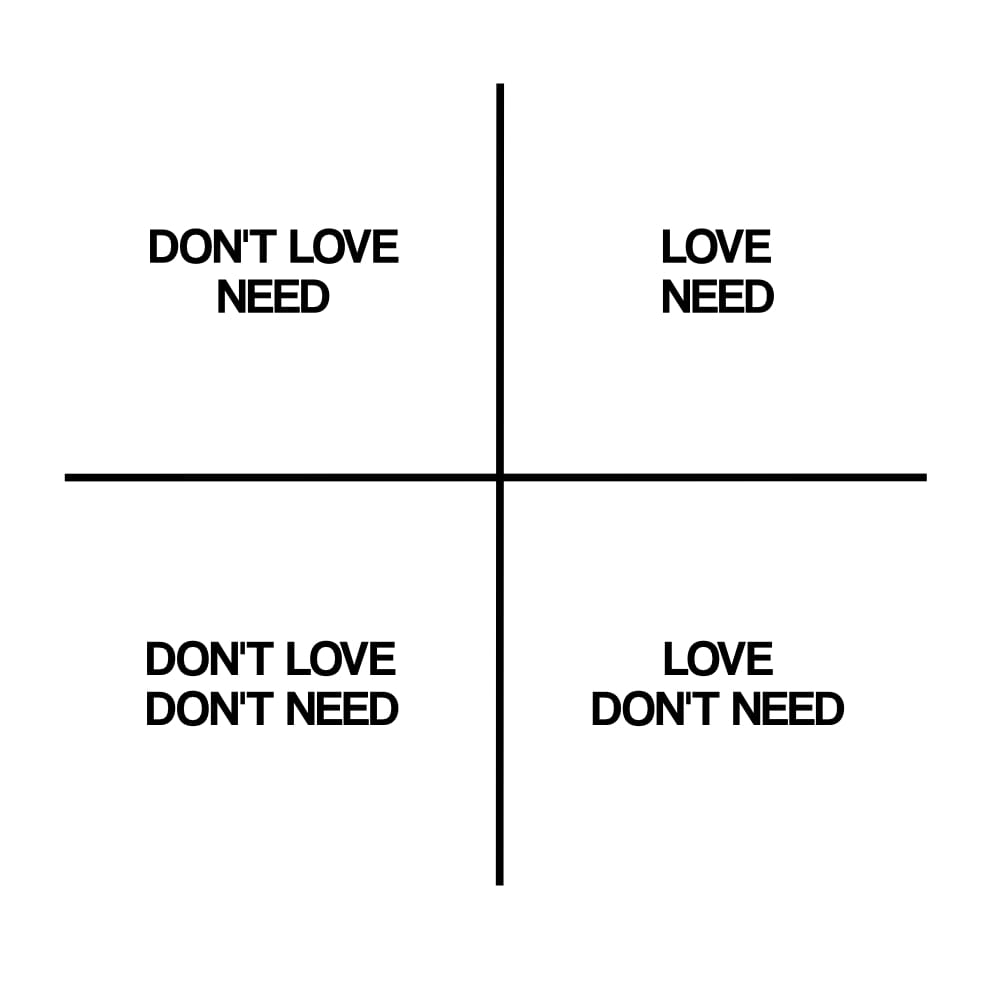
- Now, you assess. What is in the top right quadrant? Those should be your core products and offerings. You might even find some new services you could offer that more align with your passions. What is in the bottom right quadrant? How can you make those more important to your business? What is in the top left quadrant? How can you outsource those, or change them so you love them? What ended up in the bottom left quadrant? Cut those things ASAP.
The more time you can spend doing those, the more your company will grow.
What you should find are the things in your business that bring the highest return and provide a high level of satisfaction. You should immediately find ways to double down on those parts of your business.
Building sustainable systems
When I was younger, I thought productivity was all about speed. How fast could I write? How many projects could I juggle? Now I understand it’s about building systems that grow stronger over time.
I think about my body like a computer with a specific amount of RAM. When you’re a novice at something, it takes up 80-90% of your bandwidth. You’re learning the basics, figuring out what works, making all the rookie mistakes. You can barely think about anything else when you’re working on it.
Over time, as you become a pro, that same task might only take 1-10% of your bandwidth. Keep going, become an expert, and it drops to a tenth of 1%. I’ve been doing this so long that giving presentations takes very little of my bandwidth. It still takes energy, but I can do it while managing other tasks because I’ve mastered it.
The trick is understanding that you can’t do more than one novice thing at a time. You can’t do more than three things you’re a pro at in one day. You have to respect your bandwidth limitations. So many of us try to open five novice programs at once and wonder why our system crashes.
Some tasks take a long time even when you’re an expert. If I can write 2,000 words a day and I’m writing a 100,000-word book, that’s still 50 days. That’s still almost a sixth of my year writing that book. Then, I have to edit it.
The key is accepting that mastery takes time, but it does come.
When you’re learning something new, try not to learn other things simultaneously unless you’re already an expert at them. Focus on turning as many novice skills into pro skills, and pro skills into expert skills, as you can. That’s when you start doing these things on autopilot.
If something is exhausting you right now, you’re probably not far enough along on it. You need to at least get to a pro level at it, or figure out a way to offload it or delegate it before you can move on to the next thing.
This is why it’s so important to give yourself space. Your speed of creating things will increase with each stage, along with the number of projects you can produce. But you have to respect the process. You have to understand that your capacity grows naturally over time, and you can’t force it.
Even expert-level tasks can take significant time and energy. When I do an expert-level task like giving a presentation, it takes all my focus and energy because I have to be present. The difference is that I know how to manage that energy now, how to prepare for it, and how to recover from it.
This is the reality of sustainable growth. It’s not about suddenly becoming superhuman. It’s about gradually building your capacity, understanding your limitations, and creating systems that work with your natural rhythms rather than against them.
Planned serendipity
I always thought that the more successful you got in business, the more rational, logical, and measured you would be, but I’ve had a different journey. I started in business very “business-minded”.
I put quotes around business-minded because while there is a perception of what being business-minded means, my journey has been a descent into chaos.
Being business-minded entails possessing a mindset focused on business-related activities, including entrepreneurship, management, finance, and strategic planning. Individuals with this mindset demonstrate strategic thinking, analyzing situations to identify opportunities and develop plans to achieve business goals, while also being willing to take calculated risks.
They possess financial acumen, able to manage budgets, forecasts, and financial reports effectively, and they excel in networking, building and maintaining relationships within the business world to foster new opportunities. Moreover, they exhibit strong problem-solving skills, addressing challenges that arise in business operations, and are receptive to innovation, embracing new ideas and technologies to enhance business processes and products.
Overall, being business-minded encompasses a blend of skills, knowledge, and attitudes essential for navigating and succeeding in the dynamic landscape of business.
Not to say my successful friends don’t have all those qualities. They do, it just paints a picture of a stodgy old man who sits around a computer studying spreadsheets.
Basically, it brings to mind President Business.

Meanwhile, most of my successful friends are closer to Princess Unikitty.

Let me be clear, Princess Unikitty is a killer business being. They somehow keep Cloud Cuckoo Land running even though it is pure chaos, and they do it all with an upbeat smile and I heavy dose of magic. On top of that, Cloud Cuckoo Land works effectively-ish; so much so that many master-builders choose to live there. In the chaos, they thrive.
When I first started in business, I thought it was Lawful Evil, like President Business, but have found business is more Chaotic Good, like Princess Unikitty.
Can you explain why Cloud Cuckoo Land works? No, but it certainly does work…until order is imposed on it.To succeed, it’s usually better for both your company and your mental health to try to focus chaos productively than to impose order onto it. In short, the universe is dumb and capitalism is nonsense.
After that article, people asked me what they could even do if the world was pure chaos energy. I’ve been thinking about this a lot recently and I think my business started growing when I embraced that chaos and found ways to embrace it in productive ways.
Mostly, I have fully embraced planned serendipity.
While you can’t force serendipity, you can bottle it. The more I embrace this business, the faster my success grows. My businesses are mostly about bringing the smartest people I know together, giving them space to exist as their best selves, and understanding that good things happen, even if I don’t know what those things might be, effectively trying to bottle that chaotic good energy to work for everyone at scale.
The more I work building events, the more I believe events fair when they stop being able to bottle that energy for their attendees.
There is an idea in both publishing and movies, where if you release enough books, then 1 in 10 books will pay for the other nine. Nobody can tell you which one will succeed, but they know if they release enough projects, then the Bell Curve will stabilize and they can predict things.
The general idea of the Bell Curve is that if given enough of the correct data on almost any subject, then the data distribution will look like a bell with a big, fat middle that tapers off on the edges. You can really get into the weeds about whether this is the correct distribution for every population, but since I look at audience building and sales from the sociological perspective of how large groups behave, it is apt for this discussion.
Why is this important in sales?
Because almost everyone gives up on accumulating data before their distribution fits into a Bell Curve.
What do I mean by that?
Let us say that at a convention, every 100 people you talk to will lead to $100 in sales. Once you talk to 100 people, you can reliably predict you will make that amount of money almost every time.
The reason that is predictable is that you have found the normal distribution of your data.
However, if you give up and only talk to 50 people, you will not reliably make $50 in sales.
Why is that?
Because you have not spoken to enough people to normalize your curve.
You see, if you talk to 100 people, you might make that $100 from the first two people, or the last two people, or somewhere in the middle.
But by skewing your metrics, you no longer have a Bell Curve, which makes your curve more erratic and less reliable.
You might make $300 from talking to 10 people or $0 from talking to 70 people, but it’s impossible to predict because you have not collected enough data.
The graph of data eventually normalizes into a Bell Curve because there is enough data, a robust data set, to create such a curve.
This can’t be overstated enough. If you gather enough data, then your data will, 100% of the time, result in a curve that looks like a bell.
There are ways to correct for a less-than-normal distribution curve, but it’s still partially a guess.
The Bell Curve is the foundational metric of statistics. It’s how we can poll 1,000 people and make assertions about a whole population.
There is another factor working here, though, because to get a Bell Curve, you need your data collection to be random.
For instance, you can’t pick and choose who you talk to at a convention because that is no longer random. I can’t tell you how many sales I’ve made from people outside my target demographic simply because I talked to them.
So, if you only look for people who look like your perfect customer, your standard distribution falls apart.
This doesn’t mean you should go everywhere and talk to everyone, even at a supermarket or swap meet, unless they have a high propensity for being filled with your ideal clients.
For instance, if you want to study voting patterns in Texas, you wouldn’t poll people in Oklahoma, right? So, you need to find the random distribution in whatever population you choose, like a specific convention.
However, it does mean when you decide to do a marketing/sales push, you need to get a robust data set. Otherwise, your numbers will vary wildly.
This concept is a foundational component of all sales. It’s how you can predict the ROI of your ad spend, choose what conventions to go to, and how much money you will make next year.
That’s a big, long way to explain that nobody knows what will work, but if we do enough of the right things, it will probably all work out. We all want more certainty than that, but I just don’t think it exists. The best we can do is try to bottle chaos without imposing to much order on it.
When I looked into it more, I found that this is true with almost any industry. It’s how venture capital firms work. It’s how mutual funds work. It’s how innovation cycles work.
Basically, our entire economy runs on bottling chaos and planning for serendipity.
We as humans want to believe there are people who know what they are doing, but the “smartest” people are mostly just really good at bottling chaos and using it to get lucky. After all, luck is what happens when opportunity meets preparation.
You won’t get your big break before your time. This is an unfortunate truth of being a creative. It doesn’t matter who you know—until you are good enough to create mind-blowing content, nobody is going to hire you.
So many creatives believe that meeting Stan Lee or Steven Spielberg will change their lives. The thing is that it just might. It might change your life, but not until you are ready for it. If you meet Steven Spielberg and hand him your piece of garbage short film, he’s not going to care.
If you meet Steven Spielberg with your earth-shattering movie, he might take notice. He might not, but he might if you catch him on just the right day. But that chance meeting is luck. You have no control over luck. What you have control over is your preparation.
If you prepare properly, opportunities will present themselves. If you put yourself in the right situations, opportunities will happen. If you are prepared, then you will be able to make the most of those opportunities. The right opportunities can take years to cultivate, like pulling on a rubber band. As you pull back, the tension grows and grows. The harder you pull on the band, the more force it has when you finally release it.
The trick is to find these opportunities before you are prepared to utilize them and cultivate contacts until they will happily help to advance your career. This is possible even if you are at the beginning of your career and haven’t created anything of import yet.
So, how do we do that?
There’s an old saying among creatives: “Good, nice, and on time. You need two in order to succeed.” Being good means you have the talent required to do the job. Being nice means people think you are generally pleasant and affable. Being on time means you deliver on or before a deadline.
As the saying goes, you need two in order to succeed. If you are nice and on time, you don’t have to be that good. If you are good and nice, you don’t have to be on time. If you are good and on time, you don’t have to be that nice. It follows that if you want to find opportunities, you have to master two of those qualities.
At the beginning of your career, you aren’t very good—at least not compared to where you will be in the future (with hard work and dedication, and finished projects). The only two things you have control over are being nice and on time. If you can master those two, opportunities will present themselves if you put yourself in the right situations.
If you can just be nice and on time at first, even if you suck at your chosen profession, people will want to be around you. Over the years, you will build a massive rolodex of influential people who want to work with you. Eventually, with enough practice, you will learn to be really good at your job, too.
Possessing all three of these skills is what I call the holy trinity of success, and it’s critical to build your career. I’ve found it over and over in the top performers of every creative field. If you can start out just being on time and nice, people will want to help you. If you keep working at your craft, you will eventually get good. If you can be good, nice, and on time, there will be no stopping you.
It’s important to note that when you get your opportunities by being nice and on time, these will be lower-end opportunities. They won’t be hiring you into your dream career; they will be using you for grunt work.
If you can do that work with a smile, you will build up enough trust with people that they will assuredly want to help you at the opportune moment—but don’t ask for that help until you are ready. When you can create great content, it will be a no brainer for them to work with you.
It’s easy for me to connect the dots of my career in retrospect, but most of it started with getting into the right rooms with the right people.
I recently wrote a comic with a very successful author, but that road started by reconnecting with her at in 2022 at 20Books, and it really started in 2015, when we were both running similar companies. My relationship with our publisher goes back years as well and we’ve both grown our careers in parallel but dimilar (different but similar) tracks.
I have maintained this idea for years that if I could just know and hang out with enough smart people, who were all on dimilar journeys, then good things would happen. It wasn’t until I merged it with intention and planned serendipity that is all started to come together.
The planning is the events and the spaces I either join or build with intention. The serendipity is what happens when you get there and let life unfold.
The more I focus on growing the right audience and curating the right events, the more my business grows and the more I feel like I’m on a solid path.
IDK what will happen from just about anything I do. I just know that if I put certain projects out into the world, good things will come from it. It might sound terrifying, but it’s one of the most freeing things I’ve ever found.
Break through a ceiling. Turn it into a floor.
When I first started my career, everything felt exponential.
Every show I tabled at, I met more people. Every book I put out, I doubled my readers. Every launch seemed bigger than the last. It was a rush.
And like most new authors, I assumed the curve would just keep going up forever.
Spoiler: it doesn’t.
Eventually, I started seeing the same people at shows, and now I was a known commodity. People had made opinions about me, and many of them not positive.
Yes, I could level up my shows to reach new markets, but eventually if you’re doing the biggest show in a market, then you essentially cap out at the people you can meet there.
You can still work hard. You can still put out books. You can still post on social media, buy ads, do all the things. But the returns flatten out. What used to be exponential suddenly becomes logarithmic. The curve bends, and you hit a ceiling.
And when you’re in it, it feels awful. You start asking yourself: “Why isn’t this working anymore? What am I doing wrong?”
But you didn’t do anything wrong. This is just how growth works.
Every level has a ceiling.
The mistake I see most authors make is that when they hit a ceiling, they think the way to break through is to press harder. So they keep doing what they’re already doing, just more of it.
More books. More ads. More posts. More everything.
That’s pressing the balloon down on a bed of nails. You can put your whole weight into it, but nothing happens. Because the pressure is spread out across too many points.
A balloon doesn’t pop that way.
But press it against one needle, one pinprick? Pop.
That’s the secret to breaking through ceilings. Not by doing more of everything. By finding the weak point and pouring all your energy into it until it bursts.
Every ceiling has its own collection of weak points:
- Visibility. Maybe you need to be seen with the right people. Your work is good, but nobody in the next tier even knows who you are.
- Legitimacy. Maybe you need a publisher, an award, a review, something external that proves you belong.
- Messaging. Maybe your books are too hard to explain, and you need someone who can sharpen the pitch so readers and gatekeepers actually get it.
- Network. Maybe you need introductions, endorsements, or partnerships with people already living at the next level.
And most authors don’t stop to analyze it. They just keep doing what they’ve always done, wondering why they’re stuck.
For years, nobody in publishing took me seriously about Kickstarter. I could run campaigns, hit my numbers, show the receipts, and people would nod politely, then go back to ignoring me. It didn’t matter what I knew. From their perspective, I wasn’t credible.
I told Monica Leonelle that what I really needed was somebody like her to validate me with the industry. I don’t think she believed me at first. It sounded like ego, or maybe desperation.
But then the Get Your Book Selling on Kickstarter book launched. And overnight, the same people who had written me off suddenly got very excited. Nothing about my expertise changed. What changed was legitimacy. Monica’s name on that book was the needle. It burst the balloon.
That’s how ceilings really work. You don’t break them by grinding harder. You break them by finding the weakpoint, the one needle that makes all the pressure count.
One specific Author Ecosystem, a Tundra, is preternatually adept at finding these weakpoint. They don’t scatter. They don’t flail. They put everything into the pinprick until the ceiling bursts.
In the past year, I’ve been having a crisis of faith about whether Tundras are their own ecosystem or just a glorified sales funnel.
I’ve decided they’re definitely their own ecosystem, and they think in effort/burst cycles. I often say you only get 1–2 times a year to really leap your career forward, and the rest should be spent planning for or recovering from those moments…
…and that is classic Tundra thinking.
It’s not just about launches. They know x, y, and z have to happen before they can break through the next ceiling, and they strategically plan toward a singular point of effort.
It seems like they are in hibernation, but what they are really doing is moving around the chess pieces until they are all in perfect alignment to strike hard and fast. While a Grassland will map all the topics needed to circle a subject, a Tundra will focus on the one point of pressure they need to push to break through.
I’ve done this with anthologies and virtual summits, not necessarily to make money, but to build my network and push through to the next level.
Every breakthrough I’ve had came from finding a weakpoint and hammering it.
- Monsters and Other Scary Shit and Cthulhu is Hard to Spell? Those weren’t about money. They were about network. 50-75 creators in an anthology = lots of audiences, lots of credibility, and lots of doors opened.
- The virtual summits I ran? Those were about visibility. Thousands of new subscribers in a week. Suddenly people who’d never heard my name couldn’t ignore me.
- Those co-written books gave me credibility and legitimacy with huge segments of the publishing ecosystem that didn’t give me the time of day before I wrote them.
None of those were accidents. They were strategic weakpoints. But that was just half the equation.
Busting through a ceiling wasn’t the win, not until I turned around and built the structure to turn it into my new floor.
You don’t only rise to the ceiling. You also fall to the floor.
This is the lesson that changed everything for me.
Breaking a ceiling feels incredible, but it’s temporary. A ceiling is just a breakthrough moment. A spike on the graph. A flash of attention.
A floor is permanent. A floor is the level you never fall beneath again.
If you don’t reinforce the new level, if you don’t stabilize, if you don’t put in the invisible work of hibernation, you fall right back through.
This is what most people don’t get about Tundras.
When you see a successful author disappear after a big launch, it looks like they’re coasting. It looks like they’ve gone quiet.
But they’re not sleeping. They’re reinforcing. That’s what hibernation really is.
It’s all the unglamorous, invisible work of stabilization:
- Following up with people.
- Recording podcasts.
- Showing up in new communities.
- Delivering on promises.
- Strengthening relationships.
- Building systems and infrastructure.
When I started breaking through to higher levels, it meant a lot more work under the radar. The ceiling I broke wasn’t automatically a floor. I had to make it one. And that meant catching up with people, putting myself on more shows, and doing the kind of behind-the-scenes labor nobody sees.
That’s why strong Tundras hibernate. Not because they’re resting (though they should be doing that, too), but because they know the breakthrough isn’t the end. It’s the beginning of the work that makes the new level stick.
That’s why you only get one or two real shots a year to pool all your energy and break through a ceiling. That’s why you need to break through as many levels as you can with one go.
You spend most of your time reenforcing the floor. So, you have to make those moonshots count.
That’s why strong Tundras spend most of the year preparing. They’re lining up weakpoints. They’re stacking visibility, legitimacy, network, and messaging so when they hit, they break through multiple ceilings at once.
And then, once they break through, they hibernate. They reinforce. They make that ceiling a floor.
Here’s how the curve really works:
- Early career: exponential growth. Every move pays off.
- Ceiling: growth flattens. Effort yields less.
- Pinprick breakthrough: targeted move cracks the ceiling. Growth spikes.
- Hibernation: reinforcement work turns the ceiling into a floor.
- Repeat: exponential → logarithmic → breakthrough → floor.
That’s the loop.
If you understand where you are on the curve, you stop beating your head against the ceiling. You stop blaming yourself. You start looking for the weakpoint. And you plan your shot.
Unhealthy Tundras:
- Bloop through ceilings by luck, then slide back down.
- Get addicted to breakthroughs and keep launching without stabilizing.
- Burn out because they never hibernate.
Healthy Tundras:
- Identify weakpoints.
- Pool their energy into 1–2 strategic shots a year.
- Break through multiple ceilings at once.
- Hunker down in hibernation.
- Reinforce until the ceiling becomes the floor.
Every career has levels. Every level has a ceiling. Breaking through feels incredible, but it’s not the win. It’s just the opening.
The real win is what comes after, because you don’t rise to your ceiling. You fall to your floor.
And if you want to keep leveling up, you have to turn every ceiling you break into the new floor you stand on.
Inefficiency is the real flex
Somewhere along the line, we got tricked into believing that efficiency equals success.
We started to believe that the person with the fullest calendar, highest productivity metrics, and shortest email response time is the one who’s winning.
We began treating our lives like machines with every second accounted for, every task tracked, and every outcome optimized.
This was supposed to make life easier and better…
…and yet, we’re exhausted, unhappy, and worst of all, we’re still broke despite running faster and faster on the hamster wheel for years. “Gurus” have been telling us all along that time=money, but what if the real flex isn’t doing more, faster, better?
What if the most radical thing you can do today is take a nap at 2 pm, go see a movie in the middle of the week, or sit quietly with a cup of tea doing absolutely nothing productive?
In a world addicted to hyper-efficiency, choosing deliberate inefficiency is a power move.
This is something aristocrats have known for centuries. There’s nothing more gauche than working…unless it’s for them.
They will dangle the carrot in front of you as long as it keeps you working for their bottom line, but no matter how much you work for them, they always want more. The cult of efficiency is built on the foundational lie that doing more makes you worth more.
We’ve all internalized this belief to some degree. We feel guilty for resting. We apologize for delayed replies. We hustle through burnout and call it “grind culture.”
But who does this actually benefit?
Not you, and probably not anyone you would care about even a little if they didn’t offer you a paycheck.
The system demands more output, but not necessarily better input. It feeds on your constant motion. When you slow down, it starves the machine, taking back your time, and reclaiming your sovereignty.
That’s the real power, but more importantly, it’s just more fun to inefficient. We simply like our lives more when there is space to play around. No matter what capitalism thinks, we humans usually think it’s pretty great to get lost in a useless moment.
Honestly, I can’t believe I have to write this, since it should be so obvious that “wasted” time is where the good stuff lives, but I’ll bet every memory you treasure and photo you’ll never delete was probably created inefficiently.
While I’ll grant the idea that in some jobs working faster actually makes you more productive, that’s not true for knowledge workers that thrive on great ideas. When one great idea is worth a million, or even a billion dollars, churning out more and more average ideas is ludicrous.
You don’t get breakthrough ideas while grinding through back-to-back meetings. You get them in the shower, on a walk, or while doodling in the margins of a notebook.
When we create margin in our lives, we invite innovation. We create space for insight.
And even when you’re not in pursuit of some big epiphany, giving yourself permission to waste time is restorative. Watching a movie in the middle of a Tuesday isn’t indulgent. It’s why life is worth living.
You might think that inefficiency a privilege, but our ancestors literally died to make it a human right. They died for a weekend, a 40 hour workweek, and to not be worked like a robot.
And here we are letting it happen again!
We’ve been conditioned to maximize every moment, while those with power and money build in leisure as a default.
Efficiency is a trap. It’s a race designed to keep you constantly performing, constantly optimizing, and constantly comparing your worth to someone else’s output. It’s a game you can never win, because the finish line keeps moving.
If you’re a creative type human, inefficiency isn’t optional. It’s your lifeblood.
Yes, a big part of your job is to show up consistently, but showing up doesn’t mean burning out. It means letting boredom creep in sometimes. Letting your subconscious do its thing. Letting the gaps between tasks breathe a little.
Truly original work is born from the liminal spaces, unoptimized hours, and inefficient parts of your life that don’t make it into the Instagram highlight reel.
And ironically? Those inefficient moments are often the ones your audience connects to the most.
I have meetings every week where super successful people confess they still feel the need to grind it out, not because their bank account is low, but because they have been trained since birth that any time they have must be filled with work to fuel the capitalism machine.
If even they are brainwashed by capitalism, what chance to we have of breaking free? None, unless we do it with intention.
Money means nothing if we don’t use it wisely. Yes, we need some baseline to live, and some amount saved to feel safe, but after that the only thing worth buying back in this business is your time.
That said, what’s the point of even doing that if we can’t feel good about using it to putz around? Pursuing money in service to pursuing more money is an miserable game that never leads to happiness.
If this idea feels radical to you, good.
It shouldn’t, though, and that’s the problem with the whole system.
This should be the obvious base state of every single human on this planet. I shouldn’t have to convince you that you get the best ideas in your downtime because I should never have to justify taking downtime.
That I do have to justify inefficiency proves something is fundamentally wrong with the whole system.
Don’t worry, though, you’re not alone. Everyone feels this way, even me a lot of the time. So, to help break this cycle, here’s how to start flexing your inefficiency muscle:
- Schedule blank space - Yes, actually put it on your calendar. A morning off. An evening without screens. A whole Saturday with no agenda. Let the blank space be sacred.
- Say no without apology - Not every opportunity is worth your time. Not every hour needs to be monetized. Your calendar doesn’t need to be full to justify your existence.
- Do one “useless” thing a day - Watch a movie. Go to the beach. Bake bread. Sketch. Dance badly. Something purely for the joy of it, with zero ROI.
- Plan elasticity - Leave space in your workflow. Don’t book every minute. Build in valleys between the peaks. Let your schedule breathe.
- Protect your peak creative time - Whether you’re a morning writer or a midnight dreamer, protect that sacred time. Don’t dilute it with meetings or admin. Let it be inefficient and exploratory.
It makes me so sad that I have to make a list to tell you how to relax and not feel burdened about it, and yet here we are.
You don’t have to prove your worth through busyness. You don’t have to chase every shiny productivity hack. You don’t have to collapse under the weight of a to-do list written by capitalism.
You are allowed to rest, wander, and be gloriously inefficient.
Because inefficiency isn’t failure, it’s freedom. It’s the space to create, connect, and breathe.
And that? That’s the real flex.
The question to ask during this is:
- What are you keeping to have your best quarter ever?
Here are those resources again.
(P)rioritization HAPI Compass related articles and resources
We believe in what we call the HAPI Compass to building a successful author career, which revolves around four points. Point it at your work and your direction comse into view:
Russell NoheltyAnd these are the three most powerful ones.
Prioritizing your business using a modified Eisenhower Matrix
Hi friends,
Russell NoheltyIntroduction
Russell NoheltyHow to Thrive as a Writer in a Capitalist Dystopia
Russell NoheltyWhere are we going next?
(I)ncome
Income is all about making the money you need to lead the life you want without compromising your values along the way. Here’s where you can find all our (i)ncome related resources.
(I)ncome HAPI Compass related articles and resources
We believe in what we call the HAPI Compass to building a successful author career, which revolves around four points. Point it at your work and your direction comse into view:
Russell NoheltyThese powerful resources can help you attract money to you without feeling gross about it once your done with this section.
Building an integrated publishing ecosystem
This presentation breaks down a crucial lesson for authors: success isn’t about picking the “best” platform, whether it’s Kickstarter, Substack, or direct sales, but about how they work together to amplify each other.
Russell Nohelty[TIAFC 2024] 1 - Homepage experience
Russell Nohelty
Setting up successful products on your web store
Here is a quick link to the sales page for reference.
Russell Nohelty
11 steps to supercharging your writing career with our Author Stack framework
Hi, I’ve written a lot about author growth in my career. So much that it often paralyzes people from taking action. While we have loads of books and frameworks, I’ve been trying to collect my most powerful concepts together into one place to help you stack processes on top of each other to generate outmoded success.
Russell NoheltyMy wife thinks I’m nuts when I say this, but I truly believe you can always make more money.
And I don’t mean “work more hours” or “grind harder” or “manifest abundance” with a vision board and a mug of turmeric tea. I mean you can literally pull money out of thin air.
I do this all the time. Launch a course? Boom, money. Drop a Kickstarter? Boom, more money. Offer a consulting call, publish a book, run a Substack promo…every single one is a container for money.
The better your container, the more money it holds.
A container is anything people can buy from you.
Books, courses, consulting, subscriptions, merch, paid webinars, live events, even a signed postcard with a doodle counts if someone values it.
The moment someone gives you money, you’ve pulled that cash from the ether using your container.
- The better the container fits your audience, the more easily it fills.
- The better container you make, the more money fills that bucket.
- The more aligned that container is to your audience, the more money fills that bucket.
- The more often you launch, the more money (usually) fills those buckets.
- The bigger your audience, the more money fills those buckets.
If you’re not making the money you want, then you need better containers. Let’s say you write a book, and it flops.
That’s not the end of the world.
It just means:
- Your container was suboptimal, and/or
- Your audience wasn’t big enough to fill it, and/or
- You offered some combination of the wrong thing to the wrong people at the wrong time.
No big deal. Change the offer. Build a better container. Find a different audience. Rinse and repeat. The reason I succeed as an entrepreneur isn’t because I’m smarter or better than anyone else. It’s because I don’t stop building containers.
I just keep throwing buckets into the ocean until one comes up full. If a launch doesn’t go well, I build a different container to make up the difference.
The product is the container.
The platform is the spigot.
The launch plan is the method by which you turn off and on the spigot.
Over my career, I’ve build a collection of spigots and methods that I know reliable make me money when I need (or want) it.
- Launch a book on Kickstarter? That’s a reliable container and spigot.
- Do a convention? That’s a reliable spigot to sell my containers.
- Offer an Author Stack discount? That’s a reliable spigot.
- Launch a course? That’s a reliable container.
Really we’re all building containers, spigots, and methods that align with our audience in order to pull money from thin air.
Some containers take longer to build than others. My Hapitalist membership is something that is currently a great container without a very good spigot or method.
My hope is that my talking about it often and then running periodic launch events, I can grow it like I grew The Author Stack, 25-50 people at a time. If I can maintain the 70% retention rate, then after 1-2 years I’ll be making the money I want from it.
Meanwhile, while a launch like Revenge is a Dish Best Served Cold was a good spigot, container, and method for a one time event, building beyond that is opaque to me, as neither book fits into a series.
Having a one time event is not a bad thing, per se, but you shouldn’t judge a long term plan on a short-term event, or vice versa.
That’s all this whole thing is about, really. Every book you write is something you want somebody to buy, and thus it becomes a container for money. Where you launch it (KU, wide, direct to customer) is the spigot by which people find and give you money. How and where you talk about that launch is the method by which you turn on and off the spigot.
Most creators fail because either they don’t have these reliably tested and available or they are building terrible containers that will never support them.
If you make a book that costs $10, and you want to make $10,000, you need 1,000 people to buy. Since most decent offers convert around 1-3% of your audience, that means you likely need a 30,000-100,000 people in your audience to make that offer work.
But if you create something that costs $1,000, then suddenly you only need 10 buyers. And you probably already have 10 super-fans who would buy, if only you gave them the opportunity.
The only limitation on the amount of containers you can build is the number of people in your audience willing to buy that thing, and how often they are willing to buy from you.
If you have a 10,000 person email list, you can reliably do 4-5 launches a year. If you find other people’s audience, you can do more. You can sustain between those launches (and/or support them) with ads.
Want to make more offers? Build a bigger audience. It will take about 1-2 years for the bigger audience to stabilize, then you can make more offers to them.
Want to make more money? Build a bunch of containers.
- Want a bigger audience? Build a free container to capture new people.
- Want more people to buy? Build a $10 container to give people a taste at a low entry point.
- Want to make your career sustainable? Build a $100 container. Build a $1,000 container. Build a $10,000 container. Build a recurring revenue container.
And build an ecosystem of people who want to fill them.
Is this crass? Yes, but it’s also not magic. I’m not saying you shouldn’t take care in what you build. Far from it. You should love all your containers, and you should treasure anyone who buys them.
But under the surface, it helps to also understand the mechanisms powering your author career. If you are failing, you aren’t a failure. You just need better containers, better spigots, and/or better methods.
If you want to survive and thrive as a creator, you better believe this with your whole chest. You can always make more money.
Always.
Always.
ALWAYS.
And if you don’t believe that, you’ll always be afraid to take risks. You’ll freeze when it’s time to launch. You’ll panic when something fails. You’ll convince yourself you’re not cut out for this.
The people who make it? They trust they can always create another offer. Another opportunity. Another container.
Because entrepreneurship is the act of gambling time and money now for future gain, and you can only play the game well if you believe you can earn it back.
So, go build a container.
Doesn’t have to be big. Doesn’t have to be perfect. It just has to exist.
Money isn’t just out there waiting to be found. It’s waiting to be created.
Not someday. Not when you’re “ready.”
Now.
“If I needed $1,000, I could always…”
It starts with the gut punch of an unexpected bill.
Your car breaks down. A medical bill hits. Rent spikes. Or maybe it’s just that your book sales dried up unexpectedly this month. You open your bank account and stare at a balance that wouldn’t cover a trip to Taco Bell, let alone real life.
42% of people don’t have an emergency fund and couldn’t cover a $1,000 emergency bill that comes up.
2025 has been a year that won’t stop taking from me. First, I lost my biggest client. Then, I shuttered a company responsible for half my revenue. Then, I had to spend $8,000 getting all the pipes under my house fixed. Then, my car fell apart and now I need a new one, only to find out that I still need a new dishwasher.
2021 was the last year that felt like it took everything from me, and yet through it all, I always came back to one idea.
I can always make more money.
Since I started doing this work, I always had a trigger I could press to magically make another $1,000-$5,000 when I was short.
When I first started out, my “make money now” move was conventions.
I’d pile up my books, fill my trunk, set up my banner, and go sell in-person. It wasn’t glamorous, but it was dependable. I knew if I could get to a show, even a small one, I could come home with cash in my hand.
Then COVID hit. Shows disappeared. My “panic button” was gone.
So I pivoted to Kickstarter.
Kickstarter’s not something you can just flip overnight, but I’d built my system over the years. I had a list. A backlist. Launch templates. Email sequences. A plan. And that meant when I needed money, I could run a campaign and bring in a few thousand (or more). It wasn’t just theory. It was tested. Reliable. Repeatable.
Eventually, I added courses.
I realized that everything I’d learned could be turned into training. When I had a slow month or a gap in launches, I could do a soft launch of a mini-course, or run a cohort-based class. It wasn’t always flashy, but it worked.
Each time my business matured, my $1,000 trigger leveled up, but I always had one. It wasn’t always fun. I remember one time I was $2,000 short and that meant driving to Vegas for a show that weekend…
…but it worked. I made just over the $2k I needed to make payroll and keep things moving forward.
Publishing is a war of attrition. Mostly, we live to fight another day, but we can only do that if we have mechanisms that work to pick us up when we fall.
In the last couple of years, building our Writer MBA conference meant we had to use all kinds of tricks to make our payments to vendors and got very good at finding ways to squeeze water from a stone.
Most writers don’t have a mechanism they can turn to that makes them money on repeat, and that’s a problem.
Instead, they panic. They scramble. They beg. They borrow. Or worse, they freeze, burn out, and let their dreams die on the vine of financial stress.
If you want to build a business that lasts and doesn’t cause constant headaches, you need a way to make $1,000, or $10,000, consistently in a manner that is predictable.
Yes, those $50k launches were great, but that money burned quickly and then we were always back in the same place, trying to find a way to get to payroll again without overdrafting.
It gives you:
- Peace of mind. When the bank balance is low, you don’t spiral. You act.
- Power. You’re not waiting on BookBub, or praying for a royalty check.
- Control. You’ve got leverage in your own career.
This is especially important because publishing is a roller coaster. You’ll have $5K months and $500 months. You’ll sell out one launch and then tank the next one. If you don’t have a baseline system for generating revenue, you’ll burn out fast.
“$1,000 Triggers” writers can build
Every writer’s ecosystem is different. What works for me might not work for you, but you can build a system that fits your skills, audience, and energy.
Here are 10 ideas (some I’ve done, others I’ve seen work):
- Run a flash sale to your list: Got a backlist? Bundle it. Discount it. Make it exclusive. Then send it out with a compelling hook and deadline.
- Kickstart a mini project: Not a giant epic. A short story collection. A zine. A workbook. Something you can pull together fast with low risk.
- Launch a cohort course :Teach something you already know: world-building, character arcs, Kickstarter planning, Substack growth. Offer limited slots.
- Offer coaching or consults: Writers constantly need feedback. If you’ve done something successfully (launched, hit #1, built a mailing list), offer sessions.
- Host a virtual event or summit: Partner with other creators. Offer replays. Charge a small ticket price or upsell a premium bundle. Even if you write fiction, you can collect a group of authors together for a reader focused event about your genre.
- Sell a workshop recording: Have you given a talk, presentation, or done a deep-dive on a niche topic? Package it and sell it to your audience.
- Create a Patreon offer blitz: Launch a new tier with a special gift. Offer exclusive behind-the-scenes content. Drive traffic there with a 5-day campaign.
- Book a signing, convention appearance, or speaking gig: Libraries, schools, and cons pay. If you’ve got a solid presentation or track record, you can pitch yourself.
- Host a book bundle or sale with other authors: Use StoryBundle, BookFunnel, or just DIY. Everyone promotes. You split proceeds. Instant cash and cross-pollination.
- Do a membership drive: Offer a discount to your membership for a few days at a really good price.
The goal is not to do all of these. It’s to pick one, and build it into a repeatable, dependable revenue generator.
Just make sure you understand that these are emergency measures. They are meant to work when your back is up against the wall and you need money now.
You don’t have to like doing it, but it always has to work, and that means testing. Your $1,000 trigger needs to be built now, tested, and refined so when you need it, it’s there.
That might mean running a flash sale when you’re not broke, just to test it. Or hosting a tiny course with five people to work out the kinks. Or launching a $500 Kickstarter just to see what your audience responds to.
Eventually, you’ll find the sweet spot: what works for you, reliably, over and over.
That’s when you go from surviving to thriving.
What’s Your “I Can Always…”?
This is your challenge: fill in this blank right now, before you need it.
“If I need $1,000, I can always ________.”
If you don’t have an answer yet, start building one. Test it. Refine it. Turn it into something that isn’t just a fallback, but a strategic part of your author business.
Because when the panic hits, and trust me, it will hit, you don’t want to be scrambling. You want to be executing.
This whole writing business? It’s not about going viral. It’s not about hitting a list. It’s not even about royalties or awards.
It’s about freedom.
This is what we teach in Hapitalist, our top tier membership at The Author Stack. The freedom to write what you want. To build something you love. To create without desperation creeping in.
And that freedom starts with knowing, without hesitation, that when the chips are down that you’ve got a trigger and system that works.
Your answer to the $1,000 question isn’t just about money. It’s about security, sovereignty, sustainability…
…and the dogged belief that you can always always always make more money.
Freedom to vs. freedom from
A while ago, I read On Freedom by Timothy Snyder. It’s the companion piece to his On Tyranny book everyone talks about, rooted in politics and philosophy, and not the kind of thing you’d expect to offer a profound insight about running a creative business.
Still, I can’t stop thinking about the the difference he draws between freedom from and freedom to.
After all, freedom is the holy grail, right? At the end of the day, doesn’t everyone tell us what we want is freedom?
I don’t think I’ve ever heard a speech, at least not a political one, that didn’t talk about some type of freedom, but most of the time what they tell us to chase is freedom from something, whether it’s freedom from jobs, from rules, or from gatekeepers.
But when we finally get that freedom we’re chasing? We don’t know what to do with it, and that’s because freedom from whatever we’re escaping is only half the battle.
Freedom from is a powerful drug. When we are shackled, that is the kind of freedom we yearn to have in our lives, and we’re all pretty much shackled to something these days; work, kids, marriage, debt, addiction, or something else. Pick your poison, but there’s not a lot of “freedom” in the “land of the free”.
In that kind of world, freedom from is the easy sell. It’s the clean break that starts you on the hero’s journey.
You pass into your new reality, and that sounds great because your current reality suuuuuucks…
…but that’s only the end of the first act. Even if you find and slay the big, bad monster at the end of the story, that’s still probably only the first book.
What do you do for the rest of the trilogy? If you’re the hero of your own story, you learn to stop running from something you fear, and start running toward something you want instead.
Freedom to is the long game. It’s proactive, constructive, and grounded in values, not just reactivity.
Freedom to means:
- Freedom to build systems that support your creative work.
- Freedom to define success on your own terms.
- Freedom to focus, to say yes with intention, not just no out of fear.
- Freedom to create weird, vulnerable, unmarketable stuff, and maybe marketable stuff too.
- Freedom to take up space without apology.
Each one of those requires a commitment you have to choose proactively after accepting that no one’s coming to save you. We can’t even save ourselves. So, you have to save yourself.
Freedom isn’t the absence of structure. It’s the ability to choose the structure that serves you best.
There’s no boss. No teacher. No editor with a magic wand…
…and no villain, either. Not anymore.
You slayed that dragon. Now, you’re just standing in an empty field with a sword, trying to remember what you were fighting for in the end. That’s when you have to make the shift from what you don’t want to what you do.
Not everyone makes that leap. Plenty of even full-time writers get stuck in the freedom from loop:
- “I don’t want to write what sells.”
- “I’m done with Amazon.”
- “I’m tired of playing the algorithm game.”
- “I hate marketing.”
Fine, but now what? If you’re going to build a life around your art, you can’t just be anti. You need to be for something. After all, if you stand for nothing, then what will you fall for, right? They say that in Hamilton, so you know it’s true.
This is the part where a lot of writers turn back.
It’s so much easier to be oppressed. It’s so much simpler when you have a villain, when you can blame the market or the publisher or the platform or the audience. It’s even easier to blame yourself than it is to take the reins.
But you can’t have real freedom without responsibility.
That means:
- Owning your schedule.
- Owning your failures.
- Owning your choices.
It’s about owning your success, however you define it. Nobody’s going to do this work for you.
Which, yes, is terrifying.
But also? That’s the power. When you claim your freedom to, you’re no longer at the mercy of anyone’s permission. Ultimately, this isn’t just about writing more, or building better habits, or optimizing your time. It’s about becoming someone new.
That’s the deepest promise of freedom to. Not just to write or build, but to step into a version of yourself that you used to only imagine.
The creative life, at its best, isn’t just a rebellion against the old. It’s a declaration of the new. It’s crafting a vision for the future and them walking toward it, even if nobody else can see it.
And that’s terrifying because becoming something new is a risk. It means letting go of the safety of your old identity and replacing it with one you build from scratch. One that might fail, and is certainly not guarantee to work.
But that’s also the most profound use of freedom.
So, if you’re standing in that empty field right now, sword in hand, wondering what you fought for, this is it.
Not safety, or avoidance, or perfection, but the subtle art of becoming.
You get to decide. That’s the gift and the burden of this path. You can choose to write strange books, or start a newsletter, or launch your own imprint, or stop writing entirely and build furniture instead, and it’s all valid.
But make no mistake, choosing not to choose is still a choice.
The longer you stay in the purgatory of freedom from, the more your dream decays into regret.
So, I’m not going to end this by telling you to quit your job or start a Substack or launch a Kickstarter. I’m just going to ask this one question.
What are you building with your freedom, and is it enough?
Think about it. Who you? Who are you? Who are you? And whatchu gonna do? Let us know in the comments, and yes, that’s another Hamilton quote.
The Margin of Safety: Why most books flop and how to survive anyway
If you’ve been around the publishing block, you’ve probably seen or lived through this experience.
An author pours their heart, soul, and bank account into a book. They believe in it. It’s the one. They do the launch, the social media tour, the ads, the newsletter, the prayer.
And then… nothing.
A handful of sales. Maybe a spike that lasts a day or two. Then silence.
Worse, the author doesn’t just feel disappointed, they feel broken. Like the failure of their book means they failed. Like the dream just died in real time.
And this isn’t rare. It’s shockingly normal.
Most books flop.
Even for successful authors, only a small percentage of books are doing the heavy lifting at any given time. You might write twenty titles, and two or three of them will bring in most of your income.
Among even my most successful friends, this holds true. Roughly 20% of your books will generate 80% of your income.
It’s the Pareto Principle applied to publishing.
This isn’t a fluke. It’s a function of how creative markets work. Some ideas resonate deeper. Some books hit a moment. Some just keep selling for years while others fade.
You won’t always know which ones will take off.
That means your job isn’t to create one perfect book. Your job is to create enough bets that a few of them hit.
It’s not about genius. It’s about durability.
That’s where the concept of a margin of safety comes in.
What’s a Margin of Safety?
The idea comes from the investing world, but Morgan Housel explains it best in The Psychology of Money.
A margin of safety is your buffer. It’s the space between you and catastrophe. It’s the built-in forgiveness that allows for failure without collapse.
In finance, it means not risking every dollar on one stock.
In authorship, it means not staking your future on one book.
It’s the opposite of going all-in.
Instead of swinging for the fences, you build a foundation that can absorb failure because failure is inevitable. Rejection is part of the job. Launches will flop. Algorithms will change. Trends will leave you behind.
But if you build for resilience, not just results, you can keep showing up.
And when you keep showing up, you give yourself more chances to win. More chances to win means the ability to take more gambles.
This is where most creatives get it backward. They think safety means playing small.
But real safety? Intentional safety?
It lets you play bigger.
When you don’t need every launch to succeed…
When you don’t panic if a book underperforms…
When even your worst-case scenario still leaves you standing…
That’s when you get to experiment.
You get to make bold choices. You get to try weird things and launch niche ideas and maybe even take a month off without the sky falling in.
And in publishing, staying in the game is the biggest advantage you can have.
But it’s not just about widening your range of acceptable outcomes.
It’s about raising your floor.
Imagine every book you launch earns $5,000. Not because it went viral, but because you built a system that works: an engaged list, a sales funnel, some direct traffic, a community that shows up.
Suddenly, you don’t need home runs. You just need steady hits. Repeatable processes. Sustainable income.
Success isn’t about having one book blow up. It’s about making sure every book does something.
When you raise your floor, you remove the desperation from your launches. You remove the fear from your creativity. You stop swinging wildly and start playing like a pro.
That’s when things get easier, not because the market got nicer, but because you got smarter.
The goal isn’t money, it’s freedom.
Most writers chase money. They want six-figure launches. Big contracts. Enough passive income to quit the day job.
And those things are great. I’m not here to shame the hustle, but if you study the authors who are truly happy and fulfilled, they don’t have the biggest bank account. They have the most freedom.
It turns out that the biggest predictor of long-term success isn’t money. It’s freedom.
Freedom to say no. Freedom to pivot. Freedom to take time off, to write what matters, to try something weird without worrying it’ll kill your career.
Money helps. Of course it does, but freedom is what lets you use that money wisely. It’s what lets you build something on your terms.
And the best way to create that freedom?
Having a margin of safety. It gives you a buffer from the stuff you plan for and the stuff you don’t.
Most people don’t fail because of what you planned for. They fail because of what you didn’t even imagine.
Most writers plan for what’s already happened:
- A soft launch.
- A slower Kickstarter than expected.
- A dip in sales after Book 2.
They assume future results will look like past ones, but things rarely break the same way twice.
Maybe Amazon changes the algorithm. Maybe a vendor goes under during fulfillment. Maybe your biggest marketing channel dries up overnight. Maybe you get sick. Or burned out. Or bored.
We like to think we’re playing poker, but really we’re playing jazz during an earthquake we didn’t see coming.
So how do you plan for the unplannable?
You don’t.
Instead, you build in a buffer that exists just because you know something will go wrong, even if you don’t know what.
Not “if,” but when.
That’s not being paranoid. That’s being professional.
How to Build a Margin of Safety for the World You Can’t Predict
You don’t need a flawless plan. You need a resilient structure.
You’re not planning for what will go wrong. You’re planning for the fact that something always will, and it probably won’t be what you expect.
Here’s how to build that into your career not just with spreadsheets and schedules, but with flexibility baked into your operating system.
1. Build Systems, Not One-Time Plans
A launch strategy is a plan. A marketing framework you can adapt and reuse? That’s a system.
A system doesn’t break when a single tactic fails. It bends. It re-routes. It learns.
- Don’t rely on one platform to reach readers.
- Don’t rely on one type of launch to generate sales.
- Don’t rely on one kind of product (novels only, or courses only).
Resilient authors don’t memorize scripts. They learn instruments.
2. Design for Downturns, Not Just Growth
Everyone knows how to scale up. Few know how to scale down without crashing.
Build your business so it still works when you’re tired, sick, burned out, or emotionally wrecked.
- Can your marketing keep going even if you vanish for a week?
- Can your income continue without a new release every 90 days?
- Can you hit pause without the whole machine seizing up?
You don’t have to live in survival mode. But you should engineer for it.
3. Create Optionality
The most powerful thing a margin of safety gives you isn’t just protection. It’s choice.
When things go wrong, can you pivot? When a channel dries up, do you have others? When you’re no longer excited by your genre, can you shift without nuking your career?
- Cross-sell formats (print, ebook, audio).
- Build direct access to your readers (email > social).
- Invest in intellectual property you can reuse, remix, or relicense.
Freedom is the ability to move before you’re desperate.
4. Set a Baseline for Survive Mode
Not every season is for growth. Some seasons are just about not falling apart.
You should know, right now, what “minimum viable effort” looks like in your business.
Ask:
- What’s my minimum publishable schedule?
- What’s my essential marketing stack?
- What can I automate or delegate when energy is low?
Write it down. Make a checklist. That’s your fallback protocol when the world spins off its axis.
5. Assume You’re Wrong
Forecasts are just guesswork with a spreadsheet attached. Always assume your next launch might flop, your platform might change, your brilliant new series might not connect.
That’s not pessimism. That’s realism.
So:
- Price things assuming lower conversion rates.
- Budget assuming longer timelines.
- Plan capacity assuming delays, flukes, and chaos.
Success comes from being ready for being wrong.
When you stake everything on one book, one platform, or one launch, you shrink your odds of success.
But when you build a margin of safety?
You create space—to fail, to try again, to grow.
You raise the floor. You widen the range. You let small wins count. And you keep showing up long enough to catch the big ones.
That’s how a career is built. You don’t have to be the best. You just have to keep playing.
Money as means or money as ends?
Most advice about “growth” comes from people who see money as the ultimate goal. They are usually agnostic about what they sell or how they sell it. To them, the process, whether it is crafting a book, building a platform, or designing a marketing plan, is just a means to an end. Their focus is on the outcome: the accumulation of wealth.
For many creators, this mindset grates against their souls. Writers tend to care deeply about the process and the work itself. Writing is not just a job; it is a craft, a calling, and often a form of self-expression. For most authors, money is not the ultimate goal. Instead, it is a tool, a necessary means to create more books, connect with readers, and sustain a writing career. Once the basics are covered—keeping the lights on, buying time to write—money often fades into the background.
This difference in priorities creates a disconnect. Advice aimed at maximizing revenue can feel out of sync with what authors truly value. When money is the end goal, the strategies you use are very different than when writing and creating are the end goals. This misalignment leads to authors and growth experts talking past each other, unable to connect because they are speaking entirely different languages.
Money as means
For authors, money serves as a way to sustain their writing lives and foster creativity. It enables them to invest in their craft, expand their audience, and build a sustainable career without constant financial stress. Writers who see money as a means prioritize creative integrity and long-term growth over short-term gains.
This approach often involves reinvesting earnings into areas like editing, cover design, marketing, or learning opportunities. For example, an author might use royalties to pay for a professional editor or a marketing campaign that helps their book reach a wider audience. The goal is not to accumulate wealth for its own sake but to create a virtuous cycle where financial stability supports better work and better work leads to greater impact.
Seeing money as a means allows authors to focus on their craft and their readers. It aligns their financial decisions with their creative values, ensuring that their work remains authentic while still reaching those it is meant to serve. This perspective often leads to careers that are deeply fulfilling, even if they do not yield massive financial rewards.
Most importantly, when money is the means, you aren’t spending a lot of time focusing on how to make more, unless it aligns with the work you are already doing.
- Focus on growth through craft: Authors reinvest earnings to improve their skills and their books, prioritizing quality over quick wins.
- Create stability for creativity: Money is used to remove financial stress, allowing authors to focus on what matters most—their writing.
Money as ends
For most entrepreneurs, money is not a tool but the ultimate goal. This mindset shifts the focus from the process of writing to the financial outcomes it can deliver. Authors who take this approach often prioritize market trends, scalability, and profitability over personal or artistic considerations.
This perspective can lead to strategies that emphasize quantity over quality. An author might focus on publishing quickly in high-demand genres, even if the work feels formulaic or disconnected from their true interests. While this approach can result in financial success, it often leaves little room for creative satisfaction or personal fulfillment.
When money is treated as the end goal, decisions are driven by external metrics like sales rankings or revenue targets. The creative process becomes secondary, valued primarily for its ability to generate income. This can create a disconnect between the author and their work, as well as between the author and their audience.
These types of entrepreneurs don’t care about what they are selling (with some exceptions) just that they are making money doing it.
- Prioritize market trends: Decisions are driven by what is profitable rather than what is personally meaningful.
- Measure success by financial metrics: The focus shifts to sales and revenue, often at the expense of creative satisfaction.
Two worldviews colliding
The tension between these two perspectives is why authors often feel disconnected from conventional growth advice. For those who see money as the end goal, the strategies are straightforward: focus on the numbers, optimize for profitability, and treat the process as a means to a financial end.
For authors who see writing as the end goal, these strategies can feel alien or even harmful. Writing is deeply personal, and treating it as just another “product” in the marketplace can feel like a betrayal of what brought them to the craft in the first place. This misalignment leads to frustration. Growth experts may feel that authors are resistant to proven strategies, while authors feel misunderstood and pressured to compromise their values. The real issue is not resistance to growth; it is resistance to treating their art as someone else’s financial means.
When growth advisors offer advice, they often assume that all creators share the same goal: making more money. For authors, though, money is only part of the equation. Their goals often include writing books that matter, building meaningful connections with readers, and leaving a legacy. When advice ignores these deeper motivations, it fails to resonate. For example, a growth advisor might suggest aggressive pricing strategies or upselling tactics that feel exploitative to an author. What the advisor sees as a way to increase revenue, the author sees as a threat to their authenticity and their relationship with readers.
The tension between money as means and money as ends will always exist, but it does not have to divide us, and we don’t have to stay consistent. Maybe one project is focused on money as the means (like your passion project) while another is about money as ends (where you are very focused on hitting market trends).
The tension between money as means and money as ends will always exist, but it does not have to divide us. Different authors can find common ground by respecting each other’s goals and values. Growth does not have to mean chasing money at all costs; it can mean building a sustainable career that allows you to keep doing the work you love. When approached with mutual respect and understanding, growth becomes not just a financial outcome but a way to amplify your voice and reach as an author.
How much do you want to make in the next year?
I’m not saying everything comes down to money, but I am saying that it is good to have enough that you can sustainably exchange it for goods and services without struggling. In this section, we are gonna help you find that number for you.
What you measure you manage, so we’re gonna figute out how much money you need and the best way to get it.
This is the first true exercise we’ll run during this framework, and it should take about an hour to get right, as long as you have easy access to financials. If not, it’s going to take as long as it take for you to get comfortable with the whole money situation.
We talked a lot about sustainable monetization in the first section, and this is how we come put a number onto that concept. By the end of this, you should know your sustainable monetization number, or at least what you’re shooting for in the next year.
Step 1: This is the longest and hardest part because it requires you to go back to last year and figure out how much revenue you generated across all projects, including your job (if applicable). This is your baseline.
Step 2: Once you have looked back, it’s time to project forward until the end of this year and ask yourself how much money you want to make. Not necessarily how much you think you’ll make, but how much you want to make.
Don’t worry, we’ll bring you back to reality later, but for now, just pick a number and, as they say, dream big, honey.
Step 3: Get out a sheet of paper (but a different sheet of paper you used for the last exercise) and separate it into four columns. Label the columns Q1, Q2, Q3, and Q4.
If you don’t do a lot of financial stuff, then those labels mean quarters 1, 2, 3, and 4.
Quarter 1 runs from January 1-March 31st. Quarter 2 runs from April 1-June 30. Quarter 3 runs from July 1-September 30. Quarter 4 runs from October 1-December 31.
Now, under your quarter heading, take the number you want to make this year and divide it by four, then put the final number at the top of each column.
So, if you’ve made a goal of $100,000 (which is what most people use if you want a guidepost for what number to choose), then you would put $25,000 at the top of each column.
Step 4: Next, take any recurring revenue you make and put it under what you just wrote. This could include your average Amazon revenue, your salary, your membership income, etc.
The thing is, though, you have to add this up by quarter, not by month. So, if you make $3,000 a month, then you’re going to put $9,000 down on the sheet.
Why do we do this by quarters? Because things change month to month throughout the year, and it’s not a very good predictor of year-over-year growth. Quarters are easier to analyze and better to budget around.
Additionally, often a marketing action starting in January won’t pay off until February or even March, so judging a campaign by any one month is folly. Judging it by the complete three-month cycle is more accurate to chart success.
Step 5: Now that you’ve got your recurring revenue down, write out any planned launches you have for the year, and how much you estimate making on them.
If you’ve never launched anything before, I’ll be frank with you...this is probably not the time to do this exercise. You need baseline data before you can grow.
However, if you insist, then a single launch on Amazon for a new author will probably make between $250-$500, and a first-time Kickstarter will make about $1000-$2500 if you use our system. If you’re trying to launch a membership without a fanbase, I would have a hard time believing you would make more than $25/mo. in the beginning, but your mileage may vary.
It’s much better to use baseline metrics and then chart growth from there, but if you really want to do this early in your career, bully on you for getting ahead of the game. There will just be more variance than an established author doing this same exercise.
Back to our exercise, if you have three launches in Q1, then you need to add them all up. So, if you plan a book launch in January, February, and March, and you estimate to make $1,000 at each launch, then you’ll put $3,000 in that column.
Make sense?
If you’re wondering how to come up with your estimates, I recommend taking your baseline number and measuring it against your mailing list and social media reach at the time of your launch.
Then, find out how much growth you’ve had since that launch and use that growth to project your number out.
If you had 300 people on your mailing list and made $1,000 back in March of last year, and you currently have 600 people on your list, your reach doubled, and you can expect to make $2,000 on that same launch this year.
Please note that even the best models are guesses and while you can get very good at guessing, there is variance at even the best estimations.
The biggest culprit of bad estimation is inorganic email list growth strategies.
I have no problem with inorganic email list strategies like viral builders and have run them for authors for years, but authors tend to believe that when I ethically deliver a list to them that all their problems are over, which is simply not the case.
If you use a service to help you grow your email list, they might deliver 1,000 or even 5,000 emails to you at the end of a campaign, but that does not mean your potential income grew by that much.
You have to do the painstaking work of whittling those subscribers down to find the people who will love and buy your work. It could take a year or more of nurturing those subscribers before you see any tangible value from them.
I recommend that if you’ve participated in these high-growth strategies, use your previous baseline number as a predictor until you see how the new subscribers perform.
In general, the best way to estimate well is to be ultra-conservative until events tell you otherwise. I often use my previous baseline when I estimate how something will perform without accounting for any growth.
Step 6: Let’s take stock of where you are by subtracting everything you’ve done so far from your topline number. If you’re tracking our example, we put $25,000 as the topline number, and then put $9000 in recurring revenue and $3,000 in launch revenue for Q1.
If we subtract all that out that would leave us with $13,000 remaining in Q1 to “make up” in order to hit our targets.
How do we do that? Let’s continue. We’re almost done.
Step 7: Here is where we brainstorm what other actions we can take in order to make up that deficit.
- Can you run a Kickstarter for a special edition hardcover? I’ve seen people make $10,000+ on something like that, though only 25% of campaigns ever pass that threshold.
- Could you put together a direct sales offer? I’ve made thousands on just one offer and I know people who run 2-3 a month.
- Are you able to do a membership drive to get new subscribers? Maybe you could add $100+ a month using that.
- Could you add more advertising possibilities to help your series make even more money?
- Do you need a new pen name, or to jump to another subgenre in order to make the kind of money you want?
- Are there conventions you could attend that might put some fast cash in your pocket, or book signings you could set up?
- Could you write a signature series that will up your baseline number with every release so that by the end of the year you’re making thousands more a month?
- Is there a new project you can spin up like an anthology that would put additional money into your pocket without adding a backbreaking amount of work?
As you come up with these options, write their potential income on your list with a different color pen. I like to use black for income I’m confident I’ll receive and red for income that is theoretical.
This is another reason you should break things up into quarters instead of months. Making up a big deficit in any one month is next to impossible, but making it up in three months is considerably more attainable.
Multiple times in my career, I have, for example, added additional launches and extra conventions into my schedule when I’ve seen budget shortfalls that accounted for $10,000+ in additional income to my bottom line and literally saved my business.
Being able to make money out of nothing is the kind of magic every successful business knows how to do and is essential for long-term sustainability.
Don’t stop adding options until you have either made up that deficit or run out of ideas.
Step 8: Now it’s time for an “oops here comes gravity” moment. Is your number achievable this year? Were you able to easily make up that deficit or did it seem impossible?
If it seems impossible this year, that’s okay. Now you know the scaffolding you have to build next year in order to make it work. This is why we call it long-term planning.
Or, did you easily make up that deficit? Maybe you undershot and can look at even bigger and better things this year.
Maybe you can’t make it up this quarter or even next, but could you start seeing a bigger impact later in the year, or early next year?
The whole point of this exercise is to show you what is possible and how to expand your mind to different ways of making money.
It’s all one bucket of money at the end of the day, and there are hundreds of ways to expand it.
The question to ask during this is:
- What is your sustainable monetization number?
- Does your schedule allow you to reach that number without stretching?
Transition points: Why readers buy during life changes
As an author, understanding the psychological and emotional triggers that drive people to buy books is crucial. People are most likely to make purchases when they are in flux; times of transition when their lives are changing, and they’re seeking clarity, support, or an escape.
This is true whether you’re writing fiction or non-fiction. By recognizing these pivotal moments, you can craft books that resonate deeply with readers who are in search of solutions, inspiration, or stories that reflect their inner world.
Readers in transition are often dealing with uncertainty, and as they navigate major life changes, they look for things to bring them clarity, comfort, or perspective.
During these times, people seek books that either provide practical guidance (in the case of non-fiction) or offer emotional resonance and escapism (in the case of fiction). Understanding this need gives authors an opportunity to position their work as timely and relevant, creating an emotional connection with potential readers when they are most vulnerable and receptive.
Non-fiction: Providing clarity and solutions
In non-fiction, the connection to life transitions is clear. Readers who are in a state of flux often want answers, strategies, and a roadmap to help them navigate their new circumstances. Whether it’s a guide on starting a new job, a self-help book on personal growth, or a memoir about becoming a parent, non-fiction books provide readers with the information and insights they need to make sense of their evolving lives.
For example:
- Graduating from school or college: Non-fiction books about career planning, financial literacy, and life skills become essential as young adults step into an unfamiliar world, looking for practical advice.
- Starting a new job or career: Readers in this phase want reassurance or tips to succeed, and books on career advancement or leadership fill that gap.
- Becoming a parent: Parenting guides or memoirs about the challenges of family life provide new parents with valuable advice and comfort during an overwhelming transition.
The more your book aligns with these transition points, the easier it will be to reach readers who are actively searching for content that speaks to their current situation.
Fiction: Offering emotional resonance and escape
When I talk to fiction authors about this, they usually say “Well, that’s great for non-fiction, but that doesn’t apply to me”, and yes it does, absolutely apply to fiction. Fiction is just a different way to incept knowledge into people by letting them empathize and learn from a parable instead of a real event.
For fiction authors, these same transition points offer rich opportunities to connect with readers on a deeper, emotional level. Fiction allows readers to see themselves in characters facing similar challenges or provides an escape from the stress and uncertainty of their real lives. Here’s how fiction can play a vital role during transitions:
- Starting a new job or career: Novels about characters striving for success, navigating office politics, or starting over in a new field provide relatable stories that resonate with readers in similar circumstances.
- Moving to a new place: Fiction that explores themes of belonging, identity, and the search for home can offer solace to readers uprooting their lives.
- Getting married or entering a long-term relationship: Romance novels, or literary fiction exploring the complexities of relationships, resonate deeply with readers experiencing love and commitment, offering both an escape and a mirror to their own lives.
- Divorce or breakup: Fiction about heartbreak, rediscovery, and the strength to move on provides emotional catharsis for those recovering from a breakup. Readers in this phase often seek out stories that help them feel understood or inspired by characters who overcome similar challenges.
- Loss of a loved one: Novels dealing with grief and loss can serve as a source of comfort for those navigating the emotional turmoil of losing someone close to them.
- Health changes: Stories about resilience, healing, or characters overcoming physical challenges can offer hope and emotional support to readers facing their own health battles.
Escapism also plays a key role here. For readers overwhelmed by transitions, fiction provides an escape into another world; a necessary break from the stress of real life. Whether it’s diving into a fantasy realm, a thriller, or a romance, readers in flux often use fiction to recharge emotionally, and authors who provide that escape will find a loyal audience.
Fiction that reflects personal growth and self-discovery
Another major transition point that fiction can speak to is personal growth or self-discovery. Readers at these stages are often drawn to novels where characters embark on similar journeys, whether it’s a coming-of-age story, a novel of self-transformation, or a plot centered around identity and belonging. As fiction writers, weaving these universal themes into your narratives makes your stories more relatable to readers experiencing their own personal evolution.
For example:
- Young adults facing identity issues might gravitate toward stories that explore self-discovery, offering them the emotional resonance they need to feel seen.
- Midlife transitions often trigger a desire for stories about second chances, reinvention, and rediscovery of purpose and fiction that mirrors this process resonates with readers seeking to redefine their lives.
Why targeting transitions works for both fiction and non-fiction authors
Readers buy during life transitions because these are moments of vulnerability, uncertainty, and emotional intensity. For non-fiction authors, this means offering content that directly addresses readers’ immediate needs, whether it’s how-to guides, memoirs that inspire, or advice that offers clarity.
For fiction authors, targeting these transition points means crafting stories that emotionally resonate with readers who are grappling with similar themes in their own lives. Whether they’re seeking escape or reflection, readers in flux are looking for books that provide an emotional anchor.
By tailoring your marketing and messaging to readers going through these transitional moments, you can position your books as essential resources for readers seeking connection, understanding, or a break from their current reality.
Whether through practical advice or an immersive story, your book becomes part of their journey through change.
No matter what genre you write in, understanding the psychology of transitions allows you to connect with readers when they are most likely to seek out content. By addressing their emotional needs, offering clarity, or providing an escape, your books can become a pivotal part of their process of navigating life’s many transitions.
The question to ask during this section is:
- What is your transition point where your customers are most likely to buy?
- Are you focused on it, or scattered around working with less effective transitions?
Platform, audience, and assets
Building a sustainable author career requires aligning three things in a strategic way; Platform, Audience, and Assets. If you can make these three things work for you, then you’ll be on your way to reach your priorities.
- Platform refers to the online or offline space where you promote, sell, and engage with your work. It’s the foundation for how you share your writing with the world and includes the tools, websites, or systems that allow you to connect with readers and manage your author business.
- Audience consists of the people who consume your content, whether that’s reading your books, following your blog, engaging with your social media, or subscribing to your newsletter. Understanding your audience is essential because their needs, preferences, and engagement directly impact your success.
- Assets are the tools, resources, and intellectual property you already have that can help you grow your author career. These include everything from your backlist of books, your email list, your social media following, and your unique skills or experiences.
Each of these elements plays a distinct role in how you grow, engage, and monetize your work. When aligned, they create a cohesive system that supports both your creative output and business goals.
Platform: Meeting the demands of the market
Your platform, whether it’s Amazon, Patreon, your website, or social media, has its own unique demands and dynamics. Each one requires a tailored approach to content, engagement, and sales. The key to success is understanding what the platform prioritizes and how you can meet those demands while staying true to your voice and goals.
The main thing I want to get through here is that if a platform isn’t helping you grow, then there’s no reason to give them your money, time, or attention. So many people are on every platform, even when their incentives are not aligned with, or even in direct opposition with, their goals.
You should only be working on platforms that actively help you grow.
Types of platforms:
- Online platforms: Amazon, Patreon, Substack, your own author website, social media (e.g., Instagram, Twitter, TikTok).
- Offline platforms: Bookstore events, speaking engagements, writer conferences, and book signings.
What makes a platform important for authors?
- Visibility: Platforms like Amazon or social media provide access to a wide audience, allowing your books or content to be discovered.
- Sales channels: Platforms such as your website or eBook stores like Kobo or Amazon are where readers can buy your books directly.
- Audience engagement: Platforms like Patreon or a newsletter are where you can build direct, ongoing relationships with your audience, nurturing superfans who support your work long-term.
Examples:
- Amazon: A powerful platform for discoverability, leveraging its algorithm for ranking books and reaching a large, diverse audience.
- Patreon: Focuses on community building and deeper, more personal engagement with fans through memberships and exclusive content.
What does the platform want?
Platforms like Amazon are driven by algorithms that favor popular categories, frequent releases, and reader engagement. To thrive here, you need to write to market and optimize your work for the genres or keywords that are currently trending. In contrast, platforms like Patreon may prioritize deeper connections with your audience and regular, smaller updates that foster a sense of community. On social media, platforms reward engagement and shareable content, like creating bite-sized insights or visuals can help your work go viral.
- What kind of content does well on the platform: On Amazon, writing consistent, genre-specific books helps you show up in search results and recommendation algorithms. For Patreon, exclusive behind-the-scenes content, serialized fiction, or fan engagement polls often work best. On social media platforms like Instagram or Twitter, eye-catching visuals or quick, meaningful interactions are vital for expanding your reach.
- How to align with platform expectations: To give the platform what it wants, optimize your content. On Amazon, use targeted keywords, book covers that match the expectations of your genre, and release schedules that keep your name in front of readers. On Patreon, offer tiered rewards that reflect your creative process, giving fans a reason to engage at different levels of commitment. On social media, post regularly, engage with your audience, and create content that encourages shares and comments, driving the platform to boost your visibility.
Differentiating between platforms
Each platform has different requirements for success. For example:
- Amazon requires a focus on keywords, genre conventions, and release frequency.
- Patreon is about nurturing community with regular, exclusive content.
- Social media is driven by engagement metrics, frequent posts, interactive content, and shareability.
Tailoring your approach to fit the specific platform you’re using can maximize your success. Authors often make the mistake of trying to apply the same strategy across platforms, but recognizing and adapting to each platform’s demands can dramatically improve your results. I recommend 1-3 platforms, expanding beyond that only when you are estabished on your previous platforms.
Audience: Aligning your content with reader needs
Types of audience:
- Super fans: These are the types of people who will fly to meet you or spend $100 on a special edition of their favorite book.
- Core audience: Your most loyal readers or superfans who engage with your content regularly, buy your new releases, and advocate for your work.
- Casual readers: Readers who may have enjoyed one or two of your books but aren’t deeply invested in everything you create.
- Potential readers: People who fall within your target demographic but haven’t yet discovered your work. These are readers you aim to convert into fans.
Why Understanding Your Audience Matters:
- Targeted content: Knowing what your audience loves allows you to tailor your work to meet their preferences, increasing the likelihood that they will buy and recommend your books.
- Engagement: A clear understanding of your audience helps you build strong relationships through direct engagement, offering them content they’re eager to support.
- Marketing efficiency: When you know your audience, your marketing becomes more focused and effective. Instead of casting a wide net, you can reach people who are most likely to become loyal readers.
Examples:
- Romance readers: If your audience is primarily romance fans, they may expect certain tropes like happily-ever-afters, and knowing this helps you write and market accordingly.
- Newsletter subscribers: These are readers who have given you their contact information and have expressed a deeper interest in your work, making them a valuable group to nurture for long-term success.
Your audience has specific needs, preferences, and pain points. As an author, your success hinges on how well you can align your content with those desires while considering the platform’s demands.
What does my audience want?
Your audience could want different things depending on where they engage with you. For instance, readers on Amazon are often looking for the next book in a series, consistent quality in their favorite genre, or books that fit popular tropes. On social media, your audience may be looking for updates on your writing process, personal engagement, or sneak peeks of upcoming projects.
- How does this align with the platform’s needs? Your challenge as an author is to align what your audience wants with the platform’s mechanisms. If your readers want updates on your writing journey, Patreon is a great platform to offer behind-the-scenes content. If your readers are looking for consistent new releases, Amazon’s algorithm will reward you for frequent publishing. On social media, timely posts and interactions keep your readers engaged and can help build buzz for new releases.
- Creating a feedback loop:Consistently engaging your audience allows you to understand their changing needs. Use surveys, beta readers, or email list engagement techniques to see what they want and how it aligns with your platform. For instance, if you notice that readers are highly engaged with certain types of updates or book previews, you can double down on those types of content to enhance both audience satisfaction and platform performance.
- Tailoring for Different Audience Stages: Newer authors may focus more on building their audience by offering free content or engaging on platforms like Wattpad or social media, where discovery is easier. Established authors, on the other hand, might focus on monetization by launching higher-priced products, exclusive content, or more personalized interactions.
Assets: leveraging your unique strengths
As an author, you have assets beyond just the words you write. These include your mailing list, social media following, your backlist, or even your personal story. Your assets are the tools that help spur your success and grow your reach beyond your core audience.
What assets do I have?
Your assets could include:
- A robust email list: A direct line to your readers that you own, which allows you to promote new releases, offers, or collaborations without relying on platforms.
- A backlist of books: Multiple titles that allow you to leverage different parts of your catalog, bundling books, running sales, or promoting lesser-known works.
- A strong social media presence: This is where you can engage fans, run promotions, and drive traffic back to your website or Amazon page.
- Personal experience or expertise: If you have unique insights or a niche area of expertise, this can be a powerful asset, especially when building a thought leadership platform or writing non-fiction.
Why Assets Are Crucial
- Monetization: Assets like your backlist or email list can be leveraged to generate income, whether through book sales, memberships, or exclusive content.
- Growth: By leveraging your assets strategically, you can expand your reach and increase your visibility across platforms.
- Audience engagement: Assets like exclusive content, book bundles, or direct access through email make readers feel more connected to you, which encourages loyalty and repeat purchases.
How can I leverage these assets to reach beyond my core audience?
To grow beyond your current audience, consider how you can leverage what you already have:
- Collaborations and partnerships: Use your network to team up with other authors or influencers in your genre. This can introduce you to new readers while also enhancing your credibility.
- Cross-promotion: Utilize your backlist by cross-promoting new releases with older works. For instance, you can offer discounts on previous books when promoting a new release or offer exclusive bundles to your email list.
- Scaling your brand: If you have a strong email list or a loyal social media following, consider launching exclusive products, like limited edition signed books, merchandise, or even offering workshops or coaching.
Growing your assets over time
Continue nurturing your assets by:
- Building your email list: Use lead magnets like free chapters or exclusive short stories.
- Strengthening your social media: Be consistent and interactive, offering unique insights that make people want to follow you.
- Refreshing your backlist: Update book covers, run promotions, or reformat for new platforms to keep older works generating revenue.
Common pitfalls to avoid
Authors often make a few key mistakes when aligning platform, audience, and assets. These include:
- Neglecting platform demands: Not optimizing your work for the specific platform, such as failing to use relevant keywords on Amazon or not engaging regularly on social media.
- Ignoring audience needs: Focusing too much on what the platform wants without keeping an eye on what your readers are asking for.
- Underusing assets: Failing to leverage existing assets like your backlist, email list, or social proof (e.g., reviews and testimonials) to grow your reach.
Measurable action steps
To align these three elements, here are some concrete steps you can take:
- Platform optimization: Choose two key platforms and optimize your content (e.g., update keywords on Amazon, increase social media engagement). Track your progress monthly.
- Audience feedback loop: Send out a survey to your email list or social media followers and adjust your content strategy based on the feedback.
- Asset leveraging: Run a promotion using your backlist or cross-promote your new release with older works to boost sales across your catalog.
- Growth goals: Set specific growth targets for each asset, such as increasing your email list by 20% over the next six months or doubling social media engagement through regular posts.
To thrive as an author, you need to think of your platform, audience, and assets as interconnected parts of your overall strategy. Understanding the demands of the platform helps you tailor your content to what will succeed, while knowing your audience ensures that you meet their needs in a way that aligns with the platform’s strengths. By leveraging your assets strategically, you can amplify your reach beyond your core audience and build a sustainable author career.
When you align these elements, you create a system where each part supports the others, allowing for growth, engagement, and monetization to happen in a balanced, sustainable way.
There a lot of questions for this part, but they boil down to:
- What platforms do I want to focus on?
- How can I gather my audience?
- What assets do I need to make best use of my platform and audience?
Author success paths
We’ve identified five author success paths to help authors build sustainable, thriving careers by focusing on different aspects of their writing and marketing strategies. Each path is a proven way to grow your audience, increase visibility, and drive revenue. Let’s explore each of these paths in detail.
Virality / writing to market
Virality refers to content that spreads quickly and organically among readers, often driven by word-of-mouth or social media. Writing to market, on the other hand, means aligning your content with popular trends, tropes, and reader expectations in a specific genre. Both of these strategies focus on maximizing visibility by producing work that resonates widely with readers.
Key components:
- Understand reader expectations: Identify the current trends in your genre by researching bestsellers, reading reviews, and following discussions on forums or social media. For instance, if enemies-to-lovers romance is trending, crafting a novel that fits this trope can increase its appeal.
- Target high-demand genres: Writing in popular genres such as romance, thrillers, or sci-fi increases your chances of virality because readers in these markets are actively searching for content that fits their tastes.
- Optimize for discoverability: Use relevant keywords, engaging covers, and compelling descriptions to ensure your books stand out on platforms like Amazon or BookBub, where visibility can lead to a viral effect.
Actionable steps for authors:
- Market research: Research trends in your genre and choose a high-demand category to write in.
- Align content: Write to market by using familiar tropes and delivering the story beats that readers expect, but with your own unique spin to stand out.
- Encourage sharing: Include features in your book or marketing strategy that make it easy to share, like social media-ready quotes or special editions that encourage fans to spread the word.
In our Author Ecosystem framework, we call these Deserts.
Deserts are pliable creators who are good at writing to market and audience. They can make unemotional business decisions and can also ride a trend by delivering a solid experience. When they find a trend they want to ride, they are usually very good at hitting the market at the right time and place. They also do a good job of doubling down on things that seem to be working, and tend to put all their chips on one square.
Because Deserts are good at riding trends, they need to have a few different skill sets, including strong research skills, ability to produce quickly, and willingness to detach, both to double down on what’s working well, and to cut activity on anything that’s not working. Deserts tend to put all their sustenance in one cactus and build a highly profitable pathway of readers to sales. This brings more money in the short-term, though it can put their business at risk if any aspect of their system dries up. Many Deserts balance this risk by having multiple pen names or by maintaining a freelance career on the side that they can always fall back on.
Healthy Deserts maintain a camel hump (or several) where they can store away their “riches in the niches” to get them between oases where water is plentiful. They watch the warning signs that the market is changing and they pivot when necessary; to another genre, to another source of readers, or to another platform. Unhealthy Deserts stray too far from a water source and end up thirsty when one or several of their money makers dries up. Because this type is focused more in the short-term, it’s extremely important that they feel confident in their ability to figure it out, though in their unhealthy versions, they fly too close to the sun.
Content marketing / Thought leadership
Content marketing involves consistently producing valuable content that attracts and engages your target audience. Thought leadership takes this a step further by establishing you as an authority in your niche, building trust with your audience, and positioning you as a go-to resource.
Key components:
- Write for your readers: Focus on delivering content that solves a problem or provides valuable insights. This could be in the form of blog posts, newsletters, or videos. For non-fiction authors, this is especially critical, but even fiction authors can build thought leadership by discussing writing craft, industry trends, or the themes in their books.
- Engage consistently: Whether through your blog, social media, or newsletter, build a steady stream of content that keeps you top of mind for your audience.
- Establish authority: Use guest posts, podcast interviews, or articles to share your insights and experiences with a wider audience. By consistently delivering valuable content, you establish yourself as a thought leader in your niche.
Actionable steps for authors:
- Content strategy: Develop a plan for producing blog posts, podcasts, or newsletters that speak directly to your audience’s needs.
- Authority building: Contribute guest content to other platforms to expand your reach and establish yourself as a credible expert in your field.
- Community engagement: Respond to comments, ask for feedback, and create content that sparks discussion and engagement, helping you build stronger relationships with your audience.
In our Author Ecosystem framework, we call these Grasslands.
Grasslands are focused, deep delvers that seek out popular topics that align to their interests. They plant grass to feel out a plain, but when they find something that takes root with a large potential audience, they quickly go extremely deep with it, deeper than anyone else has the energy to do! They tend to consider every angle of their genre, niche, or topic, so when they put something out, it tends to blow people’s minds and rise to the top. In nonfiction, they tend to be correct about whatever their thesis is. Grasslands are capable of becoming the absolute best-in-class at whatever they do, which is why they need to choose new potential projects carefully!
Because Grasslands are intense and obsessive about their chosen topic, they must stay focused to see the fruits of it. It does not serve them well to have multiple projects going at once because they don’t have the energy to devote to each one. It also doesn’t typically work for them to cross over audiences between two different interests, unlike some of the other types.
Healthy Grasslands find fertile soil to take root in and grow the tallest, most epic tree in the garden. They also dedicate so much of their energy to one area that they become above reproach. Unhealthy Grasslands plant a lot of seeds but never gain momentum in any one area, and struggle to deliver on deadlines they’ve set for themselves.
Launch cycles
A well-executed launch cycle can make or break the success of a new book. This path involves planning your book launches strategically to maximize sales and visibility during the critical launch period and sustain momentum afterward.
Key components:
- Pre-launch planning: Build anticipation for your book well before its release. This can involve cover reveals, sneak peeks, ARC (Advance Reader Copy) distribution, and pre-order campaigns.
- Release strategy: Launch events, special promotions, and partnerships with bloggers or influencers can help generate excitement and ensure that your book gets noticed.
- Post-launch momentum: After the initial release, continue to promote the book through advertising, guest appearances, and continued engagement with readers.
Actionable steps for authors:
- Pre-launch timeline: Create a timeline for each launch phase (3–6 months before the release) and assign specific tasks like cover reveals, pre-orders, and reader engagement.
- Leverage influencers: Build relationships with bloggers, podcasters, and reviewers to get your book in front of new audiences.
- Sustaining sales: After the launch, maintain momentum through promotional campaigns, cross-promotions with other authors, and ongoing audience engagement.
These people utilize the build, launch, recover cycle. In our Author Ecosystem framework, we call these Tundras.
Tundras love to build cool things and launch them, and they are extremely well-versed in turning a ton of attention to themselves and their project for a short period of time. They are the type to study the platform and see what trends they can tap into to make their next launch bigger, and they are most likely to know how they are going to market and sell something before creating it. Once done with a project, they wipe their hands free of it and rarely think much of it again now that the launch is over!
Because Tundras survive on a feast and famine cycle, they need to be able to peel as much meat from the bone as possible. Tundras become stackers; stackers of trend, stackers of value, stackers of audience. They are comfortable with having a lot of one-off projects and comfortable with building a diverse audience that only likes a portion of their catalog, though they welcome superfans who enjoy everything, too!
Healthy Tundras have a firm understanding of their seasons and build safeguards to make sure there’s never a point of starvation. They also learn to connect their body of work, usually somewhat disparate projects, under one banner so that every launch offers a bigger feast on their backlist. Unhealthy Tundras struggle to create enough feast to get through the famine periods, leaving them burnt out and under-resourced before the next launch.
Ambassador marketing / Community building
Ambassador marketing involves turning your most loyal readers into advocates who help spread the word about your books. Community building focuses on cultivating a dedicated fanbase that actively supports your work and feels personally connected to your journey as an author.
Key components:
- Identify ambassadors: Your superfans can be your biggest asset in marketing your books. These readers will often volunteer to share your work, leave reviews, or even promote your books on social media.
- Foster community: Build spaces (Facebook groups, Patreon communities, Discord channels) where your readers can engage with each other and with you. By creating these spaces, you build a sense of belonging, turning casual readers into lifelong fans.
- Reward loyalty: Give ambassadors exclusive content, early access to new releases, or special shout-outs. This strengthens their connection to you and motivates them to continue spreading the word.
Actionable steps for authors:
- Superfan engagement: Create a group or community where your most engaged readers can connect with you directly. Offer special perks like early access or exclusive content to incentivize deeper engagement.
- Incentivize ambassadors: Encourage your readers to share your work by creating referral programs or offering rewards for their advocacy.
- Nurture relationships: Regularly check in with your ambassadors, involve them in your creative process, and make them feel like a valued part of your author journey.
In our Author Ecosystems framework, we call these Forests.
Forests are often marching to the beat of their interests and putting their own unique spin on everything they do for their readers. They have a close relationship with their fans largely because they inject so much of their own personality into all their books. They could write a murder mystery, a sweet romance, and cozy comedy, and readers will gobble it up because it’s [insert name here]’s take on the genre!
Because Forests are multi-passionate, they tend to have multiple pen names going at once. Whereas this might overwhelm other types, Forests are good at watering each of their trees every year on a consistent schedule so everything grows steadily. They are extremely competent and tend to stack an impressive number of skills to deliver high-quality work across everything they do. Forests are good at being top of the class and being part of the conversation. To do this, Forests must be consistent, hard working, and patient, as it takes time, energy, and money to stand up each of their trees. (And they still need to do so one at a time to get a bit of momentum in one area before moving on to another!)
Healthy Forests survive by cross-pollinating their work across all their interests. The key connection is their personality, and their fans gravitate toward them for who they are rather than what they do or write. Unhealthy Forests chase trends, explore too many interests at once, and don’t pay close enough attention to the marketplace to ensure enough others will share their interests.
Strategic partnerships
Partnerships with other authors, influencers, or organizations can amplify your reach and create opportunities for mutual growth. This strategy is about leveraging the networks of others to extend your visibility and credibility.
Key components:
- Collaborate with authors: Whether through co-writing projects, shared marketing initiatives, or group anthologies, teaming up with other authors in your genre can open you up to their readers and expand your reach.
- Cross-promotions: Partner with other creators, such as podcasters, bloggers, or YouTubers, to cross-promote your work. This helps you tap into new audiences that may not have discovered you yet.
- Joint events: Hosting webinars, live chats, or virtual book tours with other authors or experts can increase engagement and attract attention from a larger audience.
Actionable steps for Authors:
- Identify potential partners: Look for authors or influencers in your genre or niche who share your values or target audience.
- Plan collaborative projects: Work together on anthologies, book bundles, or cross-promotions to reach new readers.
- Leverage shared networks: Use your partner’s platform (and vice versa) to promote your joint venture, ensuring that both parties gain new followers and increased visibility.
In our Author Ecosystems framework, we call these Aquatics.
Aquatics are excited about everything and want to create an immersive experience for their readers. They know exactly what their fans want and this dictates both what they create and how the market and sell. If their fans won’t follow them to this or that platform, they don’t go there! If their fans want to see their bestselling novel as a comic book, they create it for them, even if they have no idea how to do a comic book. (They’ll learn!)
Because Aquatics build their business horizontally and have their hands in many different formats as well as merchandise, they must be competent at many skill sets, like building large stories and worlds, delegating, building a functional team that understands the bigger vision, maintaining a strong connection to fans, and expanding slowly and as time, energy, money, and other resources allow.
Healthy Aquatics survive by creating cool new things that both service their current audience and help them grow a larger audience. Unhealthy Aquatics create too many things with disparate audiences, spreading themselves too thin and losing momentum across everything.
Each of these paths offers a different route to success, and most authors will benefit from a combination of these strategies. Whether you’re focusing on writing to market for virality, building thought leadership through content marketing, or cultivating a loyal community through ambassador marketing, the key is to align your approach with your goals, audience, and assets. Understanding these paths helps you structure your career for sustainable growth and long-term success.
The questions you should ask here are
- What ecosystem/strategy feels the best to me right now?
- Where do my natural strengths lie?
Building your value ladder
Now that we’ve built a sales funnel, let’s talk about the actual sales part. What do we actually sell to people who enter our funnel? That’s where a value ladder becomes an essential component of your environment.
I can’t tell you exactly how to price your books. Pricing depends on whether your work is a print or an original, how long it takes to create, and the mass market viability of what you are trying to sell. You need to research data on comparable products to find out what the market will bear. Luckily, there are places like Etsy, Amazon, and Kickstarter, which are great research tools to find comparable products in your market space.
That being said, I can tell you that there are four types of offers you need before you can enter the marketplace effectively. These four types of offers have been tested rigorously in all sorts of market conditions and always bear out successfully. I have found them incredibly effective in all types of creative fields, from book sales to prints and even informational products.
Offer #1: Freebies – Freebies are critically important to getting noticed in the market. Most people think of freebies as business cards and fliers. While those are important, they’re not the freebies I’m talking about. In this scenario, what you want are nicely created, yet simple to make, pieces that can be given away for free in exchange for an email address.
Your most effective marketing is still an email newsletter. People guard their email addresses with their lives. If you want them to part with their email and join your community, you need to offer them something nice, which makes you synonymous with quality.
These freebies don’t have to be expensive or labor-intensive to make, but they should be of exceptional quality. The key to this is the exchange of free merchandise for an email address. When people give away their email addresses, they are giving away something of value to them, and you should make sure you respect that value by giving them something well-crafted.
Your goal is to provide incredible value for freebies so signing up is a no-brainer. Then, when you deliver incredible quality people will think, “Wow. This is what they offer for free? Their paid content must be incredible!”
Whatever you do, do not give these freebies away without getting that email address. If you give your work away for free, then you are unnecessarily devaluing it. Exchanging your work for an email address, however, psychologically forces the customer to place a value on your work as well, even if that value is only their email.
Offer #2: The Tripwire offer – The Tripwire offer is intended to turn somebody who has been lurking around your store gathering freebies into a paying client. These are low-priced items (under ten dollars) that act as the gateway drug into spending loads more with you in the future.
If your core business is twenty-dollar art prints, then a five-dollar print would be a good tripwire offer. Similarly, if you are selling books, a digital version for five bucks would be a good tripwire offer. If you are selling your services as a sculptor, a quick one-inch statue for ten bucks would be a good tripwire offer.
We’ve all had the experience of joining a mailing list. We keep getting emails for a long time without paying a dime. We think about unsubscribing, but the content is just valuable enough that we don’t. Then, one day the mailing list offers a product that has such an incredible value we have to try it. After that, we are hooked into spending tons of money, because we finally recognize the value of their product and we’ll shell out money for it.
This is my wife’s experience with BetaBrand. She lurked around their mailing list for ages until she finally bought something for cheap. The product ended up being incredible. Now, she spends hundreds of dollars a year on their products. This would not have happened if she hadn’t offered a cheap offer to test their incredible products first.
The point of a tripwire offer is to provide something beautifully made at an incredible value so that people find it a no-brainer to buy your higher-priced items in the future.
The biggest customer transition in your business is convincing somebody to move from a “lurker” to spending even one dollar on your brand. Once they spend that dollar, they are likely to spend much more if you can prove the value of your product.
Offer #3: Your Core Product – Your Core Product is the centerpiece of your business. Most creative businesses price their core product in the twenty to fifty-dollar range, but these core products can be incredibly expensive as well. The Core Product for a car dealership will be several thousand to even millions of dollars.
The Core Product is what keeps the lights on in your business, and it is what you are pushing on your website and through the rest of your sales strategy.
Offer #4: Profit Maximizer – If Core Products are the base of your sales, then a Profit Maximizer is the cherry on top. This offer has a slightly misleading name, as it deals more with increasing overall revenue than strictly targeting profits, but every additional dollar spent on your business should increase both revenue and profit margin simultaneously.
The idea of this offer is to increase the total amount customers spend on your products by adding additional products and services to your client’s purchase during the checkout process. While adding potential clients to your sales funnel is crucial to the success or your business, encouraging your existing customers to spend more with each transaction is a fantastic way to immediately improve your bottom line.
This offer comes in all shapes and sizes. It might be asking your client to add an additional print to their order, or it could be adding additional services like website hosting to your current website design packages, or it could be asking customers to add the digital version of your book to their cart for a nominal fee. All of these offers increase the amount spent by your customers during each transaction, thus increasing your overall revenue.
Of course, the best Profit Maximizers are pure profit. My favorite Profit Maximizer during a Kickstarter campaign is offering a special thanks in the credits of a book. This reward costs fifty dollars instead of twenty for just the book, and it takes almost no additional time, energy, or cost to implement. This additional reward is almost 100 percent profit. Meanwhile, it builds engagement with my audience, because they have become part of the book forever.
These four offers form the basis of any good sales strategy, whether it is in person or online. If you can nail these offers, you’ll bring the most people to the top of your funnel while maximizing your sales when they reach the bottom and become clients.
Profit maximizers: Cross-sells, Upsells, Downsells, and Bump Offers
Because you aren’t getting the same volume from direct sales as you are from retailers, your goal should be about maximizing the cart value of every sale. One of the most important metrics in direct sales is average cart value.
Basically, when you sell somebody one thing, you want to sell them more things. At the moment of purchase, customers enter “buyer mode” where they are the most suggestible to spending more.
At this point, we want to offer more value to them through cross-sells, upsells, downsells, and bump offers.
A cross-sell is when you offer a wholly different, but complementary product or format to your audience after a sale. So, for instance, if you are selling a bag of chips, a cross-sell could ask customers to buy a tub of salsa to complete the experience. With books, cross-selling could be offering a different series to “complete their library” or offering audiobooks to your customers purchasing ebooks.
An upsell is selling a more expensive version of the same product. So, if you are selling paperback books, offering people a “hardcover upgrade” would be an upsell. Additionally, offering “special edition ebooks” instead of the standard ebooks would be an upsell. Additionally, you can offer more books in the same series as an upsell, as well.
A downsell is initialed when a cross-sell or upsell doesn’t work. Usually, an upsell or cross-sell should be 3-5x the price of the core product, while the downsell should be closer to 1.5-2x more than the core product, and should only be offered after your customer rejects the initial upsell/cross-sell offer. If you are offering your complete library in hardcover for $500, a downsell might see you offering either a portion of or library or your complete library in ebook for $100-$150.
A bump offer is a small checkbox that appears on the checkout page that allows for a “one-time purchase” with a single button click. They happen before the first purchase, and can either be an upsell or a cross-sell.
When you’re looking for a direct sales solution, whatever you choose should have this functionality, Whether it’s Thrivecart, Shopify, WooCommerce, Optimize Press, or whatever you choose to use, this functionality is critical because these offers are almost all profit.
That’s why they are Profit Maximizers. Ideally, 20% of your customers would take the bump offer, and another 20% would take your cross-sell/upsell/downsell offer.
If you can make these numbers work, you are bringing significant additional revenue into your business, and this revenue should be almost all profit.
Media channels
Amplification strategies evolve as your career progresses. as you grow your owned, earned, paid, and borrowed media channels. I wrote about these a lot in this article, but here’s a little summary of all four channels.
Owned media
Owned media refers to the platforms and content that you have complete control over. These are the channels that you directly manage and where you can consistently communicate your message without relying on external parties. Owned media is essential for establishing your brand, building a loyal audience, and creating a hub where people can regularly engage with your work.
Examples of owned media channels:
- Website/Blog: Your personal website or blog is a central hub for your content, including articles, updates, resources, and other information about your work. It’s a primary space where you control the user experience and the messaging.
- Email newsletter: Newsletters allow you to communicate directly with your audience, providing regular updates, exclusive content, and personal insights. Since you own your email list, it’s a reliable way to reach your audience without depending on external algorithms.
- Social media profiles: While social media platforms themselves are not owned, the profiles and pages you maintain on platforms like Twitter, Instagram, LinkedIn, and Facebook are spaces where you control the content and how often you post.
- Podcasts and YouTube channels: If you create and manage your own podcast or YouTube channel, these serve as owned media where you have complete control over the topics, format, and audience interaction.
- Books and ebooks: Your published works, whether traditional or self-published, are forms of owned media that reflect your voice, brand, and expertise.
- Online courses or membership sites: Platforms where you host your own content, such as online courses or member communities, provide a controlled environment to deliver value and engage deeply with your audience.
Earned media
Earned media refers to the exposure you gain through organic, unpaid methods. Essentially, it’s the recognition you “earn” rather than pay for. This includes any media coverage, word-of-mouth, social media mentions, shares, reviews, and any other form of promotion that comes from outside your direct control. It’s often seen as one of the most credible forms of media because it’s driven by others talking about your work rather than by your own marketing efforts.
Examples of earned media channels:
- Press coverage: Articles, interviews, or mentions in news outlets, blogs, or industry publications.
- Social media mentions: Shares, likes, comments, or posts by others on platforms like Twitter, Facebook, LinkedIn, or Instagram.
- Reviews and testimonials: Reviews on platforms like Goodreads, Amazon, or endorsements from readers and other authors.
- Word-of-mouth: Personal recommendations from readers, peers, or influencers.
- User-generated content: Content created by your audience, such as fan art, videos, or blogs related to your work.
Borrowed media
Borrowed media, sometimes referred to as “shared media,” involves leveraging someone else’s platform to reach their audience. This type of media includes guest appearances, collaborations, or content that is published on platforms or channels not owned by you but where you have permission to share your message. The key here is that you’re using someone else’s established audience to amplify your voice, often through partnerships or mutual agreements.
Examples of borrowed media channels:
- Guest blog posts: Writing for other websites, blogs, or newsletters that have a built-in audience interested in your niche.
- Podcast appearances: Being a guest on podcasts to share your insights, which helps reach new listeners.
- Social media takeovers: Temporarily taking over someone else’s social media account to interact with their followers.
- Collaborative content: Joint webinars, articles, or videos where you work with other creators to reach both of your audiences.
- Influencer collaborations: Working with influencers who share your content or discuss your work on their platforms.
Paid media
Paid media involves any form of advertising or promotional content that you pay for to reach a broader audience. This includes ads on social media, search engines, display ads, paid influencers, sponsored posts, and more. Paid media is an effective way to quickly increase visibility, drive traffic, and boost engagement, especially when you’re looking to reach specific demographics or expand beyond your existing audience.
Examples of paid media channels:
- Social media ads: Paid ads on platforms like Facebook, Instagram, Twitter, LinkedIn, and TikTok allow you to target specific audiences based on demographics, interests, and behaviors.
- Search engine advertising: Pay-per-click (PPC) ads on search engines like Google and Bing help you appear at the top of search results for relevant keywords, driving traffic to your website or landing pages.
- Display ads: Banner ads on websites, blogs, or apps that reach audiences as they browse other content online. These can be targeted based on user interests, site content, or retargeting past visitors.
- Influencer marketing: Paying influencers to promote your content, product, or service on their platforms, leveraging their audience to gain visibility and credibility.
- Sponsored content: Paying for articles, videos, or posts that appear on media outlets, blogs, or social platforms to promote your message in a way that blends with the editorial content.
As your career grows, you will have success in all of these, but which one are you going to focus on right now?
The questions to ask here are :
- Which media channel feels best for me right now?
- Where are you already having growth?
Catalog/Retailer sales vs. direct sales
For authors, understanding the distinction between catalog/retailer sales and direct sales is crucial, especially when considering how to write to market. Writing to market means aligning your work with popular trends, genre expectations, and what readers are currently buying. This strategy plays directly into the strengths of catalog sales, where fitting into what’s popular can lead to greater visibility and success. However, balancing this with direct sales can give you the freedom to explore more niche or personal projects.
Catalog/Retailer sales: Writing to market for broad appeal
In the world of catalog or retailer sales, such as selling through Amazon, Barnes & Noble, or other major platforms, writing to market is key. Much like the classic JC Penney catalog, which was designed to offer products that were trending and widely appealing, these platforms thrive on mass-market demand. To succeed in catalog sales, authors must be aware of what genres, tropes, and themes are popular and align their books with those trends.
How writing to market works with catalog sales:
- Fitting into popular categories: Retail platforms rely heavily on genre categorization and search algorithms. Writing to market ensures that your book fits neatly into one or more high-demand categories (e.g., romance, thrillers, or self-help), increasing its chances of being discovered by readers searching for specific types of books.
- Tapping into reader expectations: Readers browsing large retailer platforms are often looking for books that meet certain genre conventions. For example, romance readers expect happily-ever-afters, while mystery readers look for suspense and plot twists. Writing to market means you’re delivering exactly what these readers are searching for, which increases your chances of making a sale.
- Leveraging trends: Much like JC Penney would stock up on the season’s hottest clothing styles, successful catalog sales often depend on your ability to recognize and write within trending genres or themes. If thrillers with unreliable narrators or cozy mysteries are in demand, writing a book that fits that trend can help you stand out in crowded categories.
Challenges of writing to market for catalog sales:
- Competition: Writing to market means your book will likely compete with a large number of similarly themed books. To stand out, you need to offer something that’s not only aligned with current trends but also distinct enough to grab attention.
- Conformity: While writing to market can increase sales, it may also limit your creative expression. To succeed in retailer channels, your book often needs to fit into a pre-defined mold, which can stifle innovation or exploration of unique ideas.
Direct sales: Freedom to write outside the market
In contrast to catalog sales, direct sales allow authors more freedom to explore niche markets or pursue more creative or unconventional projects. When you sell directly to readers, whether through your website, a subscription model, or another direct platform, you have more control over your marketing and messaging. This freedom lets you connect deeply with a specific audience that may not be interested in what’s popular but is passionate about your unique perspective.
Advantages of direct sales for niche or personal projects:
- Freedom to experiment: Direct sales platforms allow you to write and market books that may not fit into mainstream trends. If you have a unique voice or want to explore cross-genre works, this is the space to do it. You’re not bound by the strict genre conventions that drive catalog sales.
- Building a loyal audience: Direct sales enable you to cultivate a dedicated following of readers who appreciate your work, regardless of whether it fits current trends. These readers often value the personal connection they get through newsletters, exclusive content, and a direct line to the author.
- Higher profit margins for unique projects: Since direct sales don’t involve third-party platforms taking a percentage, you can price your books in a way that reflects their true value. This is particularly useful for limited editions, special releases, or books that don’t conform to mass-market pricing expectations.
Writing to market vs. writing for your audience
When planning your author strategy, it’s important to understand when to write to market and when to follow your own creative instincts. Catalog sales heavily favor authors who can write to market, aligning their books with popular trends to capture the broadest possible audience. Direct sales, on the other hand, allow authors to focus on personal projects or niche genres, building a smaller but highly engaged readership.
Hybrid strategy: combining both approaches
- Use catalog sales to gain broad exposure: Writing to market for retailer platforms can help you build an initial audience, gain visibility, and generate sales volume. This is where you align your writing with what’s currently popular in the market, positioning your work to fit reader expectations.
- Utilize direct sales to nurture long-term relationships: Once you’ve built a fan base, use direct sales to nurture deeper connections with your readers. Here, you have the freedom to write outside market trends, explore passion projects, or offer exclusive content. Your loyal readers will follow you for your voice, not just your ability to fit into genre trends.
- Adapt to market shifts: Trends in catalog sales change rapidly, much like seasonal clothing lines in the JC Penney catalog. As an author, staying flexible and aware of these shifts allows you to adapt and write books that continue to align with market demand, while still using direct sales to showcase your broader creativity.
Writing to market is a powerful strategy for authors focused on catalog/retailer sales. Like the JC Penney catalog, which stocked what was trending, retailer platforms favor books that fit into popular categories and trends. However, direct sales offer an opportunity to write for niche audiences and experiment with ideas that may not conform to mass-market expectations. By balancing these two approaches, authors can expand their reach while maintaining creative control, maximizing both their visibility and their long-term connection with readers.
The questions to ask here are:
- Which channel do you feel the strongest at right now?
- Which do you want to pursue?
Set your win condition
A win condition is the ultimate goal that makes all your hard work worth it. It’s not necessarily about hitting specific revenue targets or achieving fame.
It’s about what makes you feel fulfilled in your work.
This is such a powerful exercise because it cuts through all the noise and settles on how winning feels to you. It probably has nothing to do with having a million followers, either. It’s probably about having the security to live your best life.
Nobody’s best life is lifestreaming their every thought to their followers, not even the Kardashians. Sometimes, you just wanna have a think and a poo in peace and quiet.
One major key to finding happiness in your business is to pick a win condition that’s aligned with what you truly want, not what the industry or society says success should look like. Many people make the mistake of setting a win condition based on external validation, like money or fame, when their real desire might be more personal, like more time with family or space to pursue their creativity.
Once you have your win condition, you can work backwards to the platform, audience, and assets that help you get there. Then, you can work forward to find the actions that can best help you get to your win condition without betraying your values.
If you haven’t ever thought about this before now, trust me you’re not alone. I talk to writers all the time who’ve planned and prioritized their whole adult life who have never set a win condition for their career.
My personal win condition looks a lot like my life now. I want to be able to take any weird idea in my head and find enough people excited to make it happen that it will make me money. I want to do very few things, and have my whole day free to dicker around with people that inspire me, without having to worry about the money piece of it all because there is always more than enough and its growing all the time.
I’ve slowly been able to expand doing that kind of thing 10% of the time a decade ago to 60% of the time these days, but it wouldn’t have been possible if I couldn’t visualize my win condition.
When your win condition doesn’t match your actions, you’re setting yourself up for burnout and frustration. You might feel like you’re constantly hustling but never getting closer to what you really want. Worse, if you don’t know your win condition, you could create a plan at odds with what you really want out of life, which is my nightmare situation.
At NINC this year, I met several authors who were successful by traditional standards, but were miserable because their win condition was different from their actual plans and they had no idea.
One author felt guilty for not writing as much this year because she’d spent most of her time getting three kids off to college. She was measuring her success by books written when, in reality, her personal win condition was more about her family life.
She had achieved something remarkable, but because her KPIs (Key Performance Indicators) didn’t align with that win condition, she felt like she’d failed.
Another author spent an hour each day gardening and felt guilty for not writing, but gardening was what got her in the right mindset to write. Her win condition was having the mental space to create, but she was tracking the wrong metric.
Realigning your actions with your win condition isn’t easy by any stretch. You may find that old habits die hard or that you’re tempted to revert back to traditional measures of success. The key is to stay focused on your true goal. Don’t be discouraged if it doesn’t happen overnight.
It’s kind of like meditation. We all know that it’s impossible to clear your mind for long, but the process is the point. It’s okay to take small steps toward realignment, and it’s normal for the process to take time.
Some authors may fear that shifting their KPIs could hurt their business in the short term. For example, if you stop obsessing over sales and start focusing on conversations with readers, you may initially see a dip in revenue. But over time, this realignment can create a more sustainable business model that’s rooted in the things you actually care about.
If you’re feeling burnt out or like your work isn’t moving you toward success, it’s time to reflect on your win condition. Here are some steps to help realign your actions with your true goals:
- Reflect on your most rewarding experiences.
Think back to moments in your life where you felt a deep sense of accomplishment or fulfillment. What were you doing? Why did it matter to you? These moments often reveal your real win condition. For example, if you felt most alive while traveling or mentoring others, your win condition might be more about freedom or impact than financial success. - List what you truly enjoy doing.
Write down the activities that bring you joy, even during challenging times. These are the things that energize you, rather than drain you. If you consistently find joy in brainstorming with others, or spending time outdoors, those activities are likely more aligned with your win condition than, say, endless hours of marketing.
It’s easy to get caught up in what the industry says your KPIs should be, whether that’s book sales, social media followers, or revenue. ON top of that, it’s very easy for external pressure to push you further away from your win condition, especially if you don’t have one. The challenge is to resist these external markers of success and focus on the internal metrics that matter most to you. Your journey may not look like anyone else’s, and that’s okay. In fact, it should be different.
Building an integrated publishing ecosystem
The publishing landscape has become increasingly complex. Authors today face a constant barrage of “next big things” and “silver bullet” solutions. It’s exhausting trying to keep up with every new platform, marketing strategy, and publishing trend.
But you probably don’t have an information problem. You have a sequencing problem.
All the information you need already exists. The real challenge lies in putting it together in a way that works for your specific situation without burning yourself out in the process. What’s even better? It’s actually simpler to integrate these pieces than most people realize.
Why do so many authors struggle? Because the industry often overcomplicates things. Sometimes this happens because “experts” make money by doing it for you. Other times it’s because authors try to do everything at once instead of building systematically.
This methodology comes from over fifteen years of research, testing, and real-world experience. I’ve experienced both spectacular failures and incredible successes. More importantly, I’ve learned what works sustainably versus what leads to burnout.
The key is building an integrated publishing ecosystem that:
- Makes the most of every piece of content you create
- Uses your resources efficiently
- Grows steadily without requiring constant attention
- Creates predictable, sustainable income
- Lets you focus on writing rather than constant marketing
We’ll explore the five core components of a successful publishing ecosystem and how to implement them in a way that builds on your strengths while protecting your creative energy.
The foundation of your ecosystem
Before diving into specific tactics, let’s talk about the two core principles that make a publishing ecosystem work: leverage and sustainability.
Leverage means doing things once and getting multiple uses from them. Think of it like planting a tree. You do the work once, but that tree keeps producing fruit year after year. In publishing terms, we want our content and marketing efforts to keep working for us long after we create them. This might mean writing content that works across multiple platforms or creating marketing materials that can support multiple books.
Many authors burn out because they try to do everything at once. They launch a podcast, start a newsletter, run ads, and attempt to be active on every social media platform simultaneously. This approach almost always leads to failure. The smart approach is to start with one thing and make it work well. Only after you’ve mastered that should you consider adding new elements to your system.
Smart authors think about how to reuse their work before they even start creating. Your blog posts can become book content. Your book content can fuel social media posts. Your marketing copy can work across multiple platforms. Your launch systems can be reused for future books. This isn’t about cutting corners. It’s about being strategic with your time and energy.
The key to sustainability is understanding that everything you do should be repeatable without burning you out. It needs to be scalable as your audience grows, manageable within your available time, and compatible with your creative process.
Many authors try to copy what works for others without considering if it’s sustainable for their situation. What works for a full-time author with a team might not work for someone writing on the side.
Remember, the goal is to build a system that can grow with you over time, not one that requires constant heroic effort to maintain. By focusing on leverage and sustainability from the start, you create a foundation that supports your long-term success as an author.
The five-step integrated publishing system
Many authors jump straight into publishing without a clear plan. They release a book, try some marketing, and hope for the best. But publishing success isn’t about luck. It’s about building a systematic approach that works reliably over time. Let’s explore the five key steps that create a solid publishing ecosystem.
- Continuity through subscriptions - The foundation of any strong publishing business is predictable, recurring revenue. Think of subscriptions like the undercurrent of your author business. While they take time to build, they provide stability that helps you weather the ups and downs of publishing. You shouldn’t obsess over subscriptions when first setting them up, but everything you do should funnel readers toward becoming subscribers.
- Building your casual reader funnel - Retail sales aren’t the end goal. They’re a means of customer acquisition. Think of retailer sales as a funnel to convert casual fans into devoted readers. The point is to cast a wide net to find readers and bring them into your ecosystem where you control the customer relationship. You don’t need retail sales to turn a huge profit. They just need to work well enough to keep bringing new readers to your door.
- Using Kickstarter strategically - Kickstarter serves as the first step in your publishing journey. It’s how you can make the most money from your most ardent backers while creating all your marketing materials for direct sales. Kickstarter comes first because it’s a testing ground. You can validate your marketing messages, test different price points, and build excitement before a wider launch.
- Creating a series landing page - Once you’ve proven your marketing through Kickstarter, you can create series landing pages that use that tested copy. This gives new subscribers a clear path to buying your work. You can create automated sequences offering special deals to new subscribers using the exact email messages that converted best during your campaign. The key is making these landing pages evergreen assets that keep working for you.
- Building your web store - Your web store becomes the final piece, allowing you to sell directly to readers ongoing. While you’ll offer all your books, focus on exclusive bundles readers can’t get elsewhere. This gives people a reason to buy directly from you rather than retailers. Remember that once someone buys from you directly, they’re much more likely to do so again.
The beauty of this system is that each piece builds on the others. Your Kickstarter creates marketing materials for your landing pages. Your landing pages feed subscribers to your web store. Your web store offers exclusive products to reward your most loyal readers. Everything works together to create a sustainable ecosystem that grows stronger over time
Subscriptions
Many authors launch their subscription program with grand ambitions. They promise daily content, personal attention, and exclusive access to everything they create. While this enthusiasm is admirable, it often leads to burnout and disappointment when reality sets in.
Instead, subscriptions should grow naturally as part of your overall ecosystem. They aren’t meant to be your primary income source when you start. Instead, they’re a steady stream that builds over months and years, eventually becoming a reliable foundation for your business. They are the undercurrent of your business, but they don’t matter much until they matter a lot.
The key is starting small and sustainable. When you first launch a subscription, focus on delivering what you can easily maintain. This might mean sharing “burn off” content from your existing work - early drafts, character designs, behind-the-scenes glimpses. Don’t create entirely new content streams until you have enough subscribers to justify the extra effort.
Even with 1,100 paying members almost everything I generate is being used multiple times in multiple ways, without spending a ton of time servicing my membership. Now that we are making $20k/yr on subscriptions, it is now worth it to spend more time working on more community activities.
You don’t need to spend tons of time worrying about subscriptions when you first set them up. The goal isn’t to create an overnight subscription success. Instead, everything you do should naturally funnel readers toward becoming subscribers over time. This brings more recurring revenue into your business steadily and sustainably.
We use periodic pledge drives to increase subscriptions in bunches, usually 2-4 times per year, and augment them with special discounts that last 24-72 hours. These focused efforts let us boost our numbers and gain attention without constantly pushing subscriptions.
Here is how our membership looked after each big launch in 2024:
- January 1, 2024 – 324
- March 1 – 470 (+146)
- August 1 – 789 (+319)
- September 15 – 888 (+99)
- October 31 – 952 (+64)
- December 10 – 1,052 (+100)
- January 1, 2025 – 1,150 (+98)
As you can see, the biggest pledge drive was still only 319 members (and it lasted 6 weeks, way too long). Each launch built on the previous one, and we welcomed more people into our membership. It takes 1-2 years to build a sustainable membership like this, which is why it’s the undercurrent of your publishing ecosystem, not the focus of it.
When starting out, stick to one simple price plan until people are literally begging to pay you more. Don’t add features or tiers that people aren’t actively requesting inside your community. Only introduce higher price plans once your base plan is sustainable. When done right, you should see 10-20% of people upgrading over time.
Remember, subscriptions are not the focus of your business, but they are the undercurrent of it. Everything should lead back to the membership, but you shouldn’t spend a ton of time executing on it until it is sustainable to do so for you.
The casual reader funnel
Most authors see retail sales as the end goal. They obsess over Amazon rankings and BookBub features, thinking these metrics define success, but this approach misses the bigger picture. Retail sales aren’t the destination. They’re the start of a journey to convert casual readers into devoted fans.
Think of retailer sales as your wide net. Amazon, Barnes & Noble, and other platforms give you access to millions of potential readers. These casual browsers might stumble across your book through algorithms, ads, or recommendations. That first sale is just your foot in the door.
The real magic happens when you turn these casual readers into direct customers. Every retail book should include clear pathways back to your ecosystem. Your back matter needs strong calls to action that guide readers to join your mailing list or visit your website. Once they’re in your world, you control the relationship.
This is where most authors get it backward. They worry about making huge profits from retail sales when those platforms should really be customer acquisition channels. Your retail books don’t need to generate massive profits. They just need to avoid losing money while bringing new readers into your ecosystem.
The beauty of this approach is that it’s infinitely scalable. As long as your retail presence stays profitable (or at least breaks even), you can keep expanding your reach. Every new reader who discovers you through retailers becomes a potential direct customer.
Anything that increases exposure is good until it sacrifices customer acquisition costs below profitability. You can experiment with pricing, promotions, and marketing as long as you’re not losing money to gain readers. The goal is sustainable growth, not quick spikes that drain your resources.
This funnel approach also protects you from platform changes. When you build your business entirely on retail sales, you’re vulnerable to algorithm updates, commission changes, or platform shifts, but when retailers are just one part of your ecosystem, feeding readers into your direct sales funnel, you maintain control of your business destiny.
Remember, the most valuable asset isn’t your retail rankings or reviews. It’s your direct connection to readers. Every retail sale should be viewed as an opportunity to build that connection, moving casual readers closer to becoming loyal, direct customers.
Kickstarter
Once you have the base and funnel set up, Kickstarter should be your first step in your publishing journey for most projects.
When used correctly, Kickstarter serves three crucial purposes. First, it lets you make the most money possible from your most ardent supporters. Second, it creates all your marketing materials for future direct sales. Third, and most importantly, it acts as your testing ground for everything that comes after your launch.
Kickstarter is not just about raising money. Every campaign is a marketing laboratory. We test the copy on our page to make sure it converts before spending money to drive traffic to it. We experiment with email messaging to see what drives the most sales. We track which products and reward tiers resonate most with our audience.
This testing is invaluable. Instead of guessing what will work in your marketing, you get real data from real buyers. Every successful element from your campaign becomes a proven asset you can use in your broader publishing strategy.
We also use Kickstarter to fund production of extra inventory. This lets us take advantage of economies of scale, getting better rates on printing and production. We can then sell this inventory through our direct sales website and in future campaigns. While the campaign should still be profitable on its own, this extra inventory becomes rocket fuel for future sales.
A successful Kickstarter campaign should end with three things:
- All your production costs paid off,
- A seed budget for marketing and advertising, and
- Enough profit for at least one reward for yourself.
More than that, you should end with proven marketing materials and a clear understanding of what resonates with your audience. Everything you build after - your landing pages, your web store, your email marketing - all grow from what you learn during your campaign. It’s not just about the money raised. It’s about creating the bedrock for your entire publishing ecosystem.
This is why timing matters so much. Running a Kickstarter too late in your publishing journey means missing out on all this valuable testing and foundation building. Start with Kickstarter, learn from your campaign, then use those insights to build everything else.
Landing pages
Once your Kickstarter wraps and you’ve proven your marketing copy works, it’s time to turn that success into something permanent. This is where series landing pages come into play. They’re not just web pages. They’re conversion machines built on proven messaging.
We create a series landing page using the exact copy we just tested in our Kickstarter. No guessing, no reinventing the wheel. We know this messaging works because we’ve already seen it convert real buyers, but now, instead of a time-limited campaign, we’re building an evergreen asset that keeps working for us.
We’re using a landing page instead of a web store because we know our Kickstarter page works, and we want to replicate that success as easily as possible.
Once the page is set up, we create a sequence to present new subscribers with a “special offer” for our series at a healthy discount. This sequence uses the exact email messages that converted best during our Kickstarter campaign. Again, we’re not guessing. We’re using proven winners.
This becomes your reader’s first introduction to your direct sales environment. You’re training them to buy directly from you instead of retailers. Our offers use evergreen countdown timers, so everyone who hits the site starts at the same place, no matter when they join, and considers that initial discount an investment in our relationship with them.
It’s really important to note here that we never offer this discount again. This first discount should be the absolute best deal anyone can ever get on your series. When you stick to this rule, it creates real urgency and rewards people for taking quick action. If readers know they can always get the same deal later, they have no reason to act now.
We use heat mapping and session recording to test these pages with new readers. This lets us make small improvements over time that increase conversion rates. Once we have a template that works well, we can create additional special offers periodically with limited-time deals.
The beauty of this approach is that until this point, we haven’t spent a dollar on advertising. We’re building our foundation on organic reach and proven messaging. Only after we know our funnel works do we consider adding paid traffic to accelerate growth.
Web store
Your web store isn’t just another sales channel. It’s the final piece of your integrated publishing ecosystem. It’s the place where all your previous efforts converge to create direct relationships with readers.
After creating landing pages and testing your marketing through Kickstarter, your web store becomes the mechanism for ongoing direct sales. The goal isn’t to compete with retailers, especially since they are funneling casual readers to you, but to create an exclusive experience that gives readers a compelling reason to buy directly from you.
While you’ll offer all your books, the focus should be on creating exclusive bundles readers can’t find elsewhere. This approach gives people a unique reason to visit your site and purchase directly from you.
The most important metric? Repeat purchases. Once somebody buys from you, they become open to buying from you again. This is the entire game of direct sales.
Create a strategic approach to discounts that make each purchase feel like a special opportunity. Make sure to segment customers who purchase through your web store, so they don’t get your even better offer.
Your web store isn’t an isolated channel. It’s the final step in a carefully constructed publishing ecosystem. Your Kickstarter creates marketing materials. Your landing pages feed subscribers. Your web store offers exclusive products that reward your most loyal readers. Everything works together to create a sustainable ecosystem that grows stronger with each sale.
The beauty of this approach is its simplicity. You’re not just selling books. You’re building a direct relationship with readers, one exclusive bundle at a time. And in a world of increasingly complex publishing strategies, sometimes the simplest approach is the most powerful.
The advanced set
Advanced optimization isn’t about doing more. It’s about doing the right things strategically and efficiently. Most authors chase every marketing tactic, burning themselves out in the process, but true optimization is about understanding where your energy creates the most impact.
Advertising enters the ecosystem only after you’ve tested and proven your foundational elements. Running ads before your funnel is optimized is like pouring water into a leaky bucket. You’ll waste resources without seeing meaningful returns.
When you’re ready to add advertising, focus on your best bundle offer or series landing page. The goal isn’t immediate massive sales but creating a sustainable pathway for reader acquisition.
The key is testing. Not endless, exhausting testing, but strategic experiments that provide clear insights. Track your metrics carefully. Understand which elements of your funnel convert most effectively. A small, targeted ad spend can generate spillover sales across multiple platforms, potentially reaching six-figure results when done correctly.
Optimization isn’t about maximizing every single metric. It’s about creating a system that generates predictable, sustainable income while protecting your creative energy.
The Joy of Missing Out (JOMO) isn’t just a cute phrase. It’s a strategic approach to building your author business. Many authors leave money on the table by trying to optimize everything. Instead, focus on the 20% of activities that generate 80% of your results. Your time and creative energy are your most valuable resources. Protect them fiercely.
This doesn’t mean being lazy. It means being intentional. Choose the platforms and strategies that align naturally with your strengths. Build systems that work even when you’re not actively pushing them. Create an ecosystem that grows with minimal constant intervention.
The most successful authors aren’t those who work the hardest. They’re those who work the smartest. They build repeatable processes. They create content that serves multiple purposes. They understand that true optimization is about working in harmony with your natural strengths, not fighting against them.
Remember, your goal isn’t to become a marketing machine. Your goal is to create a sustainable publishing business that supports your writing, not consumes it. Advanced optimization is about finding that delicate balance—generating enough income to support your creative work while maintaining the freedom and autonomy that drew you to writing in the first place.
Bringing it all together
The publishing world loves to overcomplicate things. Authors are bombarded with endless strategies, platforms, and “revolutionary” marketing techniques. But direct sales isn’t about chasing every shiny new opportunity. It’s about creating a systematic approach that works reliably and grows with you.
Direct sales isn’t just selling books outside traditional retail channels. It’s about building a direct relationship with your readers. Every sale is an opportunity to transform a casual reader into a loyal fan. This means thinking beyond individual transactions and focusing on creating an entire ecosystem around your work.
Your direct sales strategy should integrate multiple channels—Kickstarter, landing pages, web stores, subscriptions—each working together to create a seamless reader experience. The goal isn’t to replace retailers but to create additional pathways for readers to discover and engage with your work.
Platforms like Kickstarter become more than just funding mechanisms. They’re testing grounds for marketing messages, ways to validate audience interest, and opportunities to build excitement before a wider launch. Your landing pages transform from static web pages into conversion machines, using proven messaging from your most successful campaigns.
Most authors approach their writing as a creative pursuit, separating it completely from business strategy, but the most successful authors understand that creativity and business are deeply interconnected. Your publishing ecosystem isn’t just about selling books. It’s about creating a sustainable business that supports your creative vision.
This means thinking strategically about every piece of content you create. How can one piece of work serve multiple purposes? A blog post might become a book chapter. A character sketch could become newsletter content. A Kickstarter campaign becomes a marketing laboratory for future projects.
The key is leverage. Do the work once but create multiple pathways for that work to generate value. This isn’t about working harder. It’s about working smarter. It’s about building systems that continue generating value long after the initial creative effort.
Sustainability isn’t just a buzzword. It’s a strategic approach to protecting your creative energy. Many authors burn out trying to be everywhere, do everything, chase every trend. But the most successful authors are selective. They understand their strengths and build systems that amplify those strengths.
Your author business should feel like an ecosystem; interconnected, adaptable, and capable of growth with minimal constant intervention. It should support your writing, not consume it. Each element should work together, creating a whole that’s greater than the sum of its parts.
This approach requires a mindset shift. Stop thinking like a struggling artist hoping for a big break. Start thinking like a creative entrepreneur building a sustainable business. Your writing is your product. Your ecosystem is your business strategy.
The most powerful publishing strategy isn’t about finding the perfect marketing hack. It’s about creating a system that works for you, protects your creative energy, and grows steadily over time. It’s about building an author business that feels less like constant hustle and more like a natural extension of your creative work.
Bringing it all together with KPIs
Now that you’ve done all of this stuff, we can tie it all up by focusing on your most important metrics, or KPIs. Most people aren’t stagnating. They are just focusing on the wrong metrics. I talked to somebody today who didn’t write much in the past year…but they got triplet off to college.
That’s an epic year, but their KPIs are misaligned.
KPIs, or Key Performance Indicators, are measurable values that help authors assess the success of their activities in relation to specific goals, such as productivity, audience growth, and monetization.
While there are hundreds of performance indictator metrics, your KPIs are the 3-5 that you’re looking to improve at any one time, which should be reanalyzed every quarter.
By regularly monitoring these indicators, authors can make data-driven decisions to ensure consistent growth, adapt to changing market trends, and create a sustainable, thriving career.
To align your KPIs (Key Performance Indicators) with the article’s framework on author growth, productivity, monetization, and sustainable practices, follow these steps. The KPIs will be tied to the key themes discussed in each section of the article to help you measure progress in both creative and business aspects of your author career.
1. Productivity vs monetization KPI
KPI focus: Balance sustainable productivity with sustainable monetization.
KPIs to track:
- Number of books written vs. revenue generated: Compare the number of books you produce to the revenue from those books. This helps determine if fewer high-quality books generate more income.
- Burnout vs. revenue impact: Measure the impact of slowing down production on your revenue and burnout. Track mental health or energy levels with productivity rates.
- Revenue per book: Track how much each book generates in revenue to gauge the effectiveness of fewer, more impactful releases.
2. Money as means vs. ends KPI
KPI Focus: Understand how effectively you are using money as a means to sustain your creative work and career longevity.
KPIs to Track:
- Revenue reinvestment percentage: Track the percentage of income reinvested into your writing career, such as for editing, marketing, or professional development. This shows how much of your earnings are fueling sustainable growth.
- Revenue-to-impact ratio: Measure how effectively each dollar spent translates into meaningful outcomes, like audience growth, reader engagement, or book quality improvements.
- Creative output vs. financial Input: Compare the creative projects completed (e.g., books, articles) against the money spent to support them. This ensures your financial investments align with your productivity.
- Sustainability score: Develop a metric that factors in income stability, burnout levels, and work-life balance to evaluate whether your current financial strategy is sustainable long-term.
- Audience expansion efficiency: Track how financial investments (e.g., in ads or outreach) result in tangible growth in your audience base, such as increased email subscribers or loyal readers.
3. Growth-to-monetization parallel KPI
KPI focus: Understand your positioning on the growth-to-monetization spectrum and manage expectations.
KPIs to track:
- Audience growth (Subscribers/Followers): Track your social media, newsletter, and platform follower growth to measure audience expansion during the growth phase.
- Revenue growth from monetization: Track income from book sales, services (coaching, Patreon), and product launches to see how monetization efforts contribute to the bottom line.
- Content giveaway vs. sales conversion rate: Measure how giving away free content (e.g., chapters, books) converts into sales and long-term audience growth.
4. Monetary goals KPI
KPI focus: Set financial goals and break them down quarterly.
KPIs to track:
- Quarterly revenue goals: Set a target revenue for each quarter and track progress.
- Recurring revenue: Track monthly or quarterly recurring income from sources like memberships or royalties.
- Launch revenue: Set goals for launches and compare actual income to the estimates.
- Shortfall adjustments: Track how new initiatives (Kickstarter, promotions, conventions) help cover any shortfall from your initial revenue goals.
5. Prioritization KPI (modified Eisenhower Matrix)
KPI focus: Identify high-impact, enjoyable tasks and eliminate low-priority ones.
KPIs to track:
- Task efficiency: Measure how much time is spent on tasks in the “NEED/LOVE” quadrant vs. the “DON’T NEED/DON’T LOVE” quadrant.
- Outsourcing success: Track the success and efficiency of tasks you outsource (from the “NEED but DON’T LOVE” quadrant).
- Time spent on core business activities: Measure time allocation on tasks that have the most impact (from the “NEED/LOVE” quadrant).
6. Transition points KPI
KPI focus: Identify life transitions when readers are most likely to buy.
KPIs to track:
- Purchase timing: Track the timing of book sales and correlate them with reader transitions (e.g., graduations, new jobs, breakups).
- Reader engagement during key life moments: Track interactions, such as email opens or social media engagement, during peak transition points.
- Content resonance: Monitor which content resonates with readers in different transition points by tracking feedback, reviews, and direct messages.
7. Platform, audience, and assets KPI
KPI focus: Align your platform, audience, and assets for long-term success.
KPIs to track:
- Platform optimization: Track platform-specific performance metrics, such as Amazon ranking, Patreon memberships, or social media engagement.
- Audience growth and engagement: Measure email list growth, open rates, and click-through rates.
- Asset Utilization: Track how effectively you are leveraging existing assets (books, backlists, email list) to generate consistent income.
8. Author success path KPI
KPI focus: Determine which author success path aligns with your strengths.
KPIs to track:
- Virality KPIs: Track the reach of your content through social media shares, reviews, and recommendations.
- Content marketing KPIs: Measure the growth of blog readers, podcast listeners, or newsletter subscribers.
- Launch cycle KPIs: Track the success of book launches in terms of pre-orders, launch day sales, and post-launch momentum.
- Community building KPIs: Track the number of active members in your fan groups, participation rates in exclusive events, and superfan engagement.
9. Media channel KPI
KPI Focus: Amplify your reach across different media channels.
KPIs to Track:
- Owned media growth: Track growth in your owned media, such as website traffic, email subscribers, or podcast downloads.
- Earned media mentions: Monitor the number of mentions, shares, and organic reviews you receive.
- Paid media ROI: Track the return on investment (ROI) from paid ads and sponsored posts.
10. Catalog vs. direct sales KPI
KPI focus: Balance writing to market for catalog sales and pursuing niche audiences through direct sales.
KPIs to track:
- Catalog sales revenue: Measure sales performance on platforms like Amazon, Kobo, or Apple Books, and track how writing to market improves visibility and sales.
- Direct sales growth: Track the growth of direct sales through your website or platforms like Gumroad and measure how personalized content resonates with readers.
- Catalog vs. direct sales ratio: Monitor the ratio between catalog sales and direct sales to ensure a healthy balance.
11. Win condition KPI
KPI focus: Define and align your actions with your personal win condition to ensure fulfillment in your work.
KPIs to track:
- Personal fulfillment vs. external success: Measure how aligned your actions and goals are with your personal values (e.g., time with family, creative freedom) rather than traditional success markers like sales or followers.
- Reflection on most rewarding experiences: Regularly reflect on and track the moments in your career or personal life that bring the most fulfillment. This helps clarify whether your win condition is still relevant and provides insight into your true priorities.
- Time spent on enjoyable activities: Track how much time you dedicate to activities that energize you (e.g., brainstorming, creative projects) versus activities driven by external expectations (e.g., social media marketing).
How to determine your KPIs using this framework
- Step 1: Identify your current position within each section (productivity vs. monetization, platform optimization, etc.).
- Step 2: Set clear, measurable goals for each section, making sure they are aligned with your long-term vision.
- Step 3: Break down your yearly financial and creative goals into quarterly or monthly KPIs.
- Step 4: Regularly track your progress through simple, actionable KPIs.
- Step 5: Adjust your strategies based on performance, ensuring that you maintain balance across all areas of your author career.
This approach ensures that you’re not only building toward short-term financial success but also establishing long-term creative and business sustainability.
Building a sustainable author career is a complex process that requires thoughtful sequencing, balancing productivity with monetization, and aligning your platform, audience, and assets.
As authors, we often get caught up in doing too much at once, losing momentum by skipping steps or focusing on the wrong areas. By following a clear, structured approach, whether that’s prioritizing growth over monetization, tapping into life transitions to drive sales, or leveraging owned and borrowed media channels, you can create a career path that amplifies itself over time.
Success isn’t achieved overnight, but through consistent effort, strategic decisions, and adaptability, you can position yourself for long-term growth. Remember, the key is to understand where you are, what your audience wants, and how to best utilize your assets to build a sustainable, thriving career in authorship.
This is where you can find all our resources.
(I)ncome HAPI Compass related articles and resources
We believe in what we call the HAPI Compass to building a successful author career, which revolves around four points. Point it at your work and your direction comse into view:
Russell NoheltyHere are those resources again to dive deeper.
Setting up successful products on your web store
Here is a quick link to the sales page for reference.
Russell Nohelty[TIAFC 2024] 1 - Homepage experience
Russell NoheltyBuilding an integrated publishing ecosystem
This presentation breaks down a crucial lesson for authors: success isn’t about picking the “best” platform, whether it’s Kickstarter, Substack, or direct sales, but about how they work together to amplify each other.
Russell Nohelty11 steps to supercharging your writing career with our Author Stack framework
Hi, I’ve written a lot about author growth in my career. So much that it often paralyzes people from taking action. While we have loads of books and frameworks, I’ve been trying to collect my most powerful concepts together into one place to help you stack processes on top of each other to generate outmoded success.
Russell NoheltyWhere are we going next?
You can find a complete list of resources here if you need even more, but hopefully at this point you have broken whatever blocked you and your HAPI compass is well-calibrated again.
Writer resources available on The Author Stack
While we have an extensive archive of articles about building a writing career, we also offer several other resources to help authors build better businesses. Some of these are available for free. Others are available only to paid members, as are a bunch of novels and comics I’ve written throughout my career.
Russell Nohelty