
Funnels vs. Flywheels
In the opening chapter, we talked about funnels and flywheels a bit, but now we’re going to delve deep into how to make them work for your business.
The Growth-to-Monetization Parallel for Writers
Before we (finally) get into the stack, I’d like to introduce you to the growth-to-monetization parallel.

Continuity & Subscriptions
For most authors, success can often feel like a constant hustle. You finish a book, launch it, and watch as the initial surge of sales rolls in. But then what?
The Casual Reader Retailer Funnel
Most authors see retailers like Amazon, Kobo, Apple Books, and Barnes & Noble as the final step in their sales strategy.
Kickstarter
For many authors, the traditional path to self-publishing feels linear. You write the book, put it up for sale on Amazon, market it with ads, and hope for the best.
Landing Pages
You’ve run a successful Kickstarter, you’ve optimized the page, and you’ve proven that readers will literally open their wallets for your pitch.

The Web Store
For years, authors have been trained to believe that platforms like Amazon, Kobo, Barnes and Noble, Google Play, and Apple Books are the only way to sell books.
How Each Sales Channel Fits into the Bigger System
A successful author business isn’t built on just one platform. It’s a system where every sales channel plays a role.
Launching Books for Fun and Profit
For years, Kindle Unlimited (KU) was one of the most appealing programs for indie authors.
Other marketing strategies
In a world where new releases hit virtual shelves every day, simply having a book on the market is no longer enough.
Afterword
When we started The Six Figure Author Experiment, we didn’t know exactly where it would take us.

Why writers smash into brick walls, and how to break through them to reach the next level of your career
Discover practical strategies for writers to overcome creative plateaus, sustain growth, and continue evolving in their writing journey.

The best work of your life might be behind you
Why embracing both craftsmanship and artistry in writing can help you thrive, even if your best work might already be behind you.
$10k Secrets
Here’s the truth about making $10,000 a month as a creator: There’s no single path. There’s no guaranteed formula. There’s no silver bullet (sorry, we checked).
A Bridge Between Stories and Readers
Every story begins with a spark; a moment when an idea catches fire in a writer's mind and demands to be shared.
How to Compile Your Blog Into a Book
I’ve released multiple solo nonfiction books up to this point in my career and most of them were compiled almost exclusively or primarily through repurposing blog articles and Facebook posts.
The Anatomy of Hooky Ideas
Every time we sit down with authors trying to figure out why their books aren't selling, we inevitably circle back to the same block.
Psychological triggers
Authors have always found compelling ways to engage readers through plot, character, and world building, but by consciously incorporating psychological triggers into storytelling, we can create even d
Universal Fantasies and Tropes
There’s a particular moment, sometime after you’ve nailed down your plot and cast of characters, when you realize how urgently you want your story to spark that visceral “I have to keep reading” respo

We all deserve unconditional grace and forgiveness
It doesn't matter why you made a mistake. You deserve unconditional grace and forgiveness anyway. In order to have self compassion, we need radical compassion for others.
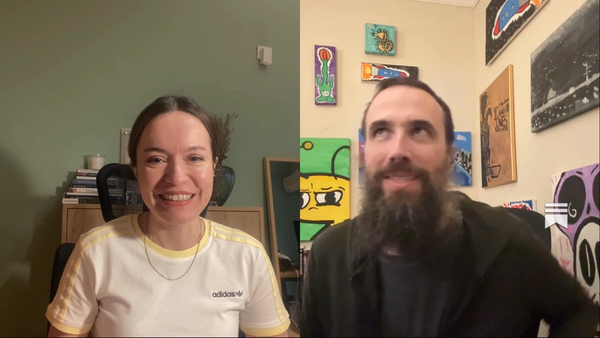
Substack, Kit, and the Power of Automated Workflows
Discover how to seamlessly automate Substack subscribers to ConvertKit (Kit) for powerful email funnels, personalized segmentation, and a more profitable creative business
Writing in Your Author Ecosystem
Writing has always been a deeply personal journey, yet for decades, authors have been squeezed into narrowly defined boxes of genre, style, and approach.
Enneagram Archetypes
Enneagrams offer writers something far more profound than simple personality typing.
Understanding Theme
Most writers get caught up debating plot versus character, as if these were the only two choices for driving a story forward.