
Previous Post
I’m always thrilled when “traditional publishing” conferences, like AWP (Association of Writers & Writing Programs), turn out to be filled with more progressive ideas on how to move the industry forward than I expected.
For most of my career the industry has been stuck in the 19th century (yes, I mean the 1800s). For that reason, AWP wasn’t on my radar for a long time, but this year it was in Los Angeles, and I was asked to be on a panel by Jane Friedman, so I went and am glad I did.
I was pleasantly surprised by how forward-thinking the presses and publishing houses had become in the last few years.
After decades being stoned and flogged for talking about self publishing, Kickstarter, and direct sales, it was refreshing to finally be able to lower my defenses and engage without having to be on guard constantly.
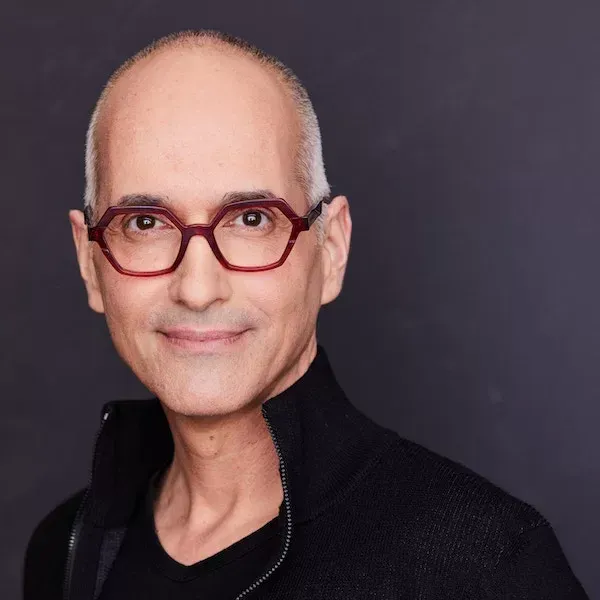
One of the most charming people I met at AWP this year was Lee Wind, chief content officer for the Independent Book Publishers Association (IBPA). I really love IBPA and what they are doing. Aside from ALLi, where I serve on the advisory board, it’s my favorite singular publishing organization.
In fact, I love it so much that I’ll be doing a keynote conversation with Jane Friedman at IBPA and BookLife’s Boot Camp for Author Publishers on Jan 30, 2026, and you can get a $20 discount off registration.
That drops the regular price of $99 for IBPA members to $79, and the regular price of $199 for nonmembers to $179 (which includes a full-year membership in IBPA).
Just use the code: BootCampRussellPeeps
I really appreciate anyone who’s willing to stand up and say “I messed up so you don’t have to”, and so this article is right up my alley. That’s the crux of what Lee talks about in this article, and now I’m going to turn the floor over him.
Here’s Lee.
It’s been twenty-one years since I started writing books for kids and teens – a shift that happened after years of writing screenplays that weren’t being produced anyway.
I crowdfunded and published my debut title (a YA novel) in 2018. My eighth book (a picture book) was published by an independent press in November 2025. Book nine (another YA novel) will be published by a different indie press in May 2026.
Do I also have a day-job? Yes, as Chief Content Officer for the Independent Book Publishers Association (IBPA). That’s where I help our more than 4,000 members with education about publishing, coordinate our cooperative book marketing programs, and run our freedom to read project, We Are Stronger Than Censorship, that buys and donates two books to offset every one book challenge.
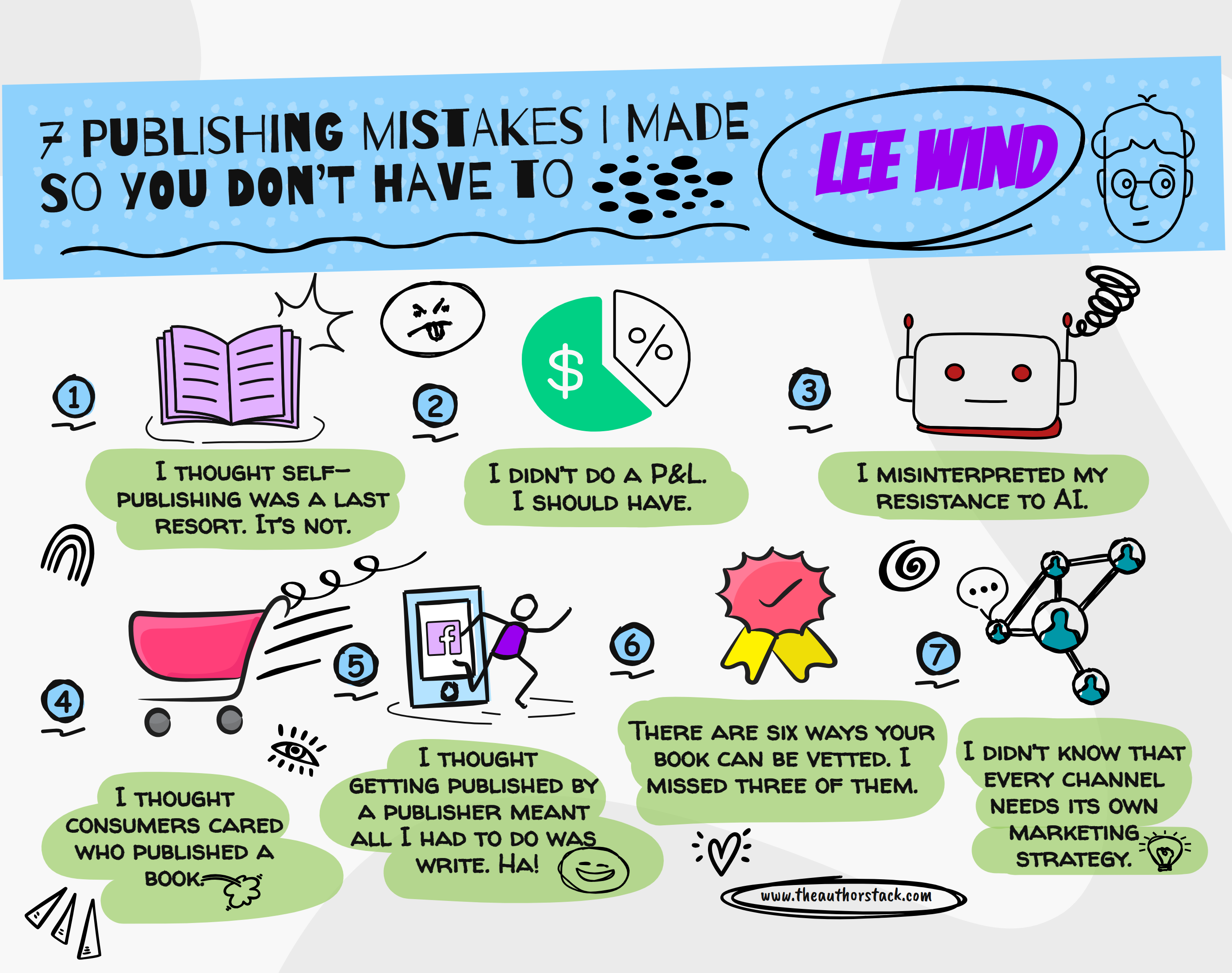
With that context, here are the seven publishing mistakes I’ve made, so you can avoid them:
Mistake #1: I thought self-publishing was a last resort. It’s not.
Let’s start with the misnomer: “Self” publishing tricks people into thinking they can do it all themselves. That they just need to download the right software and they don’t need anyone else’s input or expertise.
That’s not true. Publishing well requires a team.
“Author Publishing” is a much better term, and the one we use at IBPA. Because even if you’re the author, if you’re publishing, you need to do the things a publisher does. Including hiring professionals to do what you can’t do at a professional level.
If no one is going to pay me to design the cover of their book, I have no business designing the cover of my book! I don’t care how fancy your AI is, you need a professional designer to make sure your cover is professional, has the correct hierarchy of information, and meets genre expectations. (People do judge books by their covers, all the time.)
When I crowdfunded my first book back in 2018, I’d been trying to get traditionally published for years. The only way it seemed I could make it happen was to be the engine of it happening. To be my own publisher.
I rallied my community to cover the costs of putting out a professionally published book (and donating hundreds of copies to empower LGBTQ+ and allied teens). But I went into it with a lot of shame. Queer as a Five-Dollar Bill got lots of accolades (including being a Publishers Weekly “Indie Success Story”), but that sense of ‘I’m publishing this myself as a last resort’ stayed with me.
I talk to a lot of writers, and my sense of author-publishing has really shifted. Far from a last resort, for many authors who decide to publish themselves, it’s a strategy!
One friend who has a sizable platform in his field said to me, why would I give up my I.P. to some publisher when I can own the whole thing?
He’s right. There’s no reason he needs to go with a traditional publisher, as long as he’s willing to put in the work (and hire people for the stuff he can’t do at a professional level.)
He has the Intellectual Property (IP) and he has the audience, and those are the essentials for successful publishing.
Mistake #2: I didn’t do a P&L. I should have.
A Profit and Loss Statement (P&L) is Publishing 101. It helps you map out what your book will cost to produce and what you can realistically expect in return.
While I did a lot of math figuring out the different levels of my first Kickstarter campaign, I never did a P&L for that book. Part of my day-job was—and is—helping publishers (author publishers and indie publishers alike) with their book marketing, and yet I didn’t plan a budget for marketing my own debut novel!
You need a basic P&L that includes all formats, sales channels, a marketing budget, funding sources, what you’re going to charge by format, how and if you’re going to handle returns, and how many books you need to sell to make the numbers work.
Yes, you can still trust your gut. And you don’t have to be data-driven. But at least be data-informed.
Mistake #3: I misinterpreted my resistance to AI.
Tools (including AI) might give me more time to do what I love.
I’ll acknowledge that I’m uncomfortable with how many of the large language models (LLMs) are trained on stolen copyrighted works – including my books, without my permission or compensating me (or anyone else).
But I also know that certain tools can help. The word processing program I’m writing this on helped me spell-check “misspelling” in this paragraph. Could I have turned to my bookshelf, grabbed a dictionary, and looked up the word? Sure. But clicking on the red-underlined word and choosing the correct spelling from a drop-down list saved me two minutes.
That adds up.
For over a year, everyone from my day-job boss to my father was urging me to experiment with LLMs, and I just didn’t do it. I recently learned about Apertus, an ethically sourced LLM trained on open-source and licensed works only. Now I’m experimenting. (Be assured I wrote this piece without AI – 100% human effort. Because I’m hoping you’ll spend your human time reading it.)
But I’m keeping an open mind about how new tools might be able to free up my time from administrative stuff so I can do more of the human creative stuff.
Mistake #4: I thought consumers cared who published a book.
It is a very inside-baseball kind of thing to turn to the copyright page to see who published a book.
What readers do care about is if the book is well-written and edited. Is it well-designed? Is it indistinguishable in quality from a book put out by a major publisher?
If so, you’re in luck, because consumers don’t care who published a book.
This is an incredible opportunity for authors who want to publish their own work. But like I mentioned above, you have to hire professionals to do what you can’t do at that professional level.
Even if you’re an English teacher, you will need to hire an editor. Most of us can’t find all the typos in our own resumes, so how could we expect to professionally edit an entire book?
And pay attention to the ‘tells’ that indicate a book has been professionally published and make sure your book includes them too. For example, books by new author-publishers often miss including a colophon. It’s that little logo of the imprint/publisher at the bottom of a book’s spine. (IBPA puts out a free Industry Standards Checklist for a Professionally Published Book – a handy guide to make sure you’re not missing anything important.)
Bottom line: Know your editing and design essentials, and get it right so your book has a chance to find its readers.
Mistake #5: I thought getting published by a publisher meant all I had to do was write. Ha!
Whether you publish your own work, are published by a hybrid publisher, or are published by a traditional publisher, this truth stays the same:
You are responsible for driving demand.
My second YA novel came out from Interlude Press/Duet/Chicago Review Press in 2024. Because the publisher was only releasing the book in paperback and ebook, I pitched them on my crowdfunding a special edition hardcover that would fund buying hundreds of copies of the paperback—from them—to donate to empower Queer and allied teens. (Yup. It’s definitely my author brand, and something that resonates with my community.)
The publisher said yes, the Kickstarter succeed, and we raised enough to give away over 700 copies of A Different Kind of Brave. I also have a really beautiful special edition hardcover sitting on my desk.
All that attention helped boost sales… and the publisher agreed to publish the sequel!
How do you drive demand? I believe you do it through branding and building community.
Mistake #6: There are six ways your book can be vetted. I missed three of them.
You need someone besides you (ideally someone whose opinion isn’t seen as biased) to say your book has value. Here are six ways to do so:
- Blurbs by known authors (or other notable people) who share your ideal reader audience. Corporate publishers are making news saying they’re not going to be asking for these any more, but it’s still very much of value for authors publishing their own work.
- Trade reviews (a book review from outlets like Foreword Reviews, Kirkus Reviews, and BookLife/Publishers Weekly.) These ‘Editorial Reviews’ appear on your book’s listing on online retailers, and even if you’ve paid for the review (like with Kirkus) they’re known for being tough. A good blurb from a trade review can be golden for your marketing.
- Awards. Apply. The news comes late, but being able to say you’re an “award-winning author” is nice. The seals on your book cover if your book wins are helpful too! Take advantage of resources like the Alliance of Independent Authors’s (Alli’s) Book Award and Contest Ratings to avoid being taken advantage of. Keep in mind awards are incredibly subjective, and your book can still be awesome even if it doesn’t win. Sometimes my publishers don’t want to pay the entry fee to enter an awards program. But if I think it’s a good fit, I pay the entry fee myself.
For my debut book, I vetted my book with the three ways above. My mistake was missing these three:
- Other editorial coverage and reviews. There is a whole world of media that covers books (and the topics books cover.) Be sure to pitch your book (and you as the book’s subject matter expert) to media folks including relevant podcasts, blogs, newsletters, and local media. Keep in mind local media coverage can lead to bigger media outlet interest. I was fortunate to have my picture book Red and Green and Blue and White get a glowing review in the New York Times, who called it “beautiful,” thanks in part to illustrator Paul O. Zelinsky’s fame. But I’ve also been a guest on a ton of podcasts, and collectively those have probably reached a lot more readers.
- Reader Reviews. Consumer reviews don’t necessarily happen unless you ask for them. Remind folks they don’t need to do a book report or summarize the plot. Just a star rating and one sentence on what they thought was great will work!
- Word of Mouth. Even with all our technology, the thing that really sells books is someone telling someone else how much they enjoyed your book. Ask for this – including in the back of your book. (They got to the end so they probably enjoyed it!)
Use all the available ways to vet your book.
Mistake #7: I didn’t know that every channel needs its own marketing strategy.
Want Library sales?
Make sure you’re set up for success. Often librarians need a strong trade review to back up their acquiring a book for their collection. And know that the data (here, here, and beyond) shows that libraries drive discovery and book sales!
Want Bookstore sales?
Does your book have the consumer demand to make it worthwhile for the store to give it shelf space? How are you going to handle returns? And don’t be fooled – while indie bookstores are tastemakers, many established independent publishers see only 10% or less of their total sales from physical bookstores.
Want Consumer Sales?
What’s your marketing, advertising, and events mix? What’s online, what’s physical (like a postcard or bookmark), what’s in-person?
How are you finding your readers – and how are your readers finding your book?
Are you selling direct? Through third-party platforms? What’s your strategy for building your email list so you can nurture your audience – and let them know about your next book?
When I started publishing, I had one strategy and too many channels I was trying to reach. But now I get that every channel needs its own strategy.
Don’t Make My Mistakes.
Hopefully my hard-earned lessons will help smooth your journey!
If you’d like to dig in further, we used these seven points as a rough outline when designing IBPA’s upcoming Boot Camp for Author Publishers. It’s a one-day virtual conference on Jan 30, 2026 built for authors who are planning to publish their own work, who have published their own work, or who are working with a hybrid publisher.
We’ll start the day with a keynote conversation between Jane Friedman and this platform’s very own Russell Nohelty on The New Author Opportunity.
That’s followed by six 40-min presentations (with time for Q&A) to cover:
- Business Model Basics
- Technology
- Editing and Design Essentials
- Driving Demand through Branding and Community Building
- Vetting Your Book
- Market Strategies by Channel
Plus, from top to bottom it’s a day of networking with other author-publishers. (We also offer attendees year-long access to a private channel on IBPA’s Slack workspace.)
IBPA is putting on this Boot Camp for Author Publishers in partnership with BookLife (from Publishers Weekly), and we’re happy to offer Russell’s readers a $20 discount off registration. That drops the regular price of $99 for IBPA members to $79, and the regular price of $199 for nonmembers to $179 (which includes a full-year membership in IBPA).
Just use the code:
BootCampRussellPeeps
at checkout.
Find out more about the Boot Camp for Author Publishers at: https://bit.ly/BootCampAuthorPublishers26
To learn more about Lee Wind’s books, visit his website at leewind.org and you’re invited to sign up for his monthly newsletter here.
And you can learn more about IBPA here.
What do you think? What’s the biggest mistake you’ve made in your publishing journey that can help others? Let us know in the comments.